
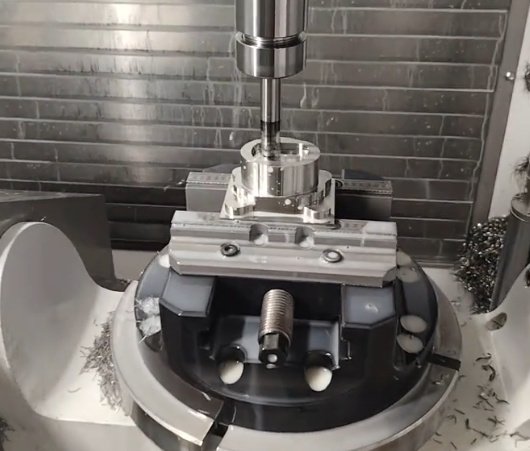
Transitioning stainless steel components from prototype to production represents one of the most consequential decisions in a product's manufacturing lifecycle. A poorly executed transfer can trigger months of re-qualification, unexpected tooling costs, and quality excursions that erode market timing advantages. This guide maps the proven pathway from first article to high-volume production, with specific attention to the material and process considerations unique to stainless steel CNC machining.
The Prototype Phase: Validating Design Intent
Prototype stainless steel machining serves two distinct purposes: design validation and manufacturing process development. Conflating these objectives leads to prototypes that prove the concept but fail to inform production economics.
Material Selection for Prototypes
Prototype material selection should mirror production intent whenever possible. Substituting 303 for 316 in prototypes to accelerate machining may validate geometry but obscures corrosion performance, weldability, and machinability differences that affect production planning. The cost of machining a prototype in the correct grade is negligible compared to discovering material incompatibility after tooling investment.
For functional prototypes requiring mechanical testing, specify heat treatment conditions matching production intent. A 17-4 PH prototype in Condition A (solution annealed) behaves fundamentally differently from production components in Condition H900 (aged). Mechanical property validation on incorrectly conditioned prototypes produces misleading safety margins.
Rapid Prototyping Methods
CNC machining remains the dominant prototype method for stainless steel components due to material fidelity and mechanical property accuracy. Additive manufacturing of stainless steel (direct metal laser sintering, binder jetting) offers geometric freedom but introduces porosity, anisotropic properties, and surface finish limitations that complicate functional validation.
Prototype CNC machining should prioritize speed over cost optimization. Aggressive feeds and speeds that would be uneconomical in production are acceptable for one-off prototypes if they compress delivery schedules. However, document these aggressive parameters separately from production baseline data to prevent inadvertent transfer.
Design for Manufacturability Feedback
The prototype phase generates the most valuable DFM input. Machinists encountering difficult features, deep cavities, or thin walls provide real-world feedback that CAD models cannot predict. Capture this feedback systematically through manufacturing review reports that document recommended design changes, alternative approaches, and cost-impact estimates.
Common prototype-to-production design modifications for stainless steel include: increasing internal corner radii to accommodate standard end mill diameters, adding draft angles to deep pockets for improved chip evacuation, and consolidating multiple setups through 5-axis accessibility analysis. Each modification should be evaluated against functional requirements before incorporation.
Pre-Production Process Development
The gap between prototype success and production readiness is where most transfers falter. Pre-production process development establishes the documented, repeatable, and capable manufacturing system required for sustained production.
Process Parameter Lockdown
Prototype parameters optimized for speed require refinement for production stability. Develop cutting parameter matrices that define speed, feed, depth of cut, and coolant flow for each operation. These parameters should target tool life consistency rather than maximum material removal rate.
For stainless steel production, parameter development must account for lot-to-lot material variation. Mill heat chemistry variations within specification can alter machinability by 15-20%. Establish parameter ranges rather than single-point values, with upper and lower bounds that accommodate normal material variation without quality impact.
Tooling Standardization
Prototype machining often uses whatever tooling is available. Production requires standardized tooling lists with approved vendors, part numbers, and life expectations. For stainless steel, this standardization is particularly critical because tool geometry variations between manufacturers produce measurable surface finish and dimensional differences.
Develop tool life baselines for each stainless steel grade and operation type. A finishing insert producing 50 parts on 304 may only achieve 35 parts on 316 due to molybdenum content effects. These baselines inform preventive tool change scheduling that prevents in-process failures.
Workholding and Fixture Validation
Prototype workholding solutions—soft jaws, manual clamping, vacuum plates—must evolve into production fixtures that ensure repeatability and operator independence. Production fixtures require qualification for locating accuracy, clamping force consistency, and chip management.
For stainless steel components, fixture materials must resist corrosion from coolant exposure and chip accumulation. Aluminum fixtures corrode rapidly in stainless steel machining environments due to galvanic effects. Hardened steel or stainless fixture components provide superior durability and maintain locating accuracy over production runs.
First Article Inspection and Qualification
First article inspection represents the formal gate between process development and production authorization. For stainless steel components, FAI must extend beyond dimensional verification to include material certification and surface integrity confirmation.
Dimensional Verification Protocols
FAI dimensional inspection should cover all drawing dimensions, not just critical characteristics. Statistical sampling plans (AQL levels) apply to production inspection, but FAI requires 100% verification to establish baseline process capability. Use coordinate measuring machines with documented calibration status and environmental temperature control.
For geometrically complex stainless steel components, consider optical measurement systems that capture full surface point clouds. These systems detect form errors that traditional CMM touch probing might miss, particularly on contoured surfaces common in medical device and aerospace applications.
Material Certification Verification
Stainless steel material certifications must be reviewed for compliance with specification requirements. Verify that chemistry, mechanical properties, and heat treatment condition match the drawing callout. Cross-reference heat numbers between raw material certificates and finished component traceability records.
For critical applications, independent material testing may be warranted. Spectrometric analysis confirms chemistry when certificate authenticity is uncertain. Hardness testing validates heat treatment condition for martensitic and precipitation-hardening grades.
Production Scaling Strategies
Scaling from pre-production quantities to full manufacturing volume requires deliberate capacity planning and process optimization. The transition strategy depends on volume targets, component complexity, and delivery requirements.
Low-Volume Production (10-500 pieces annually)
Low-volume stainless steel production maintains flexibility through general-purpose CNC equipment and skilled operators. Setup time optimization provides greater leverage than cycle time reduction at these volumes. Quick-change tooling, modular workholding, and proven CNC programs enable economic production without dedicated automation.
Supplier selection for low volumes should prioritize responsiveness and engineering support over pure unit cost. The ability to accommodate design changes, expedite emergency orders, and provide technical consultation delivers more value than marginal price differences.
Medium-Volume Production (500-10,000 pieces annually)
Medium volumes justify process refinement and partial automation. Bar feeder integration on CNC lathes enables unattended operation for turned stainless steel components. Pallet-based machining centers with automatic workpiece changing reduce operator intervention and improve consistency.
At this scale, statistical process control becomes economically justified. Control charts tracking critical dimensions reveal systematic variation before out-of-tolerance production occurs. For stainless steel, SPC is particularly valuable because material lot variations and tool wear create gradual dimensional drift that SPC catches early.
High-Volume Production (10,000+ pieces annually)
High-volume stainless steel production demands dedicated equipment, automated inspection, and potentially transfer line or rotary indexing machine concepts. The investment in automation pays through reduced labor content, improved consistency, and 24/7 production capability.
Consider multi-spindle CNC machines or Swiss-type lathes for high-volume turned stainless steel components. These machines complete complex geometries in a single chucking with cycle times measured in seconds rather than minutes. The capital investment is substantial, but per-piece cost reductions of 60-80% compared to single-spindle operation justify the expenditure at sufficient volume.
Maintaining Quality Through Volume Ramps
Quality performance often degrades during volume transitions as new operators, equipment, and processes enter the manufacturing system. Preventive measures maintain the quality baseline established during pre-production qualification.
Operator Training and Certification
Stainless steel machining requires operator awareness of material-specific behaviors: work-hardening recognition, chip control techniques, and coolant management. Production operators need training beyond basic CNC operation to understand how stainless steel responds to parameter variations.
Develop operator certification programs that verify competency on specific stainless steel grades and component families. Certified operators demonstrate consistent setup accuracy, in-process inspection discipline, and problem recognition capability. This certification reduces the variation introduced by operator changes during volume ramps.
Preventive Maintenance Scheduling
Machine tool condition directly impacts stainless steel machining quality. Spindle bearing wear, ballscrew backlash, and way surface degradation create dimensional variation that compounds the material's inherent challenges. Implement preventive maintenance schedules aligned with cutting hours rather than calendar time.
For high-volume stainless steel production, thermal monitoring of critical machine components enables predictive maintenance. Temperature excursions in spindle bearings or hydraulic systems indicate impending failure, allowing scheduled intervention before quality impact.
Supply Chain Integration
Production scaling extends beyond the machine shop to encompass material supply, finishing operations, and logistics. Integrated supply chain management prevents the bottlenecks that delay volume achievement.
Material supply agreements for volume production
Establish blanket purchase orders or consignment inventory agreements with stainless steel suppliers to ensure material availability without carrying excessive inventory. Specify heat lot segregation requirements and certificate retention periods. For critical grades, consider dual-source strategies that prevent single-supplier disruption. Negotiate volume pricing tiers that reflect actual consumption patterns rather than arbitrary annual commitments.
Secondary operation coordination
Heat treatment, passivation, electropolishing, and specialized cleaning must scale with machining volume. In-house secondary operations provide scheduling control; qualified external vendors offer capacity flexibility. For external finishing, establish quality agreements defining acceptance criteria, inspection methods, and non-conformance handling. Audit secondary suppliers annually to verify process control maintenance.
Packaging and logistics optimization
Stainless steel components require protective packaging that prevents surface damage, contamination, and moisture exposure during transit. VCI (vapor corrosion inhibitor) films and desiccant packs protect precision surfaces during extended shipping or storage. Packaging design should facilitate inventory counting and automated handling at customer facilities. Logistics agreements with reliable carriers prevent delivery delays that disrupt just-in-time manufacturing schedules.
Continuous Improvement in Production
Sustained production excellence requires ongoing process refinement rather than static adherence to initial qualified parameters. Continuous improvement methodologies identify and eliminate waste, variation, and non-value-added activity.
Lean Manufacturing Application
Lean principles apply effectively to stainless steel machining operations. Value stream mapping reveals non-value-added time in material movement, inspection queues, and setup activities. Single-minute exchange of die (SMED) techniques reduce setup times, improving equipment utilization and delivery responsiveness.
5S workplace organization prevents tool misplacement, material mix-ups, and documentation errors that cause quality escapes. In stainless steel machining, organized chip management prevents cross-contamination between grades—a particular concern when 303 chips mix with 316 workpieces.
Technology Refresh Cycles
Machine tool technology evolves continuously. Evaluate equipment upgrade opportunities based on capability gaps rather than depreciation schedules. Newer CNC controls offer advanced thermal compensation, adaptive feed control, and integrated measurement that improve stainless steel precision outcomes.
Tooling technology advances similarly. New coating formulations, substrate materials, and geometries emerge regularly. Maintain relationships with cutting tool manufacturers to access beta testing opportunities and early adoption of technologies that improve stainless steel machining performance.
Design Change Management
Production programs inevitably encounter engineering changes. Managing these changes without disrupting ongoing manufacturing requires disciplined configuration control and impact assessment.
Implement engineering change order (ECO) processes that evaluate machining impact before change authorization. A seemingly minor radius increase may require new tooling, altered CNC programs, and re-qualification of surface finish. The ECO process should identify affected work-in-process, finished goods inventory, and customer shipments.
For stainless steel components, material specification changes require particular scrutiny. Substituting 304 for 316 to reduce cost may seem straightforward but affects corrosion testing, passivation requirements, and potentially customer approval documentation. Comprehensive change impact analysis prevents unintended consequences.
Regulatory and Compliance Considerations
Stainless steel components in regulated industries—medical devices, aerospace, food processing, nuclear—face additional compliance requirements that extend across the prototype-to-production transition.
Medical device stainless steel machining requires FDA-compliant quality systems, process validation per 21 CFR Part 820, and potentially biocompatibility testing. The prototype-to-production transfer must include installation qualification (IQ), operational qualification (OQ), and performance qualification (PQ) documentation.
Aerospace components require AS9100 quality system compliance, first article inspection per AS9102, and material traceability meeting Nadcap requirements. Production process changes after initial qualification may require customer notification and re-approval.
Food-grade stainless steel components must comply with FDA 21 CFR 175.300 and NSF/ANSI standards. Surface finish requirements, material grade specifications, and cleaning validation protocols established during prototyping carry forward into production without modification.
Performance Metrics and Benchmarking
Quantitative performance measurement drives improvement and demonstrates supplier capability to customers. Establish key performance indicators that span the prototype-to-production continuum.
On-time delivery rate: Percentage of orders delivered by committed date, measured from order acceptance to customer receipt
First-pass yield: Percentage of components passing all inspection requirements without rework or repair
Scrap rate: Percentage of material consumed that becomes scrap, including setup scrap and in-process losses
Setup time: Average elapsed time from last good part of previous job to first good part of new job
Tool cost per component: Total tooling expenditure divided by components produced, including inserts, holders, and special tools
Benchmark these metrics against industry standards and internal improvement targets. Share relevant metrics with customers to demonstrate accountability and continuous improvement commitment.
Conclusion
Successful stainless steel machining from prototype to production demands systematic process development, rigorous qualification, and disciplined scaling. The material's unique characteristics—work-hardening behavior, thermal sensitivity, and grade-specific responses—require technical depth that general-purpose machining approaches cannot provide.
Organizations that invest in pre-production process validation, operator training, and integrated supply chain management achieve smoother volume transitions and sustained quality performance. The prototype phase generates invaluable data that informs production optimization; capturing and transferring this knowledge prevents redundant learning cycles.
Whether scaling from one prototype to ten thousand production units annually, the fundamental principles remain consistent: understand the material, control the process, measure the results, and improve continuously. Stainless steel components manufactured with this discipline deliver the corrosion resistance, mechanical performance, and dimensional precision that demanding applications require.