
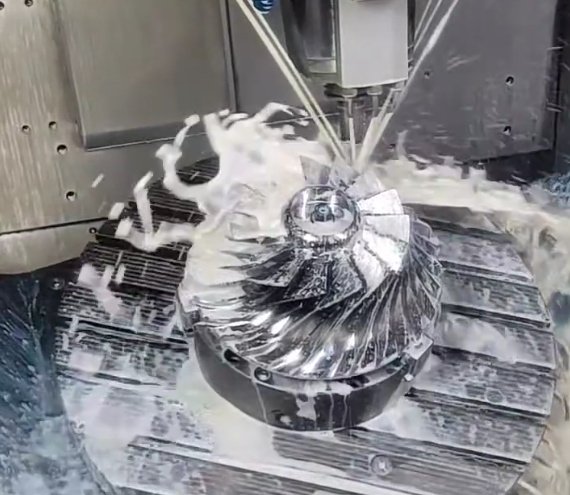
Selecting a titanium machining supplier is fundamentally different from choosing a general CNC shop. The material's extreme reactivity, poor thermal conductivity, and elevated cutting forces create manufacturing challenges that only specialized suppliers can navigate profitably. A shop proficient in aluminum or steel machining will likely destroy tooling, scrap workpieces, and miss deadlines when confronted with titanium alloys. This guide identifies the distinctive capabilities that separate qualified titanium machining partners from shops that merely claim competence.
Why Titanium Machining Demands Specialized Suppliers
Titanium alloys occupy less than 1% of global metal consumption, yet they require manufacturing infrastructure and expertise disproportionate to their volume. The material's physical properties create a manufacturing environment where conventional approaches fail predictably and expensively.
Low thermal conductivity—roughly one-sixth that of steel—concentrates 80% of cutting heat at the tool tip rather than dissipating through the chip. Chemical reactivity at temperatures above 1,000°F causes titanium to actively dissolve cobalt-based carbide binders, accelerating tool wear through mechanisms unrelated to mechanical abrasion. The material's low elastic modulus enables workpiece deflection under cutting forces that would be negligible in steel.
These characteristics demand machine tools with high torque at low speeds, through-tool high-pressure coolant systems, rigid fixturing, and operators trained in material-specific techniques. A supplier without dedicated titanium machining cells and documented process knowledge will struggle to deliver precision components economically, regardless of general machining capability.
Speed Metrics That Matter for Titanium Projects
Lead time expectations for titanium components differ from conventional materials. Raw material availability, specialized tooling procurement, and process development requirements extend timelines that might be compressed for aluminum or steel.
Quote Velocity and Technical Depth
Titanium machining quotes require deeper technical analysis than general materials. A qualified supplier evaluates component geometry against titanium-specific constraints: thin-wall feasibility, deep-hole drilling limitations, surface integrity requirements, and heat treatment needs. Quotes delivered within 24 hours that include detailed manufacturing strategy, risk assessment, and alternative approach suggestions indicate genuine titanium expertise.
Vague quotes with lump-sum pricing and no manufacturing discussion suggest the supplier lacks titanium-specific estimating capability. These suppliers often encounter unexpected difficulties during production that generate change orders and delays.
Material Availability and Procurement Lead Times
Titanium bar stock, plate, and billet availability is more constrained than steel or aluminum. Common grades like Ti-6Al-4V (Grade 5) and commercially pure Grade 2 maintain reasonable distributor inventory, but specialized alloys—Ti-5Al-2.5Sn, Ti-10V-2Fe-3Al, Ti-15V-3Cr-3Al-3Sn—often require mill-direct orders with 8-16 week lead times.
A capable supplier maintains strategic inventory of common titanium grades in standard sizes and has established relationships with primary distributors and mills. For specialized alloys, the supplier should provide documented lead times and alternative grade suggestions when application requirements permit substitution.
Material certification requirements add procurement complexity. Aerospace and medical applications demand complete traceability from ingot to finished component. Suppliers must demonstrate certificate management systems that link heat numbers to finished part documentation without gaps.
Process Development Time for New Components
First-time titanium components require process development that aluminum or steel parts may not. Tooling trials, parameter optimization, and fixture validation consume time before production begins. A reliable supplier communicates realistic development timelines and includes them in project schedules rather than promising unrealistic delivery dates.
For repeat orders, process documentation should enable immediate production startup. Suppliers investing in standardized process libraries reduce development time for geometrically similar components, compressing delivery schedules without quality compromise.
Reliability Through Process Control
Titanium machining reliability depends on systematic process control that prevents the thermal, chemical, and mechanical failures the material promotes. Surface integrity, dimensional accuracy, and mechanical properties must be verified and documented.
Machine Tool Qualification
Titanium machining demands specific machine characteristics that general-purpose equipment lacks. Suppliers should operate machines with high-torque spindles (low-speed torque priority over high-RPM capability), rigid cast iron or composite bases with vibration damping, and high-pressure through-tool coolant systems operating at 1,000+ psi.
Request evidence of machine capability: recent ballbar test results, laser interferometer positioning accuracy verification, and thermal growth mapping. Machines failing geometric accuracy or lacking adequate coolant infrastructure cannot deliver precision titanium components consistently.
Tooling Management and Standardization
Titanium machining tool life is 3-5 times shorter than equivalent steel operations. A reliable supplier maintains extensive tooling inventories with approved vendors and documented life baselines. Tool change protocols should be preventive rather than reactive—replacing inserts at 60-70% of predicted life rather than waiting for catastrophic failure that damages workpieces.
Coating technology matters significantly. Suppliers using advanced PVD coatings (TiAlN, TiSiN) with fine-grain carbide substrates demonstrate technical awareness that translates into better tool life and surface finish consistency.
In-Process Verification Systems
Machine-integrated touch probes, laser measurement, and automated inspection catch dimensional drift before out-of-tolerance production accumulates. For titanium, where thermal expansion and progressive tool wear create gradual variation, in-process gaging is particularly valuable.
Coordinate measuring machine capability with appropriate accuracy (2.5 microns or better) and environmental temperature control is essential for final verification. Suppliers should demonstrate CMM calibration certificates and operator training in geometric dimensioning and tolerancing.
Surface Integrity Control
Titanium surface integrity directly affects fatigue life, corrosion resistance, and biocompatibility. Reliable suppliers implement surface finish monitoring using profilometers and white light interferometry. White layer detection—thermally altered surface zones that compromise performance—requires metallographic examination or specialized non-destructive methods.
For medical and aerospace applications, suppliers must demonstrate surface integrity management that exceeds dimensional inspection alone. This includes documented coolant chemistry control, parameter monitoring, and post-machining surface examination protocols.
Cost-Effectiveness Beyond Piece Price
Titanium machining cost evaluation requires total cost of ownership analysis. The lowest quoted unit price often conceals quality fallout, extended lead times, and engineering limitations that increase total program cost.
Total Cost Framework for Titanium Components
Acquisition cost: Quoted piece price plus tooling, setup, and programming charges
Material cost: Titanium raw material represents 30-50% of total component cost versus 10-20% for steel. Material utilization and scrap minimization significantly impact economics.
Quality cost: Scrap, rework, and inspection sorting. Titanium scrap value is high (50-70% of virgin material cost), but defective work-in-process represents lost machining time and tooling investment.
Engineering cost: Design for manufacturability feedback, process development, and technical consultation. Suppliers offering proactive DFM input can reduce total cost through design optimization before production begins.
Schedule risk cost: Titanium component delays can stall entire product launches or aircraft certification programs. The financial impact of late delivery often exceeds piece price differences between suppliers.
Design for Manufacturability Value
Suppliers offering proactive DFM feedback on titanium components generate substantial cost savings. Common improvements include: increasing internal corner radii to accommodate standard end mill diameters, reducing deep cavity aspect ratios that require specialized tooling, consolidating setups through 5-axis accessibility, and specifying more machinable grade alternatives where application requirements permit.
A supplier identifying that a thin-wall feature can be redesigned to 0.060-inch minimum thickness rather than 0.030-inch may save hours of vibration-prone machining and reduce scrap probability from 15% to under 2%. These engineering contributions justify supplier selection based on technical partnership rather than unit price alone.
Volume Flexibility and Capacity Planning
Titanium machining capacity is more constrained than general CNC capacity due to specialized equipment requirements and longer cycle times. Evaluate supplier capacity against your forecasted demand, including peak requirements and product launch surges.
For prototype through production transitions, suppliers with identical processes across prototype and production equipment eliminate re-qualification costs. Separate prototype and production shops often require process revalidation that adds weeks to market introduction.
Technical Capabilities Assessment
Evaluate supplier technical depth through specific capability verification rather than general claims of titanium experience.
Multi-axis machining for complex titanium geometries
5-axis simultaneous machining enables complex titanium aerospace and medical components with reduced setups and improved accuracy. Verify actual 5-axis titanium experience through sample parts or facility tours. Some suppliers claim 5-axis capability based on machines with rotary tables that only support 3+2 positioning. Request CAM simulation files demonstrating collision-free 5-axis toolpaths for your specific titanium component geometry, including chip evacuation and coolant access verification.
Thin-wall and deep-feature machining capability
Titanium thin-wall machining (thickness below 0.050 inches) and deep-hole drilling (depth-to-diameter ratios exceeding 5:1) require specialized techniques: vibration-damping fixtures, peck drilling cycles, through-tool coolant, and adaptive machining strategies. Ask for capability studies demonstrating sustained performance at your required feature geometries. Review scrap rates for similar thin-wall or deep-feature components.
Secondary operation integration
Heat treatment, chemical milling, passivation, and specialized cleaning often follow titanium machining. Suppliers integrating these operations internally control scheduling and quality rather than managing external vendors. Verify that in-house heat treatment furnaces maintain vacuum or inert atmosphere capability (argon or helium) required for titanium. Chemical milling facilities must handle hydrofluoric-nitric acid mixtures safely and control material removal rates to ±0.002 inches.
Communication and Project Management
Technical capability without responsive communication creates project risk. Titanium machining projects involve complex technical decisions that require ongoing dialogue between customer and supplier.
Technical Account Management
Effective titanium machining suppliers assign engineers or program managers who understand your technical requirements and industry standards. This individual coordinates internal resources, provides status updates, and escalates technical issues without requiring you to navigate multiple departments.
During evaluation, assess whether your technical inquiries receive knowledgeable responses or generic acknowledgments. A supplier unable to discuss titanium beta transus temperatures, chemical milling allowances, or surface integrity requirements during the quotation phase will likely struggle with production technical issues.
Digital Integration and Visibility
Modern suppliers offer customer portals with real-time order status, inspection data access, and shipping tracking. For titanium components with long lead times and high value, production visibility reduces customer anxiety and enables early intervention when schedules slip.
API integration with your ERP or MRP systems eliminates manual data entry for procurement and inventory management. While not essential for all relationships, digital integration capability indicates operational maturity and scalability.
Problem Resolution and Continuous Improvement
Every manufacturing relationship encounters issues. Supplier reliability manifests in problem response speed and root cause correction effectiveness. Request documentation of corrective action processes and verify that the supplier implements systemic improvements rather than isolated fixes.
For titanium machining, common production issues include surface integrity excursions, dimensional drift from thermal effects, and tooling cost overruns. A supplier's approach to these specific challenges reveals genuine titanium expertise.
Regulatory and Compliance Considerations
Titanium components in regulated industries face additional requirements that extend beyond general manufacturing quality.
Aerospace applications require AS9100 quality systems, Nadcap accreditation for special processes (heat treatment, chemical milling, non-destructive testing), and complete material traceability per customer specifications. First article inspection per AS9102 must include full dimensional reports, material certifications, and surface integrity verification.
Medical device titanium machining requires ISO 13485 quality systems, process validation, biocompatibility testing per ISO 10993, and potentially FDA registration. Cleanroom manufacturing environments may be required for implantable devices.
Nuclear and defense applications impose additional security, traceability, and testing requirements that not all suppliers can accommodate. Verify compliance capability before awarding contracts in these sectors.
Geographic and Logistics Considerations
Supplier location affects shipping costs, delivery speed, and communication convenience. However, geographic proximity should not override technical capability for titanium machining.
Domestic suppliers offer advantages for time-sensitive projects, complex components requiring engineering collaboration, and applications where face-to-face quality reviews add value. The United States maintains significant titanium machining capacity concentrated in aerospace corridors: Pacific Northwest, Southern California, Texas, and Connecticut.
Overseas suppliers may offer lower labor rates but introduce longer lead times, customs complexity, and intellectual property exposure. For many titanium precision components, the machining cost represents a small fraction of total program value. The cost of a delayed product launch or quality failure far exceeds modest unit price differences between geographic regions.
Red Flags in Supplier Evaluation
Certain indicators suggest suppliers unlikely to deliver reliable titanium machining:
No dedicated titanium equipment or cells: General-purpose machines shared across all materials indicate insufficient titanium specialization
Inability to discuss specific titanium grades and applications: Suggests limited actual titanium experience
Quotes significantly below market range: Often signals misunderstanding of requirements, planned change orders, or quality shortcuts
No recent equipment investment in titanium-capable machines: Indicates operational stagnation or financial stress
Refusal to provide customer references for titanium work: May indicate dissatisfied clients or lack of relevant experience
No documented tool life baselines for titanium: Reveals absence of systematic process knowledge
Building Long-Term Titanium Machining Partnerships
The most cost-effective titanium machining relationships develop through mutual investment and continuous improvement. Long-term partnerships enable:
Process optimization: Suppliers refine parameters and tooling for your specific components, reducing cycle time and improving consistency
Material inventory programs: Consignment or blanket order arrangements ensure titanium availability without carrying excessive inventory
Engineering collaboration: Early supplier involvement in new product development prevents manufacturability issues and accelerates time to market
Volume leverage: Consolidated spend across multiple components improves pricing and scheduling priority
These relationship benefits compound over time, creating sustainable competitive advantage that transactional purchasing cannot replicate.
Conclusion
Finding a titanium machining supplier that delivers speed, reliability, and cost-effectiveness requires systematic evaluation across technical capability, quality systems, communication practices, and total value proposition. The lowest quoted price rarely corresponds to the lowest total cost when titanium-specific quality fallout and delivery risk are quantified.
Invest time in thorough supplier qualification during selection. Request facility tours, review capability studies for titanium-specific operations, and verify references from customers with similar requirements. The effort invested in supplier selection pays returns through reduced program risk, lower total cost, and components that meet the exacting standards aerospace, medical, and defense applications demand.