
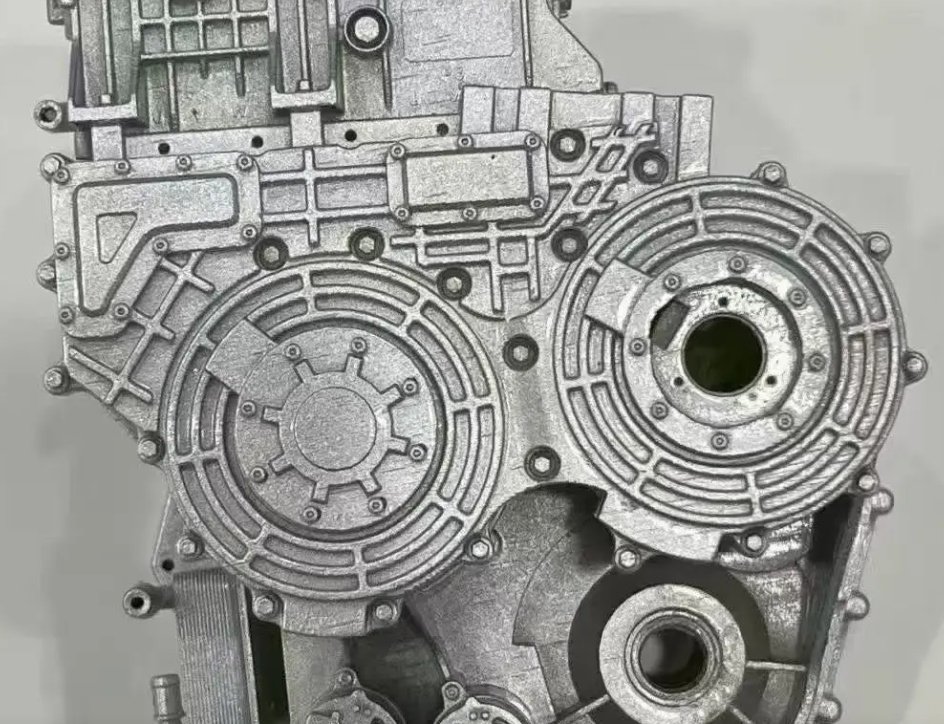
Titanium 3D printing metal powder enables the production of geometrically complex, high-performance components for aerospace, medical, and automotive applications. Selecting the correct powder grade, understanding particle size distributions, and optimizing process parameters directly determine build success rates, mechanical properties, and final part costs. This guide examines commercially available titanium powders, qualification protocols, and real-world performance data for laser powder bed fusion (LPBF) and directed energy deposition (DED) systems.
Why Titanium Dominates Additive Manufacturing
Titanium alloys offer the highest strength-to-weight ratio among structural metals, with Ti-6Al-4V achieving 900 MPa tensile strength at 4.43 g/cm³ density. Additive manufacturing unlocks titanium's potential by eliminating material waste from subtractive machining—where buy-to-fly ratios often reach 10:1 for aerospace structural brackets. Key advantages of titanium powder bed fusion include:
- Near-net-shape production of topology-optimized geometries
- Internal lattice structures reducing weight by 40–60% while maintaining stiffness
- Consolidation of multi-part assemblies into single printed components
- Material utilization rates exceeding 95% with powder recycling systems
The global titanium powder market for additive manufacturing reached $420 million in 2025, with LPBF-grade spherical powder commanding $180–350 per kilogram depending on alloy composition and qualification level.
Commercially Available Titanium Powder Grades
Ti-6Al-4V (Grade 5) — The Industry Standard
Ti-6Al-4V ELI (extra low interstitial) powder accounts for 80% of titanium additive manufacturing volume. Chemical composition per ASTM F2924:
| Element | Standard Grade 5 | Grade 5 ELI | ASTM F2924 Limit |
|---|---|---|---|
| Aluminum | 5.50–6.75% | 5.50–6.50% | 5.50–6.75% |
| Vanadium | 3.50–4.50% | 3.50–4.50% | 3.50–4.50% |
| Oxygen | 0.20% max | 0.13% max | 0.20% max |
| Iron | 0.30% max | 0.25% max | 0.30% max |
| Hydrogen | 0.015% max | 0.012% max | 0.015% max |
Oxygen content critically impacts ductility. Each 0.01% increase in oxygen reduces elongation by approximately 2%. Aerospace suppliers typically specify <0.10% oxygen for flight-critical Ti-6Al-4V ELI builds, requiring inert gas atomization under argon and sealed powder handling systems.
Ti-6Al-4V Grade 23 — Medical and Marine
Grade 23 (Ti-6Al-4V ELI) powder meets ASTM F3001 for surgical implant applications. The reduced oxygen and iron limits improve fracture toughness (K_IC >75 MPa·√m) and fatigue crack growth resistance. Medical device manufacturers require:
- 100% lot traceability from ingot to finished powder
- Biocompatibility testing per ISO 10993-5 (cytotoxicity) and ISO 10993-10 (sensitization)
- Non-ceramic atomization to eliminate aluminum oxide inclusion risks
Plasma rotating electrode process (PREP) powder, while 30–40% more expensive than gas atomized powder, delivers superior cleanliness with inclusion counts <5 per kilogram versus 50–200 for gas atomized material.
Ti-64 Modified and High-Temperature Alloys
Beyond standard Ti-6Al-4V, specialized compositions address extreme service environments:
- Ti-5Al-5V-5Mo-3Cr (Ti-5553): 1,240 MPa ultimate tensile strength for landing gear components; limited LPBF process window due to beta phase stability
- Ti-15V-3Cr-3Al-3Sn (Ti-15-3): Cold-formable beta alloy for springs and fasteners; solution-treated and aged to HV 400
- Ti-6Al-2Sn-4Zr-2Mo (Ti-6242): 540°C creep resistance for gas turbine compressor blades
Ti-5553 powder requires elevated bed temperatures (200–250°C) during LPBF to prevent cracking from residual stress accumulation. Build failure rates exceed 40% without optimized scan strategies and substrate preheating.
CP-Titanium (Grade 1–4) — Corrosion Applications
Commercially pure titanium powder serves chemical processing and marine applications where moderate strength and exceptional corrosion resistance outweigh high-strength requirements. Grade 2 powder (0.25% O, 275 MPa yield strength) prints successfully at higher speeds than Ti-6Al-4V due to lower thermal stress. Typical applications include:
- Heat exchanger headers with internal flow channels
- Desalination pump impellers handling chloride environments
- Anode substrates for cathodic protection systems
Titanium-Tantalum and Biocompatible Blends
Custom alloy powders expand application boundaries. Ti-25Ta powder (PREP atomized) produces radiopaque orthopedic implants visible under fluoroscopy without artifact generation. Ti-Ta-Nb-Zr superelastic alloys (modulus <30 GPa) match human bone stiffness, reducing stress shielding in hip stems. These specialty powders cost $600–1,200/kg and require dedicated process development for each alloy system.
Powder Production Methods and Quality Implications
Gas Atomization (GA)
Plasma atomization and electrode induction melting gas atomization (EIGA) dominate titanium powder production. EIGA melts a rotating titanium electrode via induction heating, then atomizes the molten stream with argon jets. Characteristics:
- Particle morphology: 85–95% spherical with satellite particles
- Flow rate: 18–25 s/50g (Hall flowmeter)
- Apparent density: 2.3–2.6 g/cm³ (55–60% of theoretical)
- Tap density: 2.8–3.1 g/cm³
Plasma atomization (AP&C, part of GE Additive) uses wire feedstock melted by plasma torches, achieving >99% sphericity and minimal satellites. AP&C Ti-6Al-4V powder demonstrates 28 s/50g flow rates and 2.65 g/cm³ apparent density—critical for consistent powder layer spreading at 30–50 μm layer thicknesses.
Plasma Rotating Electrode Process (PREP)
PREP uses a rotating titanium electrode (8,000–20,000 RPM) melted by a plasma arc. Centrifugal force ejects molten droplets that solidify into highly spherical particles. PREP powder advantages:
- Zero satellite particles and minimal internal porosity
- Higher tap density (3.2–3.4 g/cm³) improving build rates
- Lower oxygen pickup (<0.03% increase from electrode to powder)
- Reduced hollow particle fraction (<0.1% vs. 1–3% for gas atomized)
The primary limitation: PREP yields 40–60% usable powder within standard LPBF size ranges (15–53 μm), with oversize material requiring reprocessing. This drives PREP powder prices to $280–400/kg versus $180–250/kg for premium EIGA powder.
Hydride-Dehydride (HDH) Powder
HDH processing crushes titanium hydride, then dehydrides to produce angular, irregular particles. While unsuitable for LPBF due to poor flowability (flow rates >40 s/50g), HDH powder serves DED and binder jetting applications where particle morphology requirements are less stringent. Cost advantages reach 50–60% versus spherical powder, making HDH viable for non-critical repair and cladding operations.
Particle Size Distribution and Process Matching
| Process Technology | Optimal PSD | Mean Diameter | Layer Thickness | Build Rate |
|---|---|---|---|---|
| LPBF (EOS M290, SLM 280) | 15–53 μm | 35–45 μm | 30–60 μm | 8–25 cm³/hour |
| LPBF (EOS M400-4, multi-laser) | 20–63 μm | 40–50 μm | 60–100 μm | 50–120 cm³/hour |
| EBM (Arcam Q20+) | 45–106 μm | 70–85 μm | 70–100 μm | 80–200 cm³/hour |
| DED (Optomec LENS) | 45–150 μm | 75–110 μm | 250–1,000 μm | 100–500 cm³/hour |
| Binder Jetting (Desktop Metal) | 15–45 μm | 25–35 μm | 35–50 μm | 1,200–4,000 cm³/hour |
Fine powder (<20 μm) improves surface finish (Ra 3–6 μm as-built) but increases fire and explosion hazards. Titanium dust minimum ignition energy (MIE) drops to <3 mJ below 20 μm, requiring nitrogen inerting and conductive flooring in powder handling areas per NFPA 654.
LPBF Process Parameters for Titanium Powder
Laser Power and Scan Speed
Ti-6Al-4V LPBF parameters balance densification against keyhole porosity and balling. Optimal energy density ranges 50–80 J/mm³:
- Laser power: 280–400 W (single-mode fiber lasers at 1,070 nm wavelength)
- Scan speed: 800–1,400 mm/s
- Hatch spacing: 120–160 μm
- Layer thickness: 30–60 μm
Excessive energy density (>100 J/mm³) generates keyhole mode melting, trapping argon pores (50–200 μm diameter) that reduce fatigue life by 40–60%. Insufficient energy (<40 J/mm³) produces lack-of-fusion defects between layers, creating planar porosity aligned with build direction.
Scan Strategies and Residual Stress
Island scan strategies (5×5 mm chessboard patterns with 67° layer rotation) reduce residual stress accumulation in Ti-6Al-4V builds. Without rotation, thermal gradients generate 400–600 MPa tensile stresses parallel to scan direction, causing:
- Part distortion exceeding 1 mm on 100 mm tall builds
- Build plate delamination during printing
- Cracking in thick sections (>10 mm)
Preheating the build plate to 200°C (achievable on EOS M290 with optional heating) reduces residual stress by 35% and eliminates stress relief heat treatment for components <50 mm height. Electron beam melting (EBM) operates at 650–750°C bed temperature, enabling essentially stress-free Ti-6Al-4V builds without post-processing stress relief.
Atmosphere Control
Oxygen contamination during building embrittles titanium. Industry standards mandate:
- Chamber oxygen <100 ppm (preferably <50 ppm) during builds
- Argon purity: 99.999% with <5 ppm O₂, <5 ppm H₂O
- Continuous oxygen monitoring with automatic build pause at >150 ppm
Each 50 ppm increase in chamber oxygen raises final part oxygen by 0.01–0.02%, directly reducing elongation. Aerospace suppliers perform 100% oxygen analysis on completed builds, rejecting lots exceeding specification.
Post-Process Treatment and Heat Treatment
Hot Isostatic Pressing (HIP)
HIP eliminates internal porosity in Ti-6Al-4V LPBF parts, improving fatigue performance to wrought levels. Standard HIP parameters:
- Temperature: 920°C (below beta transus at 995°C)
- Pressure: 100–200 MPa argon
- Hold time: 2–4 hours
HIP-treated LPBF Ti-6Al-4V achieves 950 MPa yield strength, 1,050 MPa ultimate tensile strength, and 14% elongation—matching AMS 4928 wrought specifications. Fatigue strength at 10⁷ cycles improves from 400 MPa (as-built) to 550 MPa (HIP + machined), equivalent to mill-annealed bar stock.
Stress Relief and Annealing
Stress relief at 650–700°C for 2 hours (air cool) prevents distortion during machining. Solution treatment and aging (STA) maximizes strength:
- Solution: 935°C for 2 hours, water quench
- Aging: 480°C for 8 hours, air cool
STA LPBF Ti-6Al-4V reaches 1,100 MPa yield strength and 1,200 MPa UTS with 10% elongation, suitable for high-strength aerospace fasteners. However, STA reduces fracture toughness (K_IC ~55 MPa·√m vs. 75 for annealed), requiring design consideration for damage tolerance.
Surface Finishing Requirements
As-built LPBF titanium surfaces exhibit Ra 8–15 μm with partially melted powder particles. Functional surfaces require post-processing:
| Application | Required Ra | Process | Material Removal |
|---|---|---|---|
| Aerodynamic surfaces | <0.8 μm | Chemical polishing + vibratory finishing | 50–100 μm |
| Bearing seats | <0.4 μm | Precision machining + polishing | 200–500 μm |
| Medical implants | <0.1 μm | Electropolishing + passivation | 20–50 μm |
| Sealing surfaces | <1.6 μm | Machining only | 300–800 μm |
Electropolishing titanium in perchloric acid-acetic anhydride mixtures achieves mirror finishes (Ra <0.05 μm) while removing the alpha-case layer formed during heat treatment. Medical implants require subsequent passivation in 20–40% nitric acid per ASTM F86 to restore the protective oxide film.
Powder Recycling and Reuse Economics
Unmelted titanium powder represents 50–70% of material cost in LPBF. Recycling protocols maintain quality while reducing powder expenditure:
- Maximum reuse cycles: 10–15 for Ti-6Al-4V with virgin powder blending (30% virgin + 70% used)
- Oxygen monitoring: Reject powder exceeding 0.18% O (0.15% for ELI grades)
- Sieving: 63 μm or 75 μm mesh removal of agglomerates and satellites
- Drying: 80°C vacuum drying to <0.01% moisture before reuse
Each reuse cycle increases oxygen by 0.005–0.01% due to surface oxidation from chamber atmosphere exposure. Blending strategies with virgin powder maintain effective oxygen within specification across 12+ build jobs. Powder recycling systems reduce effective material cost from $200/kg to $80–120/kg for non-critical applications.
Supplier Landscape and Qualification
Leading Titanium Powder Manufacturers
Qualified suppliers for aerospace and medical applications include:
- AP&C (GE Additive): Plasma atomized Ti-6Al-4V, Ti-5553; AS9100 and ISO 13485 certified
- Carpenter Additive: EIGA and PREP powders; extensive alloy portfolio including Ti-6242
- Praxair Surface Technologies (Linde): Gas atomized powders; major supplier to EOS and SLM Solutions
- TLS Technik: EIGA specialist; European aerospace qualified per EN 9100
- KBM Affilips: HDH and spherical powders for DED and research applications
Supplier qualification requires 3-lot testing including chemistry, PSD, flow rate, apparent density, and microcleanliness (inclusion counting per ASTM E45). First article inspection on printed test bars validates lot-specific process parameters before production authorization.
Batch Consistency and Traceability
Aerospace material traceability mandates:
- Mill test reports (MTRs) linking powder lot to ingot heat number
- Certificate of analysis (CoA) with full chemistry and gas analysis
- Particle size distribution by laser diffraction (ISO 13320)
- Flow and density testing per ASTM B213 and ASTM B527
Medical applications require additional biocompatibility documentation including cytotoxicity, sensitization, and irritation test results per ISO 10993 series. Powder suppliers must maintain FDA master files (MAF) for implant-grade materials.
Common Build Defects and Mitigation
Porosity and Lack of Fusion
Spherical pores (20–200 μm) indicate trapped gas from excessive laser power creating keyhole mode. Lack-of-fusion defects (elongated, irregular pores aligned with layers) result from insufficient energy density. Mitigation: reduce laser power 10–15% while decreasing scan speed 20% to maintain energy density within 50–80 J/mm³. Implement 67° scan rotation between layers to disrupt pore alignment.
Residual Stress Cracking
Cracking in thick sections (>15 mm) or sharp corners stems from thermal gradient stresses exceeding material yield strength. Solutions: increase base plate preheat to 200°C, implement 3D island scanning (2×2 mm sub-islands), and add sacrificial support structures to constrain distortion. Post-build stress relief at 700°C for 2 hours prevents crack propagation during machining.
Contamination and Discoloration
Blue, purple, or gold discoloration indicates oxide formation from oxygen ingress. Yellow-brown discoloration suggests nitrogen contamination (leaking air lines). Verify chamber leak rate <0.1 mbar/min, replace filter media every 500 build hours, and maintain argon dew point <-60°C. Discolored parts require 100% chemistry retesting; nitrogen levels >0.05% cause embrittlement and must trigger lot rejection.
Mechanical Properties: LPBF vs. Wrought Titanium
| Property | LPBF As-Built | LPBF + HIP | Wrought Annealed | Test Standard |
|---|---|---|---|---|
| Yield Strength (MPa) | 950–1,050 | 900–980 | 880–950 | ASTM E8 |
| Ultimate Tensile (MPa) | 1,050–1,150 | 1,000–1,080 | 950–1,000 | ASTM E8 |
| Elongation (%) | 10–14 | 13–17 | 14–18 | ASTM E8 |
| Fatigue Limit (MPa) | 350–450 | 500–600 | 520–600 | ASTM E466 |
| Hardness (HV) | 320–360 | 310–340 | 300–330 | ASTM E92 |
HIP treatment closes gas pores and lack-of-fusion defects, elevating fatigue performance to wrought equivalence. However, surface roughness remains the limiting factor—machined and polished LPBF + HIP specimens match wrought fatigue data, while as-built surfaces show 30–40% reduction due to stress concentration at surface irregularities.
Cost Analysis and Economics
Total part cost for LPBF titanium includes powder, machine time, post-processing, and quality assurance. Representative breakdown for a 200g aerospace bracket:
- Powder (300g consumed, 30% virgin blend): $45–75
- Machine time (12 hours at $150/hour rate): $1,800
- Support removal and stress relief: $120
- HIP treatment: $200
- Machining and finishing: $400
- NDT and inspection: $300
Total: $2,865–2,895 (equivalent to $14,325–14,475/kg of finished part). Despite high per-kilogram cost, the elimination of tooling, reduced material waste, and design optimization (40% weight reduction) deliver lifecycle cost advantages for low-volume, high-complexity aerospace and medical components.
Environmental and Safety Protocols
Titanium powder handling requires strict safety measures:
- Fire and explosion: Titanium dust MIE <10 mJ; all equipment must be grounded; nitrogen inerting for powder storage and sieving
- Respiratory protection: NIOSH P100 filters minimum; supplied air for powder transfer operations
- Waste management: Contaminated powder (O >0.25%) classified as reactive hazardous waste; thermal oxidation treatment before landfill
Powder recovery systems with closed-loop nitrogen transport reduce operator exposure and contamination risks. Automated powder handling (AP&C Powdersolve, Solukon SFM-AT1000) enables 100% remote powder recycling for high-volume production environments.
Conclusion
Titanium 3D printing metal powder selection and process control determine whether additive manufacturing delivers on its promise of high-performance, geometrically complex components. Ti-6Al-4V ELI remains the workhorse material, with spherical gas-atomized or PREP powder providing the flowability and cleanliness required for consistent LPBF builds. Successful implementation demands rigorous supplier qualification, oxygen-controlled processing environments, and post-build HIP treatment to achieve aerospace and medical mechanical property requirements. Organizations mastering these parameters report 50–70% lead time reductions and 30–40% weight savings compared to traditional titanium manufacturing, validating additive manufacturing as a production-ready technology for critical titanium components.