
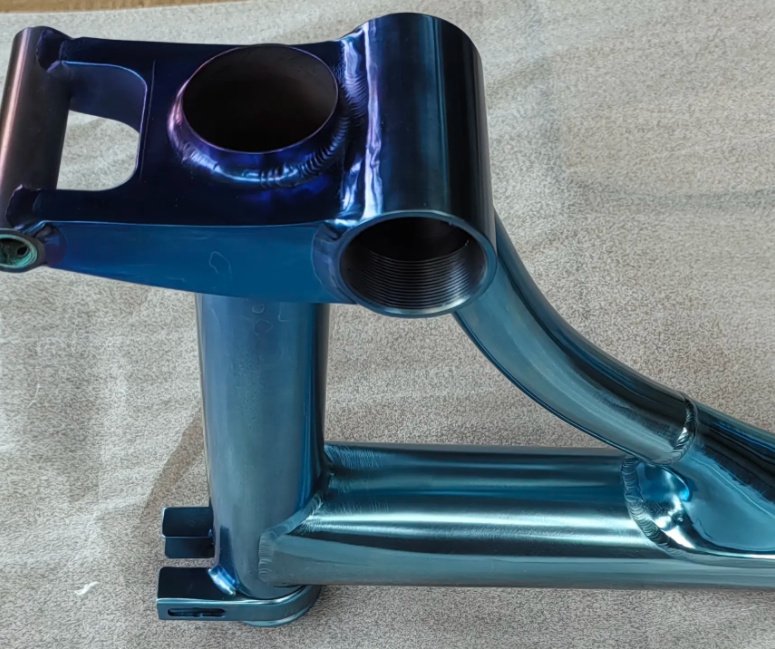
What a Titanium Anodizing Company Does
A titanium anodizing company specializes in the electrochemical surface treatment of titanium and its alloys to produce controlled oxide layers that enhance corrosion resistance, wear performance, and aesthetic appearance. Unlike aluminum anodizing, which primarily builds a protective barrier, titanium anodizing manipulates light interference within the oxide film to generate a spectrum of colors without dyes or pigments. Professional anodizing companies serve industries ranging from medical device manufacturing and aerospace engineering to jewelry production and architectural design, providing both functional surface enhancement and precise color matching capabilities.
Types of Titanium Anodizing Processes
Type 2 Titanium Anodizing
Type 2 anodizing, specified under AMS 2488, produces a wear-resistant gray coating on titanium surfaces. This process operates at higher voltages than decorative anodizing and creates a thicker, harder oxide layer that significantly improves galling resistance and anti-seizing properties. Aerospace fasteners, landing gear components, and engine parts frequently receive Type 2 anodizing to prevent thread seizure during assembly and to extend service life under high-load conditions. The resulting surface hardness typically reaches 300 to 400 HV, compared to approximately 150 HV for untreated titanium.
Type 3 Color Titanium Anodizing
Type 3 anodizing produces the characteristic color spectrum associated with titanium surface finishing. The process controls oxide layer thickness through precise voltage regulation, with each voltage level corresponding to a specific color. At 10 volts, a pale gold appears; at 25 volts, purple emerges; at 70 volts, a deep blue develops; and at 100 volts, a green-gold finish results. Professional anodizing companies maintain voltage control accuracy within ±0.5 volts to ensure color consistency across production batches. This precision is critical for medical device manufacturers who use color coding to differentiate implant sizes and for consumer product brands requiring exact color matching across product lines.
Color Chart for Type 3 Titanium Anodizing
| Voltage (DC) | Resulting Color | Approximate Oxide Thickness | Common Applications |
|---|---|---|---|
| 10V | Pale Gold | 30–40 nm | Jewelry, decorative hardware |
| 20V | Bronze | 50–60 nm | Consumer electronics, eyewear |
| 30V | Purple | 65–75 nm | Medical instrument identification |
| 50V | Light Blue | 85–95 nm | Dental implant color coding |
| 70V | Deep Blue | 105–115 nm | Aerospace fasteners, luxury goods |
| 90V | Green-Blue | 125–135 nm | Architectural panels, art pieces |
| 110V | Green-Gold | 145–155 nm | High-end bicycle components |
Industry-Specific Applications
Medical Device and Implant Anodizing
Medical device manufacturers rely on titanium anodizing companies for both functional and identification purposes. Bone screws, plates, and spinal implants receive Type 2 anodizing to improve wear resistance and reduce the risk of galling during insertion. Color anodizing enables rapid size identification in the operating room, where surgeons can instantly distinguish between implant diameters based on color without reading laser-etched markings. The anodized oxide layer also enhances osseointegration by creating a surface topography that promotes bone cell attachment and proliferation.
Aerospace Component Processing
Aerospace specifications demand rigorous process control and documentation from titanium anodizing companies. AMS 2488 governs Type 2 anodizing requirements, while AMS 2487 addresses chemical conversion coatings. Aerospace anodizing companies must maintain complete process traceability, including bath chemistry logs, voltage and current records, and post-process inspection data for each production lot. Components such as hydraulic fittings, structural fasteners, and engine mounts receive anodizing treatments that prevent galvanic corrosion when titanium contacts dissimilar metals in aircraft assemblies.
Consumer Products and Jewelry
The consumer sector represents a growing market for titanium anodizing services. Bicycle frame builders, custom knife makers, and jewelry designers use color anodizing to create distinctive product aesthetics. Unlike painted or coated surfaces, anodized titanium colors are integral to the metal surface and will not chip, peel, or fade under normal use. High-end watch manufacturers specify anodized titanium for bezels, case backs, and bracelet components, requiring anodizing companies to maintain color consistency within Delta E values of 1.0 or less across production runs spanning months or years.
Process Control and Quality Assurance
Surface Preparation Requirements
The quality of anodized titanium finishes depends heavily on surface preparation. Professional anodizing companies employ multi-stage cleaning processes that include alkaline degreasing, acid etching, and deionized water rinsing. Any contamination from machining oils, handling residues, or previous surface treatments will cause uneven oxide formation and color variation. For critical applications, companies perform water break testing after cleaning to verify that surfaces are free of hydrophobic contaminants before anodizing begins. A continuous water film that persists for 30 seconds without breaking indicates adequate surface cleanliness.
Electrolyte Chemistry and Maintenance
Titanium anodizing electrolytes typically consist of sulfuric acid, phosphoric acid, or ammonium sulfate solutions, with the specific chemistry selected based on the desired oxide characteristics. Bath temperature control is critical, with most processes operating between 15°C and 25°C. Higher temperatures accelerate oxide growth but reduce color control precision. Professional anodizing companies monitor electrolyte conductivity and pH daily, replacing or replenishing baths when parameters drift outside specified ranges. Contaminant buildup from dissolved titanium and introduced impurities requires periodic bath analysis using inductively coupled plasma spectroscopy to maintain process consistency.
Electrical Parameters and Ramp Control
Color consistency in Type 3 anodizing depends on precise control of voltage ramp rates and hold times. Rapid voltage application can cause localized heating and uneven oxide growth, resulting in color variation across part surfaces. Professional anodizing companies use programmable power supplies that control voltage ramp rates between 0.5 and 2 volts per second, with hold times at target voltage ranging from 30 seconds to several minutes depending on part size and desired color saturation. Current density typically ranges from 0.5 to 2 amperes per square decimeter, with higher current densities producing more saturated colors but requiring tighter process control to avoid burning.
Common Defects and Troubleshooting
Color Inconsistency and Mottling
Uneven coloration across part surfaces indicates problems with electrical contact, electrolyte circulation, or surface preparation. Poor electrical contact between the rack and the part creates localized voltage drops that produce lighter colors in affected areas. Inadequate electrolyte agitation allows temperature and concentration gradients to develop, causing color variation between high and low flow regions. Professional anodizing companies address these issues through redundant electrical contact points and forced electrolyte circulation systems that maintain uniform bath conditions throughout the processing tank.
Pitting and Surface Roughness
Pitting defects appear as small, dark spots on anodized titanium surfaces and result from localized arcing during the anodizing process. Causes include contaminated electrolyte, excessive current density, and sharp edges or burrs on part surfaces that concentrate electrical fields. Prevention requires thorough electrolyte filtration, conservative current density limits, and edge rounding or deburring before anodizing. Once pitting occurs, the affected parts require stripping of the oxide layer in a nitric-hydrofluoric acid solution and complete reprocessing, adding 2 to 4 hours to the production timeline.
Oxide Layer Delamination
Oxide delamination manifests as flaking or peeling of the anodized layer, typically occurring when the oxide thickness exceeds the substrate's ability to accommodate the associated growth stresses. This defect is most common with Type 2 anodizing when process times or voltages exceed specified limits. Prevention involves strict adherence to voltage and time parameters established through process qualification testing. Parts exhibiting delamination cannot be reworked and must be scrapped, as the underlying titanium surface has been compromised by the delamination process.
Selecting a Titanium Anodizing Company
Certifications and Quality Systems
Industry certifications provide objective evidence of a titanium anodizing company's commitment to quality and process control. Medical device manufacturers should seek companies with ISO 13485 certification, which addresses quality management systems specific to medical device production. Aerospace customers require NADCAP accreditation for chemical processing, which involves rigorous audits of process documentation, equipment calibration, and operator training. Companies serving multiple industries often maintain ISO 9001 as a baseline certification with additional industry-specific credentials layered on top.
Process Capability and Equipment
The physical capabilities of an anodizing company determine which parts they can process effectively. Tank dimensions limit maximum part size, while rectifier capacity constrains the total surface area that can be processed simultaneously. Companies processing large aerospace structural components require tanks measuring several meters in length, while medical device specialists may operate smaller tanks optimized for high-volume batch processing of small parts. Power supply capabilities should include voltage ranges up to 150 volts DC with current capacities matched to the company's typical workload and part sizes.
Turnaround Time and Production Capacity
Prototype and low-volume production customers typically require turnaround times of 3 to 7 business days, while production quantities may extend to 2 to 4 weeks depending on batch sizes and process complexity. Rush services offering 24 to 48 hour turnaround are available from some companies for an additional fee, typically 50 to 100 percent above standard pricing. Companies should inquire about minimum lot charges, which can range from $150 to $500 depending on the process type and required documentation level.
AMS 2488 Type 2 Anodizing Specification Requirements
AMS 2488 governs the Type 2 anodizing process for titanium and titanium alloys. The specification requires an alkaline cleaning step followed by acid activation before anodizing in an electrolyte solution. Process parameters must produce a uniform gray coating that meets thickness requirements verified by metallographic cross-section examination. The anodized coating must pass an abrasion resistance test and demonstrate freedom from pitting, burning, and other surface defects when examined at 10x magnification. Process solution analysis and control records must be maintained for each production lot, and the anodizing company must certify conformance to all specification requirements on the shipment documentation.
Environmental and Safety Considerations in Titanium Anodizing
Titanium anodizing operations must comply with environmental regulations governing chemical storage, waste treatment, and air emissions. Spent electrolytes containing dissolved metals require neutralization and precipitation treatment before discharge, with sludge disposal managed as industrial waste. Rinse water conservation through counterflow rinsing and conductivity-controlled flow reduction can decrease water consumption by 30 to 50 percent compared to continuous overflow rinsing. Operator safety requires chemical-resistant gloves, face shields, and aprons during bath maintenance and part handling. Ventilation systems must capture acid mists generated during processing, with exhaust air scrubbed before release to meet air quality permit requirements.