
Understanding Ti-6Al-4V and Its Market Position
Ti-6Al-4V, also known as Grade 5 titanium, is the most widely used titanium alloy in the world, accounting for approximately 50 percent of total global titanium consumption. This alpha-beta alloy contains 6 percent aluminum and 4 percent vanadium, delivering an exceptional combination of high strength, low density, excellent corrosion resistance, and good fatigue properties. Selecting a qualified Ti-6Al-4V supplier requires understanding the alloy's metallurgical characteristics, available product forms, and the critical quality certifications that distinguish reliable sources from commodity distributors.
Ti-6Al-4V Product Forms and Specifications
Sheet, Plate, and Strip Products
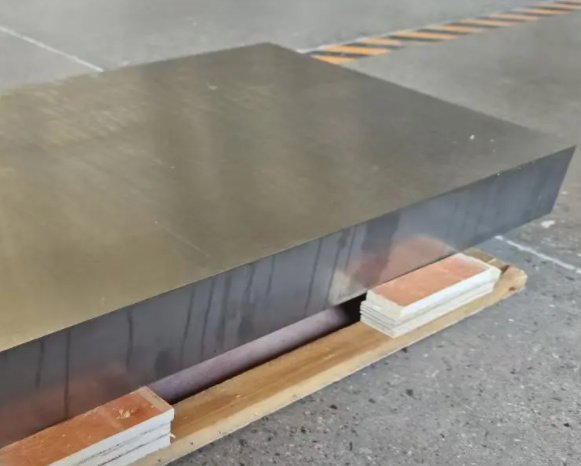
Ti-6Al-4V sheet and plate are supplied under ASTM B265 and AMS 4911 specifications, with thicknesses ranging from 0.5 mm to over 100 mm. Aerospace-grade sheet undergoes vacuum annealing at 704°C to 788°C followed by controlled cooling to achieve the specified microstructure and mechanical properties. Suppliers serving aerospace customers must provide material with ultrasonic inspection per AMS 2631 to detect internal discontinuities. Plate products intended for structural applications require additional testing for fracture toughness and fatigue crack growth rate, properties that are not typically certified for commercially pure titanium grades.
Bar, Billet, and Forging Stock
Round bar, flat bar, and billet products are supplied under ASTM B348 and AMS 4928 specifications. These product forms serve as starting material for machined components, forged parts, and fastener production. Aerospace-quality bar stock requires 100 percent ultrasonic inspection with documentation of any indications exceeding the specification's acceptance criteria. Centerline segregation, a metallurgical defect that can occur during ingot solidification, must be controlled through proper melting practice and verified by macroetch testing of samples from each heat.
Tube and Pipe Products
Seamless Ti-6Al-4V tube is supplied under ASTM B861 and AMS 4935, while welded tube falls under ASTM B862. Aerospace hydraulic and pneumatic systems use seamless tube with wall thickness tolerances as tight as ±10 percent of nominal. Medical applications such as intramedullary nails and external fixation components require tube with controlled inner and outer surface finishes, typically achieved through cold drawing and subsequent annealing. Suppliers must verify that tube products meet flattening and flaring test requirements that demonstrate adequate ductility for forming and assembly operations.
Fastener and Wire Products
Ti-6Al-4V wire and small-diameter bar for fastener manufacturing are supplied under AMS 4967 and AMS 4965. Fastener-grade material requires precise control of the beta transus temperature during processing to ensure consistent microstructure and mechanical properties. Aerospace fasteners manufactured from Ti-6Al-4V achieve tensile strengths of 1100 MPa minimum after solution treatment and aging, compared to 896 MPa for annealed bar products. Suppliers must provide certification of double vacuum melting practice, typically vacuum arc remelting following vacuum induction melting or electron beam cold hearth melting, to ensure the cleanliness levels required for fatigue-critical fastener applications.
Melting Practices and Quality Implications
Vacuum Arc Remelting
Vacuum arc remelting (VAR) is the standard melting practice for aerospace-grade Ti-6Al-4V. The process involves melting a consumable electrode under vacuum, allowing volatile impurities to evaporate while the controlled solidification rate produces a homogeneous ingot structure. Triple-melted VAR material, processed through three successive melting cycles, provides the highest level of chemical homogeneity and microstructural consistency. Suppliers offering triple-melted Ti-6Al-4V typically serve rotating component manufacturers where material anomalies could lead to catastrophic engine failures.
Electron Beam Cold Hearth Melting
Electron beam cold hearth melting (EBCHM) offers advantages over VAR for certain Ti-6Al-4V applications. The process uses a water-cooled copper hearth that prevents contamination from refractory materials while allowing high-density inclusions to sink and dissolve in the molten pool. EBCHM is particularly effective at eliminating hard alpha inclusions, which are brittle titanium-nitrogen or titanium-oxygen particles that can initiate fatigue cracks. Suppliers using EBCHM can produce Ti-6Al-4V with inclusion ratings superior to VAR-only material, making it preferred for fracture-critical aerospace components.
Mechanical Properties and Testing Requirements
Tensile Properties by Product Form
| Product Form | Specification | Tensile Strength (MPa) | Yield Strength (MPa) | Elongation (%) |
|---|---|---|---|---|
| Annealed Bar | AMS 4928 | 896 min | 827 min | 10 min |
| Solution Treated & Aged Bar | AMS 4965 | 1103 min | 1000 min | 10 min |
| Annealed Sheet | AMS 4911 | 924 min | 869 min | 10 min |
| Annealed Plate | AMS 4907 | 896 min | 827 min | 10 min |
| Forging Stock | AMS 4928 | 896 min | 827 min | 10 min |
Fatigue and Fracture Properties
For dynamically loaded components, tensile properties alone are insufficient to characterize Ti-6Al-4V performance. High-cycle fatigue testing per ASTM E466 establishes the endurance limit at 10 million cycles, which for properly processed Ti-6Al-4V typically ranges from 500 to 600 MPa at room temperature. Fracture toughness testing per ASTM E399 provides plane-strain fracture toughness values between 44 and 66 MPa√m for annealed material, with solution-treated and aged conditions showing slightly lower values due to increased strength. Suppliers serving aerospace customers must provide statistical analysis of fatigue and fracture data when these properties are specified on the purchase order.
Quality Certifications and Supplier Qualification
Aerospace Industry Certifications
Aerospace Ti-6Al-4V suppliers must maintain certifications that validate their quality management systems and process capabilities. NADCAP accreditation for heat treating, materials testing, and nondestructive testing is mandatory for most aerospace prime contractors. AS9100 certification extends ISO 9001 requirements with additional aerospace-specific quality provisions including first article inspection, foreign object debris prevention, and configuration management. Suppliers without these certifications are typically limited to non-aerospace applications or must undergo customer-specific qualification audits for each new part number.
Medical Device Certifications
Medical-grade Ti-6Al-4V suppliers must comply with ISO 13485 quality management requirements and provide material certified to ASTM F136 or ASTM F1472. These specifications impose stricter limits on interstitial elements including oxygen, nitrogen, carbon, and hydrogen compared to aerospace specifications. The ELI (Extra Low Interstitial) designation indicates oxygen content below 0.13 percent, which improves fracture toughness and ductility for implant applications. Suppliers must also provide biocompatibility documentation demonstrating that the material meets ISO 10993 requirements for medical devices in contact with tissue and bone.
Material Test Reports and Traceability
Every shipment of certified Ti-6Al-4V must include a material test report that documents chemical composition, mechanical properties, and any additional testing performed. The report must establish unbroken traceability from the finished product back to the original ingot, including heat numbers, processing dates, and inspection results. Aerospace customers typically require that test reports be signed by the supplier's authorized quality representative and retained for a minimum of 10 years. Digital test report systems that allow customers to verify certification authenticity online are increasingly common among major Ti-6Al-4V suppliers.
Supply Chain Considerations and Lead Times
Mill Lead Times and Inventory Strategies
Ti-6Al-4V mill lead times vary significantly based on product form, quantity, and current market demand. Standard mill products typically require 12 to 20 weeks from order placement to delivery, while specialized product forms or tight tolerance requirements can extend lead times to 26 weeks or longer. Suppliers who maintain strategic inventory of common sizes can reduce delivery times to 2 to 4 weeks for stocked items. Companies with predictable demand patterns often establish blanket purchase agreements with suppliers that reserve mill capacity and guarantee pricing for periods of 6 to 12 months.
Geographic Sourcing and Import Considerations
The global Ti-6Al-4V supply chain includes primary producers in the United States, Russia, Japan, and China. Defense and aerospace applications in the United States are subject to DFARS specialty metals restrictions that require titanium to be melted or produced in qualifying countries. Suppliers must provide documentation of melt source and country of origin to demonstrate compliance with these requirements. Import duties and trade restrictions can affect pricing and availability, making it important for buyers to understand the geographic origin of their Ti-6Al-4V supply and any applicable regulatory constraints.
Pricing Factors and Cost Drivers
Ti-6Al-4V pricing is influenced by raw material costs, energy prices, and market demand from the aerospace and medical sectors. Sponge titanium, the primary raw material, represents approximately 30 to 40 percent of finished product cost. Alloying elements including aluminum-vanadium master alloy add additional cost compared to commercially pure titanium grades. Small quantity orders typically carry premium pricing of 20 to 50 percent above volume pricing due to setup and handling costs. Suppliers offering cut-to-size services can reduce material waste and total project cost for customers who lack in-house cutting capabilities.
Chemical Composition Requirements for Ti-6Al-4V per ASTM B265
The chemical composition of Ti-6Al-4V is tightly controlled to ensure consistent mechanical properties and corrosion resistance. Aluminum content must fall between 5.50 and 6.75 weight percent, while vanadium ranges from 3.50 to 4.50 weight percent. Iron is limited to 0.30 percent maximum, with oxygen restricted to 0.20 percent maximum for standard grades and 0.13 percent maximum for ELI grades. Carbon, nitrogen, and hydrogen are each limited to 0.08 percent, 0.05 percent, and 0.015 percent maximum respectively. Residual elements including yttrium are limited to 0.005 percent maximum, with total other elements not exceeding 0.40 percent. These tight compositional controls distinguish certified Ti-6Al-4V from non-certified material and are verified by chemical analysis of each heat before shipment.
Heat Treatment Conditions Available for Ti-6Al-4V
Ti-6Al-4V is supplied in several heat treatment conditions depending on the application requirements. Mill annealed material is heated to approximately 700°C to 785°C, held for a time dependent on section thickness, and cooled in air. This condition provides a balanced combination of strength and ductility suitable for most applications. Solution treated and aged material is heated above the beta transus temperature, quenched, and then aged at 480°C to 595°C to achieve maximum strength. Beta annealed material is heated above the beta transus and cooled at controlled rates to produce a lamellar microstructure with superior fracture toughness and fatigue crack growth resistance. Duplex annealed material receives a two-step heat treatment that optimizes both strength and damage tolerance properties for fracture-critical applications.