
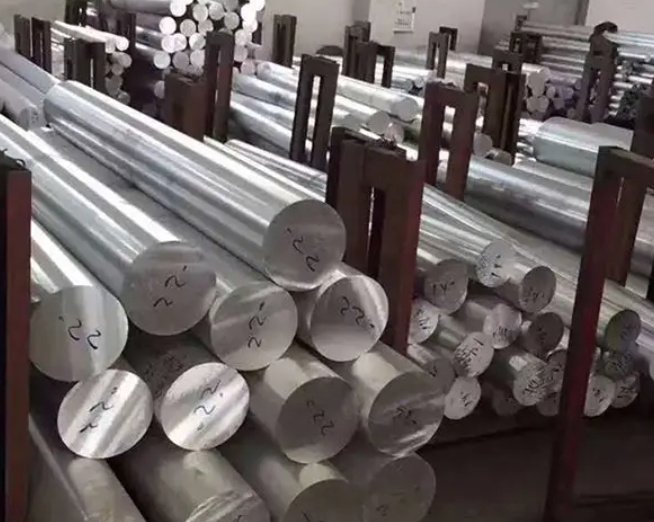
Hastelloy is a family of high-performance nickel-based corrosion-resistant superalloys widely adopted in chemical processing, flue gas desulfurization, nuclear energy and other harsh industrial scenarios. Many engineering teams face frequent processing failures, post-weld corrosion degradation and unexpected performance loss when working with this material, mostly due to a lack of systematic understanding of its core composition rules and standardized operation specifications. This guide breaks down the elemental composition logic, practical machining best practices and field-verified welding tips, with real process data to help teams avoid common costly mistakes.
1. Core Chemical Composition of Common Hastelloy Grades
All Hastelloy grades use nickel as the base matrix, with carefully calibrated additions of chromium, molybdenum, tungsten and other trace elements to target different corrosion environments. Unlike general stainless steels, the strict control of carbon and silicon content in modern low-impurity Hastelloy variants directly determines its post-processing corrosion resistance and high-temperature stability.
The most widely used grade Hastelloy C-276 has a typical composition of 57% Ni, 14.5-16.5% Cr, 15-17% Mo and 3-4.5% W, which balances excellent resistance to both reducing and oxidizing media. For B-series grades optimized for pure hydrochloric acid service, the chromium content is reduced to below 1% while molybdenum is raised to over 26%, delivering stable performance in boiling full-concentration hydrochloric acid.
Composition comparison of 4 mainstream Hastelloy grades
- Hastelloy B-2: Ni ≥65%, Mo 26-30%, C ≤0.02%, no intentional Cr addition
- Hastelloy C-22: Ni ~56%, Cr 20-22.5%, Mo 12.5-14.5%, W 2.5-3.5%
- Hastelloy C-276: Ni ~57%, Cr 14.5-16.5%, Mo 15-17%, W 3-4.5%
- Hastelloy N: Ni ≥70%, Cr 6-8%, Mo 15-18%, strict control of impurity elements for molten salt service
2. Practical Machining Tips for Hastelloy
Hastelloy features rapid work hardening, low thermal conductivity and high tool wear rate, which makes it far more challenging to machine than ordinary 304 or 316 stainless steel. Many workshops use standard stainless steel cutting parameters directly on Hastelloy, leading to burnt tools, dimensional deviation and severe surface residual stress that damages the final component’s corrosion performance.
Published dry CNC milling test data for Hastelloy C-276 shows that the optimal parameter combination for PVD-coated inserts is cutting speed 40 m/min, feed rate 0.08 mm per tooth and depth of cut 1 mm, which delivers a surface roughness of 0.676 μm, material removal rate of 1.445 cc/min and controlled tool wear under 141 μm. This set of parameters can reduce tool change frequency by 60% compared with improperly selected high-speed cutting schemes.
Additional proven machining tips include using rigid machine tools with sufficient power, keeping the cutting edge engaged continuously to avoid work hardening layers, using high-pressure coolant to take away cutting heat in time, and arranging intermediate stress-relief annealing after 30% cold deformation to prevent part cracking.
3. Field-Verified Welding Best Practices
Welding is the most critical process that directly determines the final service life of Hastelloy components. Improper welding operations can cause harmful intermetallic phase precipitation in the heat-affected zone, leading to severe intergranular corrosion in subsequent corrosive service, even if the base material itself meets all standard requirements.
Always select GTAW (TIG) as the preferred welding method for thin and medium-thickness Hastelloy parts, and never use oxy-acetylene welding, which will increase carbon and silicon content in the weld and completely degrade local corrosion resistance. The filler metal must match the base material grade, and for mixed dissimilar welding between Hastelloy and stainless steel, use Hastelloy C-276 filler to ensure the weld retains sufficient corrosion resistance.
Post-weld treatment is non-negotiable for critical service parts: perform full solution annealing at 1040-1150°C immediately after welding, then quench within 2 minutes to quickly pass through the 600-870°C sensitization temperature range where brittle Ni4Mo phases precipitate. After cooling, remove surface oxides with a stainless steel wire brush followed by mixed nitric-hydrofluoric acid pickling, to restore the full corrosion resistance of the weld and heat affected zone.
4. Common Process Mistakes to Avoid
Even experienced engineering teams often overlook small details that lead to total Hastelloy component failure. The most frequent mistake is staying for long periods in the 600-870°C temperature range during hot forming or heat treatment, which causes hidden sensitization that cannot be detected by ordinary visual inspection, but leads to rapid corrosion leakage within 3 months of field service.
Other avoidable errors include using carbon steel grinding wheels or iron-containing tools to scratch the Hastelloy surface, which introduces embedded iron impurities that induce pitting corrosion; skipping post-weld solution treatment for high-temperature molten salt or strong hydrochloric acid service; and using standard stainless steel welding parameters that bring excessive heat input and extend the residence time in the dangerous sensitization temperature zone.
Final Summary
Mastering the precise composition characteristics, targeted machining parameters and standardized welding procedures is the core prerequisite to fully unlock Hastelloy’s excellent performance advantages. By following these verified engineering tips, industrial teams can reduce Hastelloy processing scrap rate by over 70%, extend the service life of final components by more than double, and avoid huge economic losses caused by unqualified process quality.