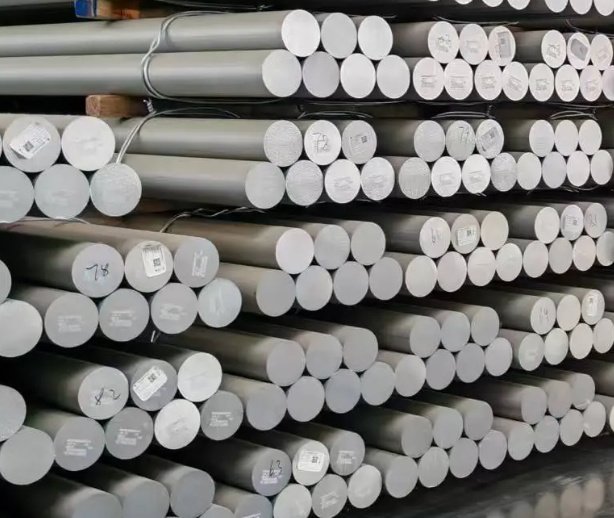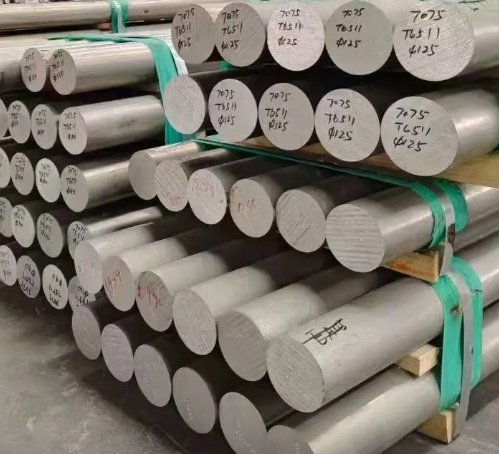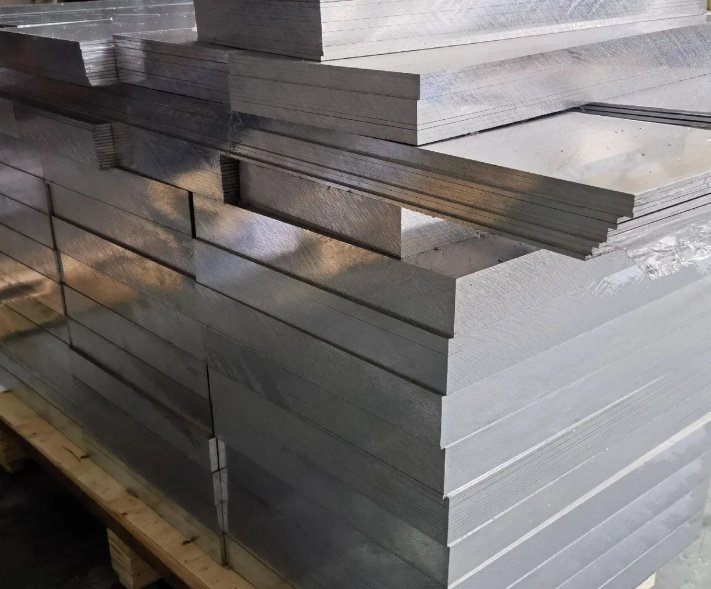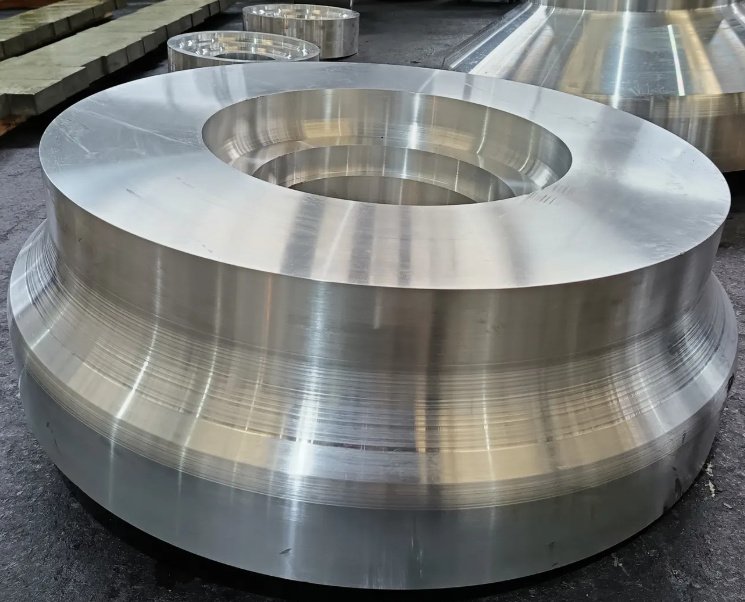
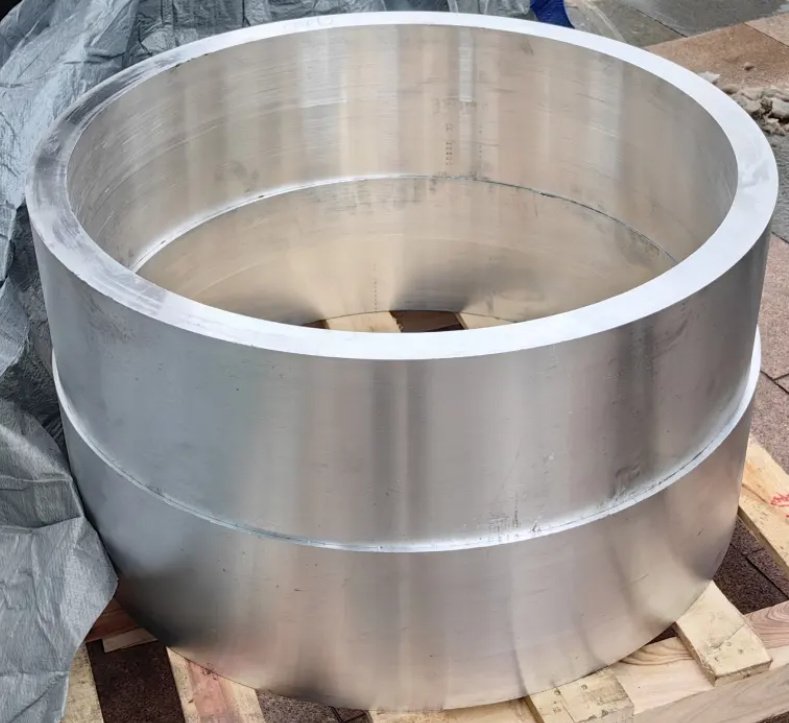
Aluminum 2090 is an aluminum-lithium-copper alloy developed for applications where weight reduction, high elastic modulus, and fatigue-resistant structural performance matter more than low material cost. Also searched as al alloy 2090 and Al 2090, it is most commonly considered for aerospace skins, frames, ribs, stringers, cryogenic structures, and other engineered components requiring a strong stiffness-to-weight ratio.
Unlike conventional 2xxx and 7xxx aluminum alloys, 2090 gains a meaningful density reduction from lithium additions. Each 1 wt.% lithium can reduce aluminum density by roughly 3% and increase elastic modulus by about 6%, which explains why Al-Li alloys are attractive when designers are trying to reduce structural mass without changing the basic manufacturing ecosystem of aluminum plate, sheet, and extrusions.
What Is Aluminum 2090?
Aluminum 2090 is a heat-treatable Al-Cu-Li-Zr alloy. Its strengthening mechanism is mainly precipitation hardening, with copper and lithium forming strengthening phases during aging. Zirconium is added to improve recrystallization resistance and help control grain structure during thermomechanical processing.
| Attribute | Typical Information for Al 2090 |
|---|---|
| Alloy family | Aluminum-lithium-copper, 2xxx-type heat-treatable alloy |
| Common tempers | T81, T83, T86 and product-specific aged tempers |
| Density | Approximately 2.58–2.60 g/cm³, lower than 2024 and 7075 aluminum |
| Elastic modulus | Typically about 76–80 GPa, higher than many conventional aluminum alloys |
| Primary value | Lower weight, higher stiffness, good fatigue performance in qualified structures |
| Typical industries | Aerospace, defense, launch vehicles, cryogenic tanks, high-performance transport |
Typical Chemical Composition of al alloy 2090
The exact composition range should always be verified against the governing procurement specification, such as AMS, ASTM, EN, customer material standard, or mill certificate. The following range is representative for engineering screening and supplier discussions.
| Element | Typical Range or Limit | Function in Aluminum 2090 |
|---|---|---|
| Copper | About 2.4–3.0% | Major precipitation strengthening element |
| Lithium | About 1.9–2.6% | Reduces density and increases modulus |
| Zirconium | About 0.08–0.15% | Improves grain structure stability |
| Magnesium | Usually controlled at low levels | May affect precipitation response and toughness |
| Iron and silicon | Low impurity limits | Controlled to support toughness and fatigue performance |
| Aluminum | Balance | Base metal |
Mechanical and Physical Properties
The property profile of Aluminum 2090 is highly dependent on product form, thickness, temper, grain direction, and quality of heat treatment. Engineers should avoid using a single handbook value for final design without validating longitudinal, long-transverse, and short-transverse data.
| Property | Typical Engineering Range | Design Relevance |
|---|---|---|
| Density | 2.58–2.60 g/cm³ | Approximately 7–9% lighter than 2024 aluminum |
| Elastic modulus | 76–80 GPa | Higher stiffness helps reduce deflection in weight-critical structures |
| Ultimate tensile strength | Approximately 450–540 MPa depending on temper and form | Comparable to selected aerospace 2xxx alloys |
| Yield strength | Approximately 380–500 MPa depending on temper and direction | Important for buckling, bearing, and limit-load calculations |
| Elongation | Often lower than 2024 in some product forms | Influences forming, damage tolerance, and inspection intervals |
| Fatigue performance | Good when grain direction and surface quality are controlled | Useful for aircraft skins, panels, and cyclically loaded members |
A practical design advantage is specific stiffness. If a component is stiffness-limited rather than strength-limited, Al 2090 can sometimes reduce mass without reducing panel rigidity. For example, replacing a 2024-T3 sheet panel with an optimized 2090 design may support a mass reduction in the approximate 5–8% range, provided that buckling, fastener bearing, fracture toughness, and corrosion behavior are all requalified.
Aluminum 2090 vs 2024, 7075 and Other Aerospace Alloys
Searchers comparing Aluminum 2090 usually want to know whether the alloy is a direct substitute for 2024 or 7075. The answer is: not directly. It can provide measurable weight and stiffness benefits, but it also brings qualification, procurement, forming, and anisotropy considerations.
| Alloy | Density | Strength Profile | Key Advantage | Key Limitation |
|---|---|---|---|---|
| Aluminum 2090 | About 2.59 g/cm³ | High strength in aged tempers | Lower density and higher modulus | Qualification complexity, anisotropy, limited availability |
| 2024 | About 2.78 g/cm³ | Excellent damage-tolerant aerospace sheet performance | Established supply chain and design database | Higher density and lower modulus than Al-Li alloys |
| 7075 | About 2.81 g/cm³ | Very high strength, especially T6/T73 variants | High static strength for fittings and heavily loaded parts | Corrosion and SCC concerns depending on temper |
| 7050 | About 2.83 g/cm³ | High strength with better thick-section behavior than 7075 | Strong aerospace plate choice | Heavier than 2090 and not a high-modulus Al-Li alloy |
| 2195 | About 2.70 g/cm³ | High-strength Al-Li alloy for cryogenic tankage | Excellent for selected launch vehicle applications | Different weldability and processing qualification path |
For aerospace buyers, the most important comparison is not only tensile strength. It is the total certified performance package: density, modulus, fracture toughness, fatigue crack growth, corrosion resistance, exfoliation behavior, availability by thickness, and whether the mill can supply repeatable material under the required specification.
Engineering note: when 2090 is more attractive than 2024
Aluminum 2090 is more attractive when the structure is stiffness-driven, weight-sensitive, and produced under a controlled qualification program. It is less attractive for low-volume parts where existing 2024 or 7075 designs already meet performance targets and certification cost dominates the business case.
Applications and Engineering Use Cases
Aluminum 2090 was designed for advanced aerospace structures where mass savings can translate into payload, range, fuel efficiency, or launch cost benefits. It is most relevant in applications where a lower-density aluminum alloy can be used without switching to titanium or composite materials.
- Aircraft fuselage skins and stiffened panels requiring high specific stiffness
- Wing and empennage components where fatigue and buckling must be balanced
- Ribs, frames, bulkheads, and stringers in weight-critical assemblies
- Launch vehicle structures and cryogenic support hardware after qualification
- Defense and high-performance transport components requiring reduced mass
- Prototype lightweight structures where aluminum fabrication routes are preferred over composite tooling
In a real engineering trade study, replacing a 2024 aluminum panel with al alloy 2090 should include finite element analysis, coupon testing, fastener joint testing, and environmental exposure data. A theoretical 8% density reduction does not automatically equal an 8% aircraft-level mass reduction because joints, reinforcements, allowable stresses, and inspection requirements may change.
Machining, Forming and Fabrication Guidance
Aluminum 2090 can be machined using conventional aluminum machining practices, but it should be treated as a high-value aerospace alloy rather than commodity aluminum. Process control matters because surface finish, residual stress, and heat input can affect fatigue and dimensional stability.
Machining Recommendations
- Use sharp carbide tools with polished flutes to reduce built-up edge.
- Apply high-pressure coolant or mist lubrication where allowed to support chip evacuation.
- Use climb milling for better surface finish when machine rigidity permits.
- Avoid excessive heat input, especially during heavy roughing or thin-wall machining.
- Plan stress-relief and intermediate machining steps for precision aerospace parts.
- Deburr carefully because fatigue-critical edges require controlled radii and clean surfaces.
For procurement teams, machining cost should be included in the total material decision. The alloy price is only one part of the real component cost; scrap rate, tool wear, inspection time, nonconformance risk, and heat-treatment documentation can be equally important.
Forming and Joining Considerations
Formability can be more restrictive than conventional 2024 sheet in certain tempers. Designers should confirm minimum bend radius, forming direction, and allowable cold work before committing to production tooling. Directionality is especially important because Al-Li alloys may show anisotropic properties.
Fusion welding of Aluminum 2090 is generally challenging due to hot cracking risk, lithium loss, porosity, and property degradation in the heat-affected zone. Mechanical fastening, adhesive bonding with qualification, and friction stir welding may be evaluated depending on the application. Any welded or bonded structure should be qualified by mechanical testing, corrosion testing, and nondestructive inspection procedures.
Machining problem example: thin-wall aerospace bracket
A thin-wall bracket machined from Al 2090 plate may distort after roughing if residual stresses are not managed. A practical route is to rough both sides symmetrically, leave machining stock, allow stabilization, then finish with balanced tool paths. In production, this can reduce out-of-flatness and lower inspection rejection risk, especially on parts with wall thickness below 3 mm.
Corrosion, Fatigue and Damage Tolerance
Aluminum 2090 offers useful aerospace performance, but corrosion and damage tolerance must be evaluated with the same rigor used for other high-strength aluminum alloys. Exfoliation corrosion, stress-corrosion cracking, fatigue crack growth, and short-transverse toughness are common topics in material qualification.
- Use appropriate conversion coating, anodizing, primer, or paint systems where required.
- Confirm compatibility with fasteners to reduce galvanic corrosion risk.
- Specify grain direction on drawings for fracture-critical parts.
- Request fracture toughness and fatigue data for the exact product form and thickness.
- Control surface roughness and tool marks on fatigue-critical machined features.
In aerospace design, a lower-density alloy is valuable only if it maintains inspection intervals and safety margins. For this reason, damage tolerance data should be product-specific, not assumed from a generic 2090 datasheet.
Procurement Checklist for Aluminum 2090 Buyers
Buyers sourcing Aluminum 2090 should focus on traceability, specification compliance, and realistic lead time. This alloy may not be stocked as widely as 6061, 2024, 7050, or 7075, so early supplier engagement is recommended for plate, sheet, extrusions, and forged product forms.
| Buyer Checkpoint | Why It Matters |
|---|---|
| Confirm exact specification | AMS, ASTM, customer standard, or aerospace drawing requirements may differ |
| Verify temper and product form | T81, T83, plate, sheet, extrusion, or forging properties are not interchangeable |
| Request mill test certificate | Chemistry, tensile data, heat number, and traceability are essential |
| Check grain direction marking | Critical for machining layouts and fracture-sensitive parts |
| Ask about ultrasonic inspection | Important for thick plate and critical aerospace components |
| Confirm availability and MOQ | Al-Li alloys may require longer lead times and minimum production quantities |
| Review export control and end-use limits | Aerospace and defense applications may require compliance screening |
A strong purchase order should identify alloy, temper, thickness, dimensions, tolerance standard, inspection class, certification requirements, packing requirements, and any restrictions on substitutions. If the drawing states Al 2090, substituting another Al-Li alloy or a 2xxx alloy should not be done without engineering approval.
When Should Engineers Choose Aluminum 2090?
Aluminum 2090 is a strong candidate when the project needs lightweight metallic construction, higher stiffness than conventional aluminum, and an aerospace-grade qualification path. It is not usually the best choice for general fabrication, low-cost machining, or applications where off-the-shelf availability is more important than weight savings.
- Choose it when density reduction and stiffness improvement have measurable system value.
- Evaluate it carefully when fracture toughness, forming, or short-transverse properties are design drivers.
- Avoid casual substitution for 2024 or 7075 without complete engineering review.
- Plan early for machining trials, corrosion protection, inspection, and supplier qualification.
For the right aerospace or high-performance structure, al alloy 2090 offers a rare combination of low density, high modulus, and useful strength. Its best results come from disciplined design, qualified material sourcing, controlled processing, and validation testing based on the exact product form used in production.