2011 Aluminum, also written as Al 2011 or al alloy 2011, is a high-machinability aluminum-copper alloy widely used for precision turned components, screw-machine parts, fittings, bushings, fasteners and small mechanical hardware. It is best known as a free-machining aluminum-copper alloy that produces short, broken chips and supports high production speeds on CNC lathes, Swiss-type machines and automatic screw machines.
Aluminum 2011 is selected when the engineering priority is dimensional repeatability, high material removal rate, good surface finish and predictable chip evacuation. It is not normally chosen for welded structures, marine exposure or decorative anodized parts where color uniformity is critical.
What Is 2011 Aluminum?
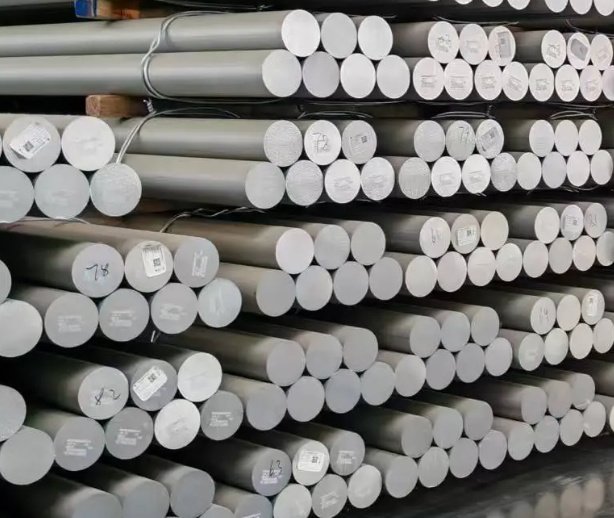
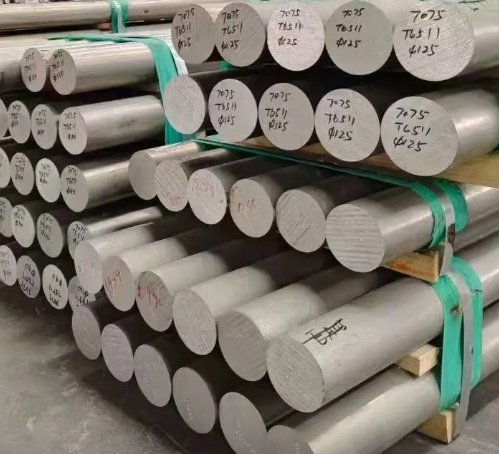
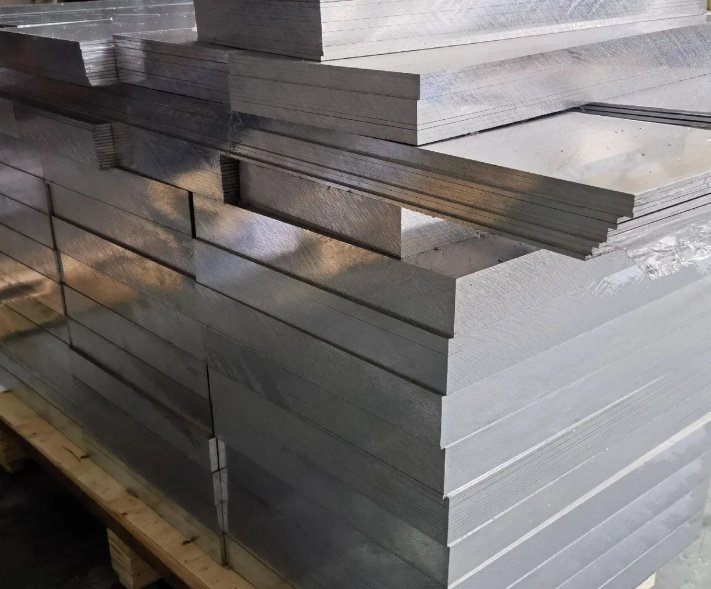
2011 Aluminum is a heat-treatable wrought aluminum alloy in the 2xxx series. Its main alloying element is copper, with small additions that improve machinability. In many supply chains, Aluminum 2011 is available as round bar, hex bar, square bar and extruded shapes, especially for automatic turning operations.
The alloy is commonly specified under standards such as ASTM B211, EN AW-2011, AA 2011 and other regional or customer-specific material specifications. Depending on the market, equivalent references may include 2011-T3, 2011-T6 and 2011-T8 bar stock.
Typical Chemical Composition of Al 2011
The exact chemistry must be verified against the applicable standard and mill certificate. The table below shows typical composition ranges used to describe al alloy 2011.
| Element | Typical Range by Weight | Function in Aluminum 2011 |
|---|---|---|
| Aluminum | Balance | Base metal, low density and good thermal conductivity |
| Copper | 5.0% - 6.0% | Increases strength and heat-treat response |
| Bismuth | 0.20% - 0.60% | Improves chip breaking and machinability |
| Lead | 0.20% - 0.60% | Enhances free-machining behavior; check regulatory restrictions |
| Iron | Up to about 0.7% | Impurity/control element affecting microstructure |
| Silicon | Up to about 0.4% | May influence casting/extrusion behavior and machinability |
| Zinc, manganese, magnesium, titanium | Minor limits | Controlled to meet alloy standard requirements |
Mechanical and Physical Properties
Properties vary with temper, product form, diameter, heat treatment route and testing standard. The following values are typical engineering references for 2011-T3 and 2011-T6 bar products, not guaranteed design minimums.
| Property | Typical 2011-T3 | Typical 2011-T6 | Engineering Note |
|---|---|---|---|
| Density | 2.82 g/cm³ | 2.82 g/cm³ | Higher than 6061 due to copper content, still lightweight |
| Ultimate tensile strength | About 310 - 380 MPa | About 380 - 430 MPa | Useful for compact machined parts |
| Yield strength | About 170 - 280 MPa | About 290 - 350 MPa | Temper and bar size strongly affect results |
| Elongation | About 10% - 15% | About 6% - 12% | Lower ductility than many 6xxx alloys |
| Brinell hardness | About 95 HB | About 110 - 125 HB | Supports clean turning and threading |
| Thermal conductivity | About 150 - 170 W/m·K | About 150 - 170 W/m·K | Good heat dissipation for small mechanical components |
| Machinability rating | About 90% relative rating | About 90% relative rating | One of the most machinable aluminum alloys |
Why Engineers Choose Aluminum 2011
The main advantage of Aluminum 2011 is its ability to support fast cycle times and excellent chip control. In turning, drilling, reaming and threading, the alloy tends to form short chips rather than long stringy swarf. This reduces chip wrapping, tool interruption, machine downtime and manual chip removal.
- Excellent machinability for CNC turning, automatic screw machining and Swiss machining
- Good dimensional stability in high-volume production when stock and temper are controlled
- High strength-to-weight ratio for compact precision components
- Clean thread formation compared with many softer aluminum grades
- Good surface finish after turning, boring, facing and milling
- Available in bar stock forms suitable for continuous production
Limitations: When Al 2011 Is Not the Best Choice
Al 2011 is not a universal aluminum grade. Its copper content improves strength and machinability, but it reduces corrosion resistance compared with 6061, 6082 or 6063. It is also generally not recommended for welded structures because welding can cause cracking, reduced mechanical performance and poor corrosion behavior in the heat-affected zone.
- Lower corrosion resistance than 5xxx and 6xxx aluminum alloys
- Poor weldability compared with 6061, 5052 and 5083
- Decorative anodizing may produce uneven, gray or yellowish tones
- Lead-containing versions may be restricted by RoHS, REACH or customer compliance rules
- Not ideal for marine, chemical or outdoor high-corrosion environments unless protected
Machining Guidance for 2011 Aluminum
Aluminum 2011 is often specified for screw-machine parts where productivity is more important than weldability or cosmetic anodizing. Its free-machining behavior allows aggressive material removal, but process control still matters.
CNC Turning and Swiss Machining
For turning small diameters, 2011 Aluminum typically supports high spindle speeds, sharp polished carbide inserts, positive rake geometry and light cutting oil or water-soluble coolant. In Swiss-type machining, the alloy helps reduce chip nesting around guide bushings and live-tooling stations.
- Use sharp tools with polished flutes or aluminum-specific geometry.
- Use chip breakers suited to shallow cuts and high feed stability.
- Maintain coolant concentration to prevent built-up edge on fine finishes.
- For close-tolerance parts, verify bar straightness, diameter tolerance and batch consistency.
Drilling, Tapping and Threading
Al 2011 performs well in drilled and tapped holes because chips break easily and evacuation is reliable. For small blind holes, peck cycles can often be reduced compared with 6061, but final parameters should be validated by tool life trials.
| Operation | 2011 Aluminum Behavior | Process Recommendation |
|---|---|---|
| Turning | Short chips, good finish, high speed capability | Use polished carbide and stable workholding |
| Drilling | Good chip evacuation, low cutting force | Use sharp drills and adequate coolant flow |
| Tapping | Clean internal threads with low torque | Control lubricant and tap geometry for blind holes |
| Milling | Good surface finish but less common than turning use | Use high helix end mills and avoid chip recutting |
| Reaming | Stable sizing when stock allowance is controlled | Keep reamer sharp and maintain consistent pre-hole size |
2011 Aluminum vs 6061, 2024, 7075 and 6262
Choosing an aluminum alloy is usually a trade-off among machinability, strength, corrosion resistance, weldability, finish requirements and regulatory compliance. The comparison below helps match Aluminum 2011 to common design intents.
| Alloy | Main Advantage | Machinability | Corrosion Resistance | Weldability | Best-Fit Applications |
|---|---|---|---|---|---|
| 2011 Aluminum | Free machining and high productivity | Excellent | Fair | Poor | Turned fittings, fasteners, bushings, precision hardware |
| 6061 Aluminum | Balanced strength, corrosion resistance and availability | Good | Good | Good | General machined parts, frames, brackets, welded structures |
| 2024 Aluminum | High fatigue strength and aerospace heritage | Good | Fair to poor unless clad or protected | Poor | Aerospace fittings, structural components, high-strength plates |
| 7075 Aluminum | Very high strength | Good | Moderate | Poor | High-load aerospace and performance mechanical parts |
| 6262 Aluminum | Machinability with better corrosion resistance than 2011 | Very good | Good | Fair to good depending on temper | Machined parts requiring better anodizing or corrosion behavior |
If the part must be welded or exposed outdoors without robust surface protection, 6061 or 6082 may be a safer choice. If maximum turning productivity is the main target and the part is protected from severe corrosion, al alloy 2011 is often the more efficient material.
Common Applications of Al Alloy 2011
- Automatic screw-machine components
- Precision turned shafts and pins
- Threaded inserts, nuts, collars and spacers
- Hydraulic and pneumatic fittings used in controlled environments
- Instrument parts and optical hardware
- Electrical and electronic connector components
- Small bushings, stops, rollers and valve parts
- Camera, sensor, measuring equipment and automation hardware
Typical part features include external threads, internal threads, grooves, cross holes, small bores, chamfers, wrench flats and close-tolerance diameters. The alloy is especially valuable when these features are produced repeatedly in high volumes.
Surface Finishing, Anodizing and Plating Considerations
Aluminum 2011 can be chemically treated, plated or anodized, but it is not an anodizing-first material. Because of copper and free-machining additives, anodized color may be darker, less uniform or less decorative than 6061 or 6063. For functional corrosion protection, engineered coatings, conversion coatings or plating systems may be considered after compatibility testing.
| Finish Method | Suitability for 2011 Aluminum | Key Risk |
|---|---|---|
| Clear anodizing | Possible but not ideal for cosmetic surfaces | Color variation and gray/yellow cast |
| Hard anodizing | Possible for wear resistance after testing | Coating uniformity and dimensional build-up |
| Chemical conversion coating | Often used for functional protection | Specification and compliance requirements |
| Electroless nickel plating | Useful where wear or corrosion performance is needed | Pre-treatment quality and adhesion control |
| Painting or powder coating | Possible with correct preparation | Surface contamination and adhesion variability |
Engineering Problem Example: Reducing Chip-Related Downtime
A production team machining small threaded spacers from 6061-T6 experienced frequent chip wrapping around the toolholder during high-speed turning. The parts required tight threads, clean chamfers and a bright machined finish, but they did not require welding or outdoor corrosion exposure.
After trials with Aluminum 2011-T3 bar, the process achieved more consistent chip breaking and reduced operator intervention. In similar production environments, switching from 6061 to 2011 can reduce chip-clearing interruptions by 30% or more and may improve cycle time by 10% - 25%, depending on part geometry, toolpath, machine rigidity and inspection requirements. These figures are realistic process targets, not universal guarantees.
Procurement and Specification Notes
For critical parts, buyers and engineers should verify temper, source certification, and diameter tolerance before approving production material. The same alloy designation can behave differently if bar size, temper, straightness, residual stress or supplier route changes.
Buyer perspective: what to confirm before ordering Aluminum 2011 bar
- Confirm the required standard, such as ASTM B211, EN AW-2011 or customer-specific specification.
- Ask for mill test certificates showing chemistry, temper and mechanical properties.
- Check whether lead-containing material is acceptable under RoHS, REACH or internal compliance rules.
- Specify bar form, diameter tolerance, straightness, surface condition and cut length if relevant.
- Clarify whether the part will be anodized, plated or conversion coated.
Engineer perspective: when to approve Al 2011 in a drawing
- Use it for high-volume turned parts where machinability drives cost.
- Avoid it for welded parts, marine service or highly decorative anodized surfaces.
- Specify temper clearly, such as 2011-T3 or 2011-T6, rather than only writing “2011 aluminum.”
- Define finish requirements and corrosion protection early in the design phase.
- Validate fatigue, thread strength and coating performance with representative prototypes.
Manufacturing perspective: common production controls
- Use consistent bar lots for long production runs to reduce offset adjustments.
- Track tool life separately for turning inserts, drills, taps and reamers.
- Monitor burr formation at cross holes, undercuts and thread runouts.
- Control coolant filtration because fine aluminum chips can affect surface finish.
- Perform first-article inspection after any material lot or tool geometry change.
Summary: Is 2011 Aluminum Right for Your Part?
2011 Aluminum is one of the most productive aluminum alloys for precision machining. It is an excellent choice for small, complex, high-volume turned components where clean chips, stable threads and fast production matter. Compared with 6061, it usually offers better machinability but lower corrosion resistance and poor weldability. Compared with 7075, it is easier to machine but not as strong. Compared with 6262, it may provide outstanding chip control, while 6262 may offer a better balance when corrosion resistance or anodizing quality is more important.
For engineered components, the best use of Al 2011 is clear: choose it when machining efficiency is the primary requirement, validate compliance and finishing requirements, and specify the correct temper and product standard on the drawing or purchase order.