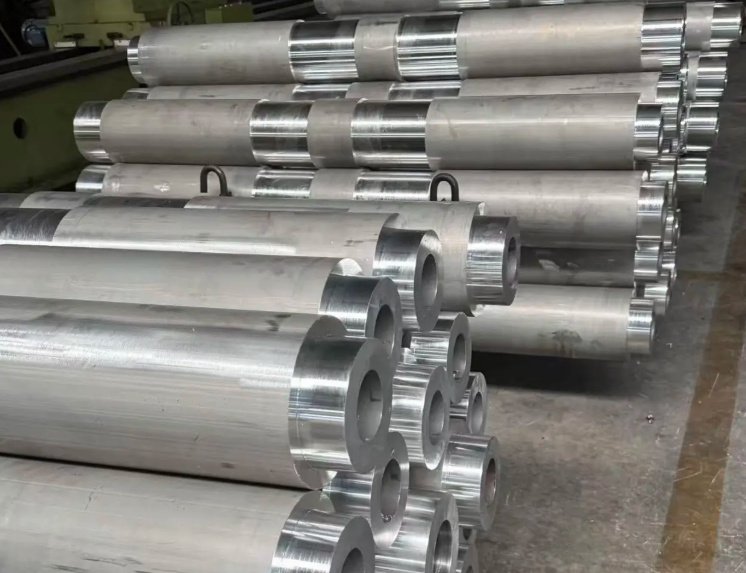
Aluminum 7005, also written as Al 7005 or al alloy 7005, is a medium-to-high-strength aluminum-zinc-magnesium alloy used where strength, weldability and structural weight reduction must be balanced. It is especially common in extruded tubing, bicycle frames, welded assemblies, transport structures, sports equipment and precision fabricated parts.
Compared with 6061 aluminum, 7005 aluminum normally offers higher strength and better post-weld strength recovery. Compared with 7075 aluminum, it is easier to weld and fabricate, although it does not reach the very high strength level of 7075-T6. For engineers, buyers and fabricators, the key question is not simply “Is 7005 strong?” but whether its temper, extrusion quality, weld procedure, machining response and corrosion protection match the service environment.
What Is 7005 Aluminum?
7005 aluminum is a heat-treatable 7xxx-series aluminum alloy based mainly on aluminum, zinc and magnesium. In practical terms, it is a structural alloy designed for extrusions and welded components rather than a maximum-strength aerospace plate alloy. The alloy gains strength through precipitation hardening, where fine MgZn2-type precipitates form during aging.
The material is valued because it is a high-strength, weldable 7xxx aluminum alloy that can recover useful strength after welding through natural or artificial aging. This makes it attractive for frames and assemblies where full solution heat treatment after welding is difficult, expensive or dimensionally risky.
7005 Aluminum Chemical Composition
The exact composition range depends on the applicable standard, mill practice and product form. The table below shows typical published ranges for 7005 / EN AW-7005. Always confirm the certified mill test report for production orders.
| Element | Typical Range by Weight | Function in Al 7005 |
|---|---|---|
| Aluminum, Al | Balance | Base metal, low density and corrosion-resistant oxide film |
| Zinc, Zn | About 4.0% - 5.0% | Main strengthening element in 7xxx alloys |
| Magnesium, Mg | About 1.0% - 1.8% | Combines with zinc for precipitation hardening |
| Manganese, Mn | About 0.2% - 0.7% | Improves strength, grain control and toughness |
| Chromium and/or Zirconium | Small controlled additions | Grain structure control and resistance to recrystallization |
| Silicon, Si | Typically limited | Impurity control; excessive levels can reduce toughness |
| Iron, Fe | Typically limited | Impurity control; affects intermetallic particles and finish |
| Copper, Cu | Low compared with 7075 | Lower copper supports better weldability and corrosion behavior |
Because Al 7005 contains significantly less copper than many high-strength 7xxx alloys, it is generally more weldable and less sensitive to corrosion issues than 7075-type alloys. However, it still requires correct filler selection, heat input control and surface protection in aggressive environments.
Mechanical and Physical Properties of Aluminum 7005
Mechanical properties vary by temper, product thickness, extrusion ratio, quench rate, artificial aging practice and testing direction. The values below are representative engineering ranges, not a substitute for certified design data.
| Property | Typical 7005-T6 / T5 Range | Engineering Meaning |
|---|---|---|
| Density | About 2.78 g/cm3 | Roughly one-third the density of carbon steel |
| Ultimate tensile strength | About 330 - 400 MPa | High for a weldable aluminum extrusion alloy |
| Yield strength | About 270 - 350 MPa | Useful for lightweight structural design |
| Elongation | About 8% - 15% | Moderate ductility, affected by section and temper |
| Elastic modulus | About 70 - 72 GPa | Similar stiffness to most aluminum alloys |
| Thermal conductivity | About 130 - 160 W/m·K | Lower than pure aluminum but useful for heat dissipation |
| Melting range | Approximately 600°C - 650°C | Important for welding, brazing limits and thermal processing |
For structural calculations, designers should verify certificate values and design allowables rather than relying only on catalog averages. Fatigue strength, weld-joint efficiency and heat-affected-zone behavior can control the design even when base-metal tensile strength looks adequate.
Common Tempers and Product Forms
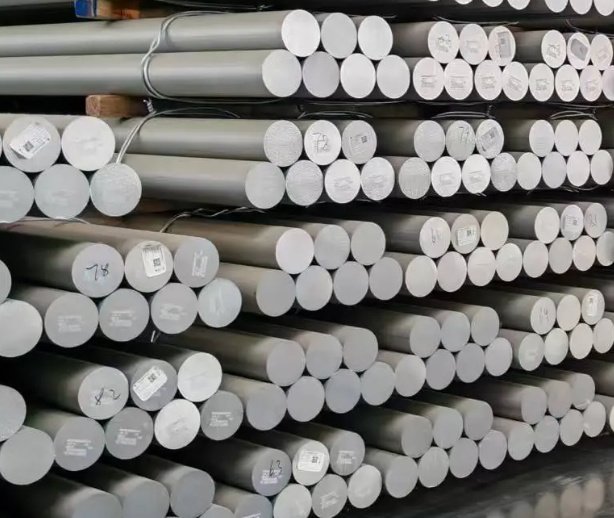
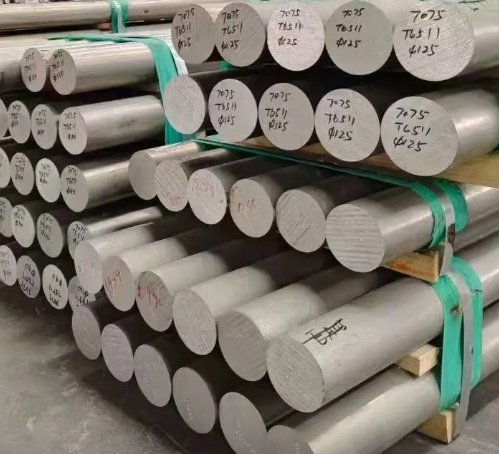
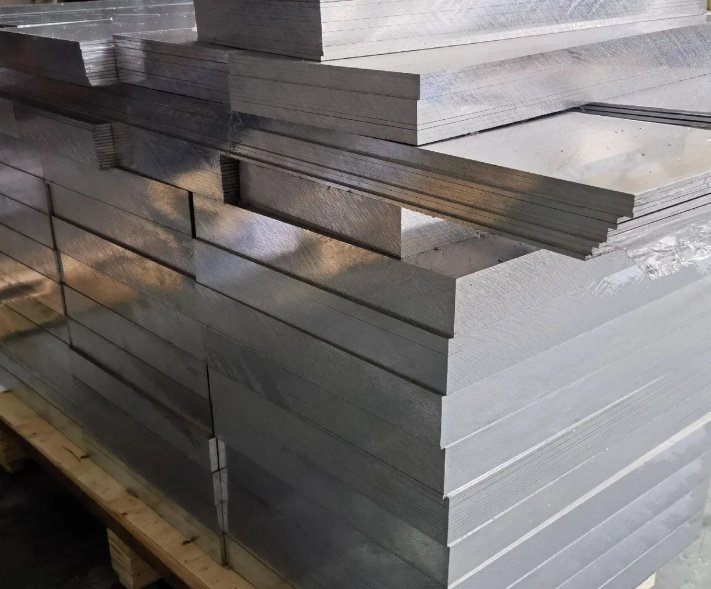
7005 aluminum is most often supplied as extruded tube, bar, profile and structural shape. Plate and sheet may be less common than extrusion products, depending on region and supplier capability.
| Temper | Description | Typical Use |
|---|---|---|
| 7005-O | Annealed condition with low strength and high formability | Forming trials, bending before heat treatment |
| 7005-T5 | Cooled from elevated-temperature shaping and artificially aged | Extrusions, frames and general structural profiles |
| 7005-T6 | Solution heat treated and artificially aged, where applicable | Higher-strength structural components |
| 7005-T53 / T56 | Special aging and stress-relief variants depending on standard | Welded structures, dimensional stability and improved performance targets |
Engineer and buyer notes on temper selection
For extruded and welded parts, the specified temper should match the manufacturing route. If the part will be heavily welded, request data for weld-zone strength after natural aging or artificial aging, not only base-metal T6 values.
- For machined billet or bar, T6 is usually preferred for strength and chip control.
- For bent tubing, confirm minimum bend radius and whether bending occurs before or after aging.
- For welded frames, ask whether the supplier qualifies mechanical properties after welding and aging.
- For critical assemblies, specify dimensional tolerances after heat treatment, not only as-extruded tolerances.
Aluminum 7005 vs 6061, 7075 and 7020
Searchers often compare al alloy 7005 with 6061 and 7075 because all three are used in lightweight components. The best alloy depends on whether the priority is strength, weldability, machinability, corrosion resistance, availability or cost.
| Alloy | Relative Strength | Weldability | Machinability | Corrosion Resistance | Best Fit |
|---|---|---|---|---|---|
| 7005 | Higher than 6061, lower than 7075 | Good for a 7xxx alloy | Good in aged tempers | Good with proper finish | Welded high-strength extrusions and frames |
| 6061 | Medium | Excellent | Good | Very good | General-purpose structural parts and easy fabrication |
| 7075 | Very high | Poor for fusion welding | Excellent | Moderate; stress-corrosion concerns in some tempers | High-strength machined parts, aerospace fittings and tooling |
| 7020 | Similar to 7005 | Good | Good | Good | European welded structures and transport applications |
7005 vs 6061 Aluminum
6061 is easier to source globally, has excellent corrosion resistance and is widely accepted for machining, extrusion and welding. However, 6061 loses a large portion of its T6 strength in the heat-affected zone after welding unless it is properly solution heat treated and artificially aged again. 7005 is often selected when post-weld recovery is a design advantage, especially in welded frames and tubes.
7005 vs 7075 Aluminum
7075 is stronger but less weldable. It is ideal for high-strength machined components where welding is not required. 7005 is the more practical choice when the component must be welded, extruded into thin-wall profiles or fabricated into a lightweight structure.
7005 vs 7020 Aluminum
7020 and 7005 occupy a similar engineering space: weldable Al-Zn-Mg structural alloys with useful post-weld strength. Availability often drives the decision. 7020 is common in some European specifications, while 7005 is frequently seen in extruded sports, transport and frame products.
Welding, Heat Treatment and Fabrication
7005 aluminum is more weldable than copper-rich 7xxx alloys such as 7075. TIG and MIG welding are both used, but procedure qualification is important because excessive heat input can reduce mechanical properties, increase distortion and affect fatigue life.
- Common welding processes: GTAW/TIG and GMAW/MIG.
- Typical filler choices: 5356 or other suitable Al-Mg filler, depending on strength, ductility and corrosion requirements.
- Key welding risk: heat-affected-zone softening and residual stress.
- Post-weld aging: natural aging or artificial aging can restore part of the strength.
- Design consideration: fatigue performance depends strongly on weld toe geometry, surface finish and stress concentration.
In a welded tube assembly, the base metal may meet 300 MPa-class yield strength, but the governing area can be the softened heat-affected zone near the weld. A practical engineering approach is to test representative welded coupons after the same aging cycle used in production. This gives a more reliable design basis than assuming unwelded T6 properties.
Real engineering issue: welded frame strength recovery
A typical problem in lightweight welded frames is that the design passes static analysis using base-metal properties but fails fatigue or proof testing near the weld. With 6061-T6, the weld area can require full post-weld solution treatment and aging to recover strength. With 7005, manufacturers often use controlled aging after welding to regain useful strength without a full solution heat treatment cycle.
For example, if an extruded tube assembly is designed around a 270 - 320 MPa base-metal yield range, the engineer should separately define an allowable value for the aged weld zone. Testing welded coupons before and after aging can quantify the recovery and reduce overdesign, rejected parts and field failures.
Machining 7005 Aluminum
7005 aluminum machines well in hardened or aged tempers. It is commonly milled, drilled, turned, bored, reamed and tapped for lightweight structural components. As with other aluminum alloys, the main machining concerns are chip evacuation, built-up edge, dimensional movement from residual stress and surface finish consistency.
Machining is easiest in T6 or similar aged tempers because the material is stronger and less gummy than annealed stock. Annealed 7005 can smear during cutting, producing rougher surfaces and less predictable burr formation.
| Machining Factor | Practical Recommendation |
|---|---|
| Tool material | Sharp carbide tools are preferred for production; high-speed steel can work for lower-volume operations. |
| Tool geometry | Use polished flutes, positive rake and geometry designed for aluminum to reduce built-up edge. |
| Coolant | Flood coolant or mist lubrication improves chip evacuation and surface finish. |
| Cutting speed | Carbide milling commonly uses high surface speeds; actual values depend on tool diameter, rigidity and coolant. |
| Workholding | Thin-wall extrusions require broad support to prevent vibration and distortion. |
| Finishing | Use deburring and edge-break control, especially before anodizing or fatigue-critical service. |
For precision CNC components, stress relief and process sequencing matter. Rough machining can release extrusion or heat-treatment stresses, so high-tolerance parts may need a roughing step, stabilization period or intermediate stress-relief practice before final finishing.
Corrosion Resistance and Surface Finishing
Aluminum 7005 has useful atmospheric corrosion resistance, especially compared with higher-copper 7xxx alloys. However, it is not immune to corrosion, galvanic attack or stress-corrosion cracking in aggressive environments. Protective finishing is recommended for outdoor, marine, road-salt or high-humidity service.
- Anodizing improves surface hardness, appearance and corrosion resistance.
- Powder coating or painting provides strong environmental protection for frames and structures.
- Conversion coating can be used as a pretreatment before painting or bonding.
- Isolation from stainless steel, carbon steel and copper alloys reduces galvanic corrosion risk.
- Drainage holes, sealed joints and clean weld design reduce trapped moisture.
For fatigue-critical parts, surface treatment should be selected with care. Deep scratches, sharp machining marks and poor weld toe finishing can reduce fatigue life more than small differences in base-metal tensile strength.
Applications of 7005 Aluminum
7005 aluminum is used when a component needs better strength than general-purpose 6xxx aluminum while still requiring welding or extrusion. Typical applications include:
- Bicycle frames, e-bike frames and performance tubing
- Motorcycle and powersports components
- Transport structures, rail components and vehicle frames
- High-strength extruded profiles and rectangular tubing
- Sports equipment, climbing and outdoor hardware
- Welded lightweight assemblies
- Precision CNC machined brackets, supports and fixtures
The alloy is most competitive where geometry is extrusion-friendly and welded-joint performance matters. If the part is a non-welded machined block requiring maximum strength, 7075 may be more appropriate. If the part requires the lowest cost and broad availability, 6061 may be sufficient.
Sourcing and Specification Checklist
When purchasing 7005 aluminum, the commercial specification should do more than name the alloy. It should define the product form, temper, mechanical property requirements, dimensional tolerances, finish condition and documentation.
Buyer and engineer checklist for procurement
- Specify alloy designation: 7005, EN AW-7005 or equivalent standard designation.
- Define product form: tube, bar, profile, plate, custom extrusion or machined blank.
- Specify temper: T5, T6 or project-specific aged condition.
- Request mill test certificate with chemistry and mechanical properties.
- Confirm extrusion tolerances, straightness, twist and wall-thickness variation.
- For welded parts, request weld procedure qualification and post-weld aging details.
- For machined parts, define flatness, residual-stress expectations and surface roughness.
- For outdoor service, define anodizing, painting, powder coating or pretreatment requirements.
The best fit for 7005 aluminum is a high-strength welded or extruded structure where 6061 may be marginal and 7075 is impractical because of welding limitations.
Key Takeaways
- Al 7005 is an aluminum-zinc-magnesium alloy with high strength and good weldability for a 7xxx alloy.
- It is commonly used in extrusions, welded tubing, bicycle frames, transport structures and lightweight assemblies.
- Compared with 6061, it usually offers higher strength and better post-weld strength recovery.
- Compared with 7075, it is easier to weld but not as strong in peak-aged conditions.
- Machining performance is good in T6 or aged tempers, especially with sharp carbide tools and proper chip evacuation.
- For engineering use, weld-zone strength, fatigue behavior, corrosion protection and certified mill data are essential.
References and Data Basis
The property ranges and engineering guidance on this page are based on commonly published aluminum industry data and practical fabrication considerations. For final design, use the latest edition of the applicable standard and supplier-certified test results.
- The Aluminum Association, aluminum alloy registration and product standards for wrought aluminum alloys.
- EN 573, Aluminum and aluminum alloys: chemical composition and form of wrought products.
- EN 755, Aluminum and aluminum alloys: extruded rod/bar, tube and profiles.
- ASM Handbook references for aluminum alloy metallurgy, heat treatment, corrosion and joining.
- AWS welding guidance for aluminum alloys and procedure qualification practices.