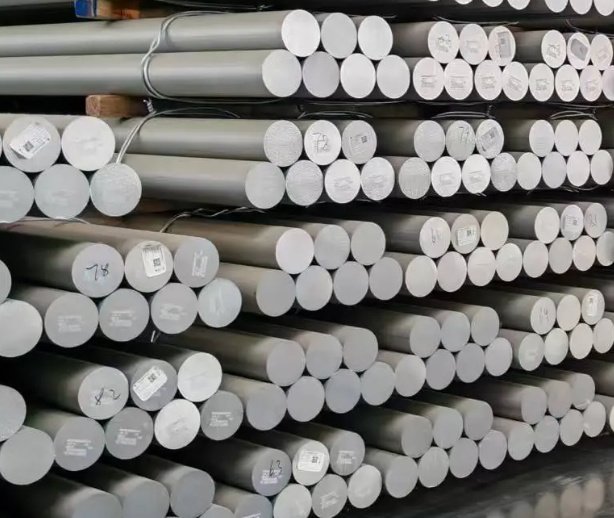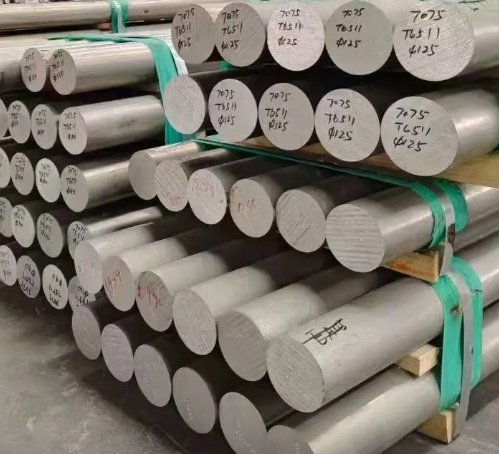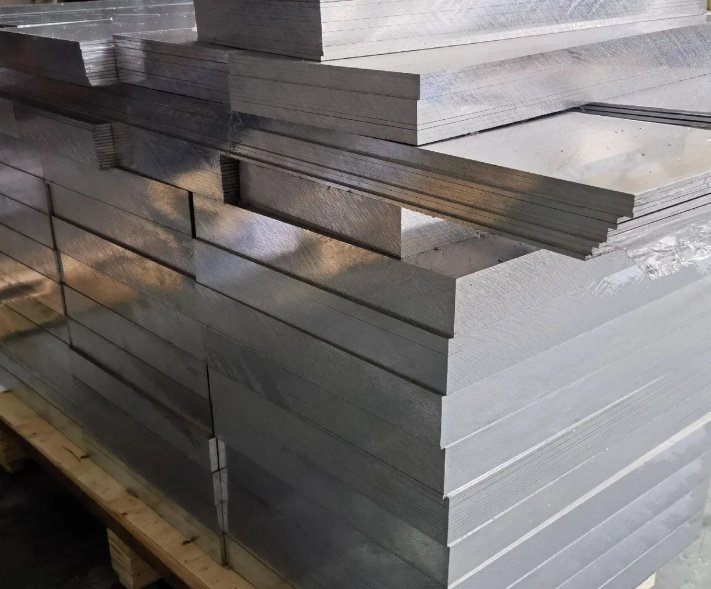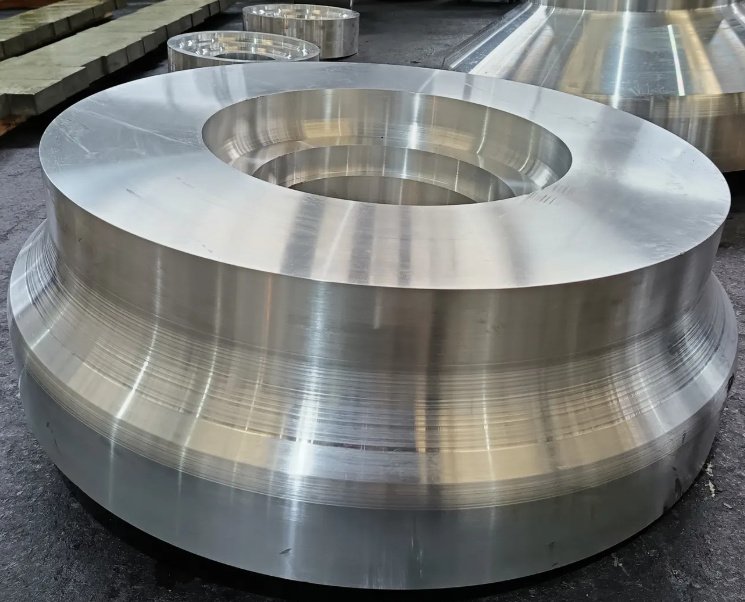
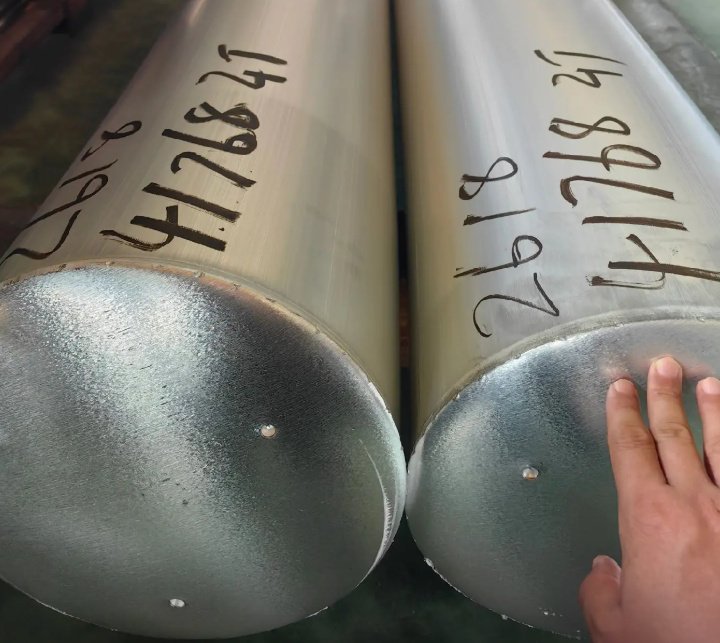
2618 Aluminum is a high-strength, heat-treatable aluminum-copper-magnesium-nickel alloy used where retained mechanical performance at elevated temperature is more important than maximum corrosion resistance. Also searched as Al 2618, al alloy 2618, and Aluminum 2618, this alloy is widely specified for aerospace engine parts, racing pistons, compressor components, and high-duty structural parts exposed to heat, fatigue, and cyclic loading.
For engineers and buyers comparing aluminum alloys, 2618 is best understood as a material designed for high-temperature strength, fatigue resistance, and forged-part reliability. It is commonly supplied as plate, bar, forgings, extrusions, and near-net-shape components, typically in T61, T6, T651, or related heat-treated tempers depending on product form and specification.
What Is 2618 Aluminum?
2618 Aluminum is an age-hardenable 2xxx-series aluminum alloy. Its main strengthening elements are copper and magnesium, while nickel and iron contribute to thermal stability and strength retention at temperatures where many common aluminum alloys begin to lose significant mechanical performance.
Compared with general-purpose alloys such as 6061, Aluminum 2618 offers higher strength and better performance in demanding thermal and fatigue environments. However, it is not primarily chosen for corrosion resistance, and it often requires protective surface treatment, coating, or controlled service conditions when exposed to corrosive media.
| Item | Typical Information |
|---|---|
| Alloy family | 2xxx aluminum-copper alloy |
| Common names | 2618 Aluminum, Al 2618, Aluminum 2618, al alloy 2618 |
| Primary strengthening system | Al-Cu-Mg with Ni and Fe additions |
| Heat treatable | Yes |
| Typical product forms | Forgings, plate, bar, rod, extrusions, machined blanks |
| Typical applications | Pistons, aircraft engine parts, impellers, compressor wheels, high-temperature structural components |
Chemical Composition of Aluminum 2618
The exact chemistry may vary slightly by standard, mill practice, and product form. The following table gives a representative composition range used for engineering reference. Purchase orders should always cite the governing material specification, required temper, inspection level, and certification requirements.
| Element | Typical Range, wt.% | Function in the Alloy |
|---|---|---|
| Aluminum | Balance | Base metal |
| Copper | 1.9 - 2.7 | Age-hardening strength, elevated-temperature performance |
| Magnesium | 1.3 - 1.8 | Precipitation strengthening |
| Nickel | 0.9 - 1.2 | Thermal stability and high-temperature strength |
| Iron | 0.9 - 1.3 | High-temperature strength contribution with nickel |
| Silicon | 0.10 - 0.25 | Controlled impurity or minor addition |
| Titanium | Up to 0.10 | Grain refinement |
| Zinc | Up to 0.10 | Controlled residual |
| Others | Limited by specification | Impurity control |
Mechanical Properties and Physical Data
Mechanical values for 2618 Aluminum depend strongly on temper, section thickness, forging reduction, grain direction, heat treatment, and test standard. The values below are typical reference ranges for heat-treated product and should not replace certified mill test reports.
| Property | Typical Value or Range | Engineering Note |
|---|---|---|
| Density | About 2.76 - 2.80 g/cm³ | Slightly higher than many 6xxx alloys due to copper, nickel, and iron |
| Ultimate tensile strength | Approximately 390 - 460 MPa | Depends on temper and product form |
| Yield strength | Approximately 300 - 380 MPa | Forgings may show directional variation |
| Elongation | Typically 4 - 10% | Varies with thickness and heat treatment |
| Elastic modulus | About 72 - 74 GPa | Similar to other aluminum alloys |
| Thermal conductivity | Approximately 140 - 160 W/m·K | Lower than high-purity aluminum, adequate for many engine components |
| Coefficient of thermal expansion | About 22 - 24 µm/m·K | Important for piston-to-bore clearance and hot-fit designs |
| Melting range | Approximately 500 - 640°C | Do not use as a direct maximum service temperature |
The practical advantage of Al 2618 is not just room-temperature strength. In applications where components see repeated exposure to 150 - 200°C or localized thermal spikes, 2618 can retain useful strength and dimensional reliability better than many lower-duty aluminum alloys.
Heat Treatment and Temper Conditions
Aluminum 2618 is normally solution heat treated and artificially aged to develop its strength. Common tempers include T6, T61, T651, and application-specific stress-relieved or forged tempers. The exact temperature and aging cycle should be controlled by the applicable material standard and qualified process route.
| Temper | General Meaning | When It Is Used |
|---|---|---|
| T6 | Solution heat treated and artificially aged | General high-strength applications |
| T61 | Heat treatment route often associated with forgings | Aerospace and high-duty forged components |
| T651 | Solution heat treated, stress relieved by stretching, and aged | Plate or products where dimensional stability during machining matters |
For precision-machined parts, temper selection is closely linked to residual stress. A stress-relieved product can reduce movement during roughing and finishing, especially when machining thin webs, asymmetric pockets, or components with high material removal ratios.
2618 Aluminum vs 7075, 2024, 6061, and 4032
Searchers comparing 2618 Aluminum are usually deciding whether the alloy is worth its higher cost and lower corrosion resistance. The answer depends on service temperature, fatigue loading, manufacturability, and required safety margin.
| Alloy | Main Advantage | Limitations | Best Fit Compared with 2618 |
|---|---|---|---|
| 2618 | High-temperature strength, fatigue resistance, forged-part performance | Lower corrosion resistance, higher cost, more demanding processing | Best for hot, cyclic, high-load components |
| 7075 | Very high room-temperature strength | Poorer elevated-temperature strength retention than 2618 in many applications | Better for cold or moderate-temperature high-strength structures |
| 2024 | Good fatigue resistance and aerospace availability | Less specialized for high-temperature engine conditions | Good aircraft structural alloy, but 2618 is preferred for hotter duty |
| 6061 | Excellent general machinability, weldability, corrosion resistance, cost | Lower strength and lower thermal-duty capability | Better for general fabrication, not for demanding hot-loaded parts |
| 4032 | Lower thermal expansion, good wear behavior, common piston alloy | Generally less ductile than 2618 in high-performance forged piston use | Often used where tighter piston clearance and lower expansion are priorities |
In racing piston design, for example, 2618 is often selected when detonation resistance, toughness, and survival under high boost or high cylinder pressure are priorities. 4032 may be preferred for quieter street engines because its silicon content lowers thermal expansion and allows tighter cold clearances.
Machining Aluminum 2618
Aluminum 2618 can be machined successfully, but it is less forgiving than 6061 because of its alloying content, heat-treated strength, and potential residual stress in forged or thick-section material. For tight-tolerance components, the machining plan should include stable fixturing, staged roughing, stress-relief awareness, and controlled finishing passes.
- Tooling: Use sharp carbide tools with polished flutes and geometry suitable for aluminum alloys.
- Cutting speed: High cutting speeds are possible, but stability and heat control matter more than maximum spindle speed.
- Coolant: Flood coolant or minimum quantity lubrication can help manage chip evacuation, surface finish, and thermal growth.
- Chip control: Use toolpaths that avoid chip packing in pockets, grooves, and piston-ring lands.
- Dimensional stability: Rough machine, allow stabilization when necessary, then finish machine critical datums and bores.
- Surface integrity: Avoid smeared surfaces, built-up edge, and excessive burr formation on sealing or fatigue-critical features.
| Engineering Issue | Potential Risk | Practical Control Method |
|---|---|---|
| High material removal from plate or forging | Part movement after unclamping | Use stress-relieved stock, symmetrical roughing, and intermediate inspection |
| Thin-wall pockets | Chatter, taper, distortion | Use adaptive toolpaths, step-down control, and low radial engagement |
| Piston pin bores or bearing seats | Out-of-round condition after thermal cycling | Finish after roughing stabilization and verify at controlled temperature |
| Fatigue-critical fillets | Tool marks acting as stress raisers | Specify radius control, surface finish requirements, and deburring limits |
Applications of 2618 Aluminum
Aluminum 2618 is selected where heat, mechanical load, and repeated stress cycles occur together. The alloy is especially valuable in components where failure can result from fatigue cracking, thermal softening, or dimensional instability.
- Forged racing pistons and motorsport engine components
- Aircraft engine parts and high-temperature aerospace structures
- Compressor wheels, impellers, and rotating parts
- High-duty connecting or load transfer components
- Defense, marine, and performance machinery parts requiring elevated-temperature strength
- Machined prototypes where service simulation requires a high-strength 2xxx alloy
A practical engineering example is a forged piston operating in a high-boost engine. If crown temperature and cyclic pressure rise beyond the reliable range of a lower-strength or lower-ductility alloy, 2618 can provide better crack tolerance. The trade-off is that the designer must allow for thermal expansion, skirt clearance, surface protection, and controlled machining of pin bores and ring grooves.
Corrosion Resistance, Surface Treatment, and Joining
Like many 2xxx-series aluminum-copper alloys, 2618 has only moderate corrosion resistance. In humid, marine, salt spray, or galvanic environments, protective measures should be considered during design rather than added as an afterthought.
- Anodizing: Possible, but appearance and corrosion performance may differ from 5xxx or 6xxx alloys.
- Conversion coating: Commonly used as a base for paint or additional protection.
- Painting or coating: Recommended for exposed service environments.
- Shot peening: May improve fatigue performance when properly specified and validated.
- Welding: Generally not the preferred joining method for critical 2618 parts; mechanical fastening or qualified joining procedures are more common.
When 2618 is assembled with steel, titanium, carbon fiber, or other conductive materials, galvanic isolation should be evaluated. Fastener selection, sealants, coatings, and drainage design can significantly affect long-term performance.
Engineering Selection: When to Choose Al 2618
Choose 2618 when the design requires a high-strength aluminum alloy that can survive elevated temperature, fatigue loading, and severe duty cycles better than common structural alloys. Avoid it when the primary decision factors are low cost, simple welding, best corrosion resistance, or cosmetic anodizing.
| Use 2618 Aluminum When | Consider Another Alloy When |
|---|---|
| The component operates near heat sources or under thermal cycling | The part is a low-load bracket, cover, fixture, or general machined component |
| Fatigue resistance and toughness are more important than minimum material cost | Weldability and corrosion resistance are primary requirements |
| Forged strength and grain flow are important to the design | Standard commercial plate or extrusion availability is more important than performance |
| The part needs proven use in engine, aerospace, or high-performance machinery environments | The part will operate at room temperature and 7075 or 6061 already meets the safety factor |
Buyer and procurement notes for 2618 Aluminum
For purchasing, specify alloy, temper, product form, dimensions, applicable standard, ultrasonic inspection if required, grain direction, certification type, and country-of-origin requirements. For aerospace or motorsport-critical parts, request mill test reports showing chemical composition, tensile properties, heat number, and heat-treatment condition. If machining is outsourced, ask whether the supplier can provide stress-relieved stock or semi-finished blanks to reduce distortion risk.
Engineer notes for drawing and specification control
Drawings for Aluminum 2618 parts should define critical datums, surface finish, fillet radii, heat treatment, inspection after machining, and coating requirements. For fatigue-critical parts, avoid sharp internal corners and uncontrolled tool marks. If the part is forged, align the drawing and inspection plan with the intended grain flow direction and mechanical test orientation.
Common real-world problem: distortion after machining
A frequent issue with 2618 plate or forging blanks is dimensional movement after heavy rough machining. In one typical precision-machining workflow, removing more than 60% of the starting blank volume without staged roughing can cause bore shift or flatness change large enough to exceed tight aerospace tolerances. A controlled process using stress-relieved material, balanced stock removal, intermediate stabilization, and finish machining from qualified datums can reduce scrap risk and improve repeatability.
Standards, Specifications, and Quality Documentation
2618 Aluminum may be supplied under aerospace, defense, or customer-specific standards depending on region and product form. Common documentation requirements include chemical analysis, tensile test results, hardness data, heat-treatment records, ultrasonic inspection, dimensional reports, and traceability to heat lot.
For critical components, do not rely only on nominal alloy name. The specification should verify the temper, product form, inspection class, and acceptance criteria. A forged 2618-T61 component and a machined part from generic 2618 plate may not provide the same mechanical response in the final application.
Summary: Why Aluminum 2618 Is Used in High-Duty Components
2618 Aluminum is a specialized high-strength aluminum alloy for hot, loaded, fatigue-sensitive applications. It is not the lowest-cost or most corrosion-resistant choice, but it offers a valuable combination of thermal stability, toughness, machinability, and forged-component reliability. For engineers comparing Al 2618 with 7075, 2024, 6061, or 4032, the key question is whether the part must retain strength and resist cracking under elevated temperature and cyclic load. If the answer is yes, al alloy 2618 is often one of the most technically appropriate aluminum options.