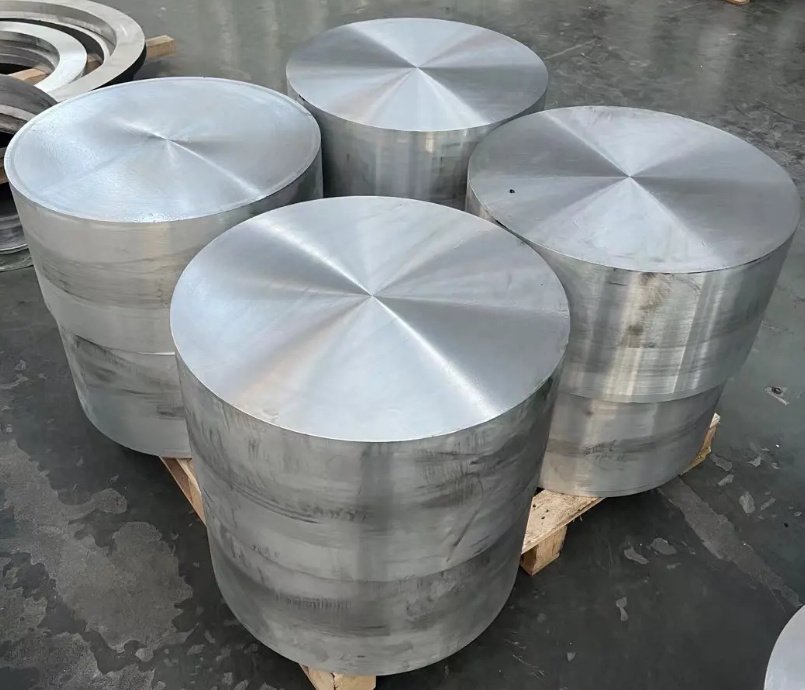
6082 Aluminum is a heat-treatable aluminum-magnesium-silicon alloy widely used for structural parts, machined components, transportation frames, tooling plates and welded fabrications. In European specifications it is commonly designated as EN AW-6082, while in Aluminum Association terminology it is often referenced as AA6082 or UNS A96082.
For engineers and buyers, Aluminum 6082 offers one of the best strength-to-fabrication balances among 6000-series aluminum alloys. It is stronger than 6061 and 6063 in many commercial tempers, has good corrosion resistance, machines well in T6/T651 condition, and remains suitable for welding when proper post-weld strength reduction is considered.
What Is 6082 Aluminum?
6082 Aluminum belongs to the Al-Mg-Si family and is strengthened mainly by magnesium silicide precipitation during heat treatment. Compared with 6061, al alloy 6082 usually contains higher manganese, which improves grain structure control and enhances mechanical performance in extruded and rolled products.
In practical sourcing, the terms Al 6082, al alloy 6082 and Aluminum 6082 usually refer to the same alloy family, but final performance depends heavily on temper, product form, thickness, heat treatment route and supplier process capability.
| Element | Typical Range by Weight | Engineering Role |
|---|---|---|
| Aluminum | Balance | Base metal, low density and corrosion resistance |
| Magnesium | 0.6% - 1.2% | Combines with silicon for precipitation hardening |
| Silicon | 0.7% - 1.3% | Improves heat-treatable strength |
| Manganese | 0.4% - 1.0% | Improves grain control and structural performance |
| Iron | Up to 0.5% | Impurity control; excessive iron may affect ductility |
| Copper | Up to 0.1% | Limited to maintain corrosion resistance |
| Zinc | Up to 0.2% | Controlled impurity |
| Chromium | Up to 0.25% | May support grain structure control |
Key Mechanical and Physical Properties
The values below are representative engineering ranges for commercial 6082 products. Actual values should be confirmed from the mill test certificate, applicable standard and product thickness.
| Property | 6082-T6 / T651 Typical Range | Engineering Note |
|---|---|---|
| Density | About 2.70 g/cm³ | Approximately one-third the density of steel |
| Ultimate Tensile Strength | 290 - 340 MPa | Depends on product form and section thickness |
| Yield Strength | 240 - 300 MPa | Useful for structural design calculations |
| Elongation | 8% - 12% typical | Reduced compared with softer tempers |
| Elastic Modulus | About 69 GPa | Similar to most aluminum alloys |
| Thermal Conductivity | About 160 - 180 W/m·K | Good for heat-spreading structures |
| Electrical Conductivity | About 38% - 42% IACS | Lower than electrical-grade aluminum but useful in structural bus supports |
| Corrosion Resistance | Good in atmospheric and industrial environments | Can be improved with anodizing or coating |
T6 and T651 tempers are commonly selected when dimensional stability, machining performance and high static strength are required. O and T4 tempers are more suitable where forming or bending is more important than final strength.
6082 Aluminum vs 6061, 6063 and 7075
Searchers comparing 6082 Aluminum usually want to know whether it is the best option for machining, structural strength, extrusion, welding or cost. The comparison below focuses on practical selection rather than only nominal datasheet values.
| Alloy | Strength Level | Machinability | Weldability | Corrosion Resistance | Best-Fit Applications |
|---|---|---|---|---|---|
| 6082 Aluminum | High for 6000 series | Good in T6/T651 | Good, with heat-affected-zone strength loss | Good | Structural plates, machined frames, transport parts, bridges, fixtures |
| 6061 Aluminum | Medium to high | Good | Good | Good | General CNC parts, welded frames, aircraft fittings, industrial parts |
| 6063 Aluminum | Medium | Fair to good | Good | Very good | Architectural extrusions, window profiles, decorative anodized parts |
| 7075 Aluminum | Very high | Good | Poor for conventional welding | Moderate | Aerospace, high-load fixtures, molds, high-strength components |
6082 is usually selected over 6061 when higher structural strength is required and European material availability is important. It is often selected over 6063 when the part must carry load rather than mainly provide appearance or extrusion complexity.
When 6082 Is Better Than 6061
- Higher yield strength is required in plate, bar or extrusion.
- The part is structural, such as a machine frame, transport bracket or load-bearing rail.
- European EN AW material standards are required by the project specification.
- The buyer needs wide availability in metric plate, round bar and flat bar formats.
When 6061 or 6063 May Be Better
- 6061 may be easier to source in North American supply chains.
- 6063 is often better for complex architectural extrusion profiles and high-quality anodized appearance.
- 6061 can be preferred for general-purpose CNC parts where strength margins are moderate.
When 7075 May Be Better
- 7075 is preferred when maximum strength is more important than weldability or corrosion resistance.
- It is commonly used for aerospace, high-stress tooling and premium fixtures.
- It is normally more expensive and less suitable for welded fabrication than Al 6082.
Common Product Forms and Tempers
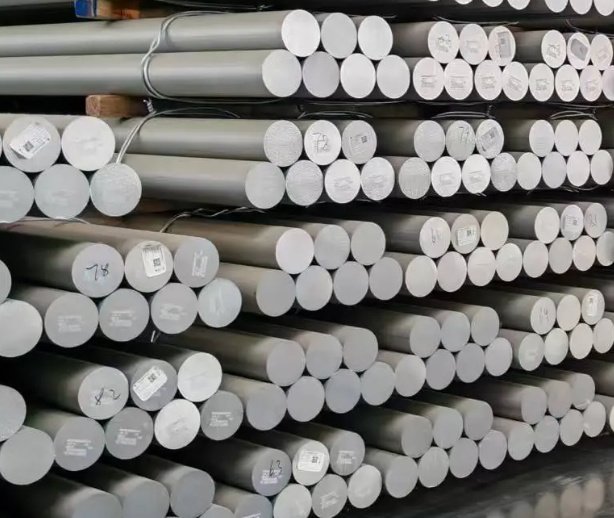
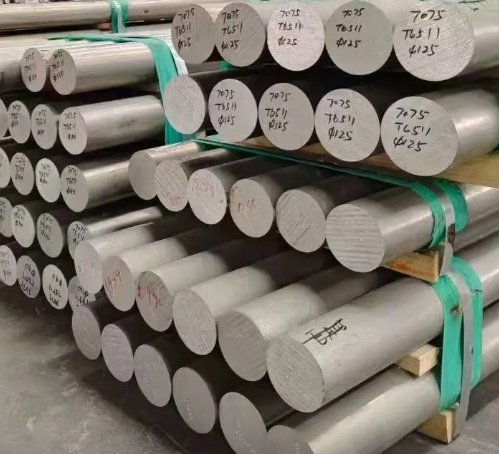
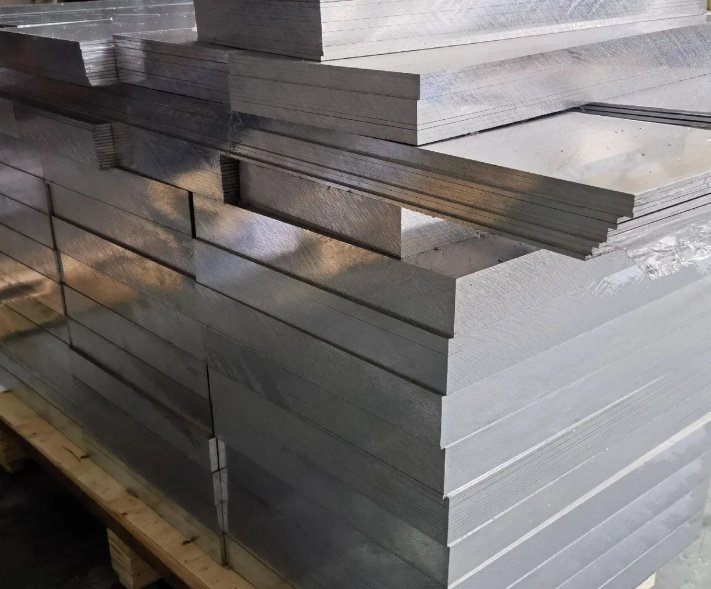
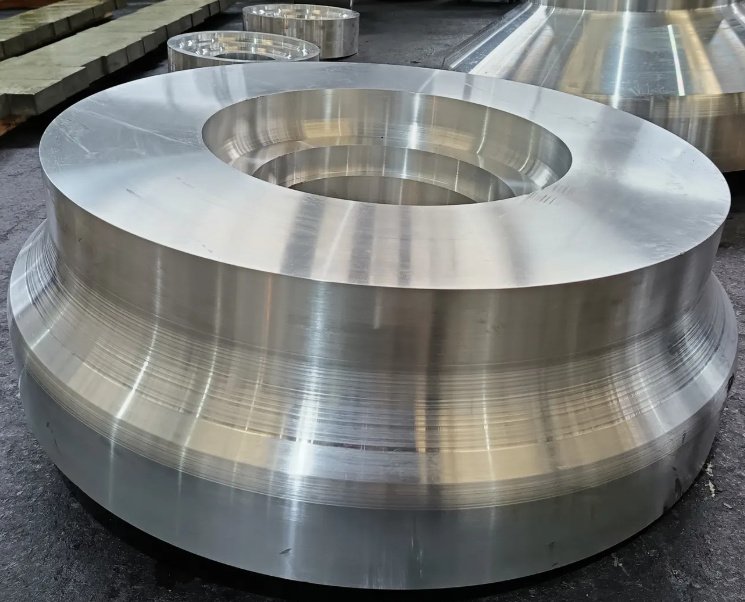
Al alloy 6082 is supplied as plate, sheet, round bar, flat bar, square bar, tube, profile extrusion and forged stock. Selection should match mechanical requirements, machining allowance, flatness, dimensional tolerance and surface finish requirements.
| Product Form | Common Temper | Typical Use | Selection Note |
|---|---|---|---|
| Plate | T6, T651 | Machine bases, side plates, tooling plates, fixtures | T651 is stress-relieved and preferred for CNC stability |
| Sheet | O, T4, T6 | Panels, covers, formed parts | Use softer temper when tight bending is required |
| Round Bar | T6 | Shafts, pins, turned components | Check straightness for long CNC turning parts |
| Flat Bar | T6 | Frames, brackets, supports | Good for sawn and machined structural parts |
| Extrusion | T5, T6 | Rails, profiles, transport frames | Profile complexity may be lower than 6063 for decorative shapes |
| Tube | T6 | Frames, ladders, lightweight structures | Confirm wall tolerance and weld seam condition where applicable |
The best all-round engineering specification is often 6082-T651 plate for machined structural components because it combines strength, stress relief and reasonable flatness.
Buyer and engineer note: how to specify 6082 material correctly
A clear purchase line should include alloy, temper, product form, size, standard, tolerance class, surface condition, certificate requirement and any ultrasonic inspection requirement. For example: “EN AW-6082 T651 aluminum plate, 25 mm thick, sawn to size, EN 485 compliant, mill test certificate 3.1 required.”
Machining Performance of 6082 Aluminum
6082 Aluminum machines well in T6 and T651 conditions. It produces relatively controlled chips compared with softer tempers and is suitable for CNC milling, turning, drilling, tapping, boring and profiling. For tight-tolerance parts, T651 plate is commonly preferred because internal stress is reduced by stretching after solution heat treatment.
Use sharp carbide tooling, high spindle speed and effective chip evacuation to reduce built-up edge and improve surface finish. Flood coolant or mist lubrication is recommended for deep pockets, high-speed finishing and tapped holes.
| Operation | Recommended Practice | Reason |
|---|---|---|
| Face Milling | Use balanced cutter paths and avoid removing all stock from one side | Reduces distortion in plate components |
| Pocket Milling | Use adaptive clearing and leave finishing allowance | Controls heat and improves final accuracy |
| Drilling | Use polished flutes and peck cycles for deep holes | Improves chip evacuation and hole quality |
| Tapping | Use proper lubricant and avoid worn taps | Prevents galling and thread tearing |
| Thin-Wall Machining | Rough symmetrically, semi-finish, then finish after stress relaxation | Improves flatness and dimensional repeatability |
Real Engineering Issue: Plate Distortion After Heavy Machining
A common problem occurs when a 6082-T6 plate is machined into a large pocketed frame. If 70% to 85% of material is removed from one side only, residual stress can cause bowing after unclamping. In many production cases, switching from T6 to T651 plate, using symmetric roughing and leaving a 0.5 mm to 1.5 mm finishing allowance can reduce post-machining distortion significantly.
Manufacturing note: practical approach for precision frames
For a 600 mm x 400 mm x 25 mm machined frame, a stable process may include stress-relieved 6082-T651 plate, rough machining both sides, 12 to 24 hours of natural stress relaxation, semi-finishing, final clamping on a vacuum plate or low-stress fixture, and final inspection at stable room temperature.
Welding, Forming and Surface Finishing
6082 Aluminum is weldable by MIG and TIG processes and is commonly fabricated into transport frames, structural assemblies and access platforms. Suitable filler wires often include 4043 or 5356 depending on strength, ductility, color match after anodizing and service environment.
6082-T6 is weldable but loses strength in the heat-affected zone. In design calculations, the weld area should not be assumed to retain full T6 mechanical properties unless validated by post-weld heat treatment, qualified welding procedures and testing.
Forming and Bending
In T6 condition, 6082 has limited formability compared with O or T4 tempers. For tight bends, specify a softer condition before forming and then apply heat treatment if final strength is needed. Larger bend radii, bend-line orientation control and trial bending are recommended for thicker sheet or plate.
Anodizing and Coating
6082 can be anodized for improved corrosion resistance and surface durability. However, it may not produce the same decorative finish quality as 6063 due to chemistry and microstructure. For visible architectural surfaces, 6063 is often preferred; for structural anodized components, 6082 is a practical choice.
Heat Treatment and Temper Selection
Al 6082 obtains high strength through solution heat treatment, quenching and artificial aging. Tempers define the alloy condition and strongly influence mechanical properties, machinability and formability.
| Temper | Description | Best Use |
|---|---|---|
| O | Annealed, soft condition | Forming, bending, low-strength parts |
| T4 | Solution heat-treated and naturally aged | Parts requiring better formability before final aging |
| T5 | Cooled from elevated-temperature shaping and artificially aged | Extrusions where moderate strength is acceptable |
| T6 | Solution heat-treated and artificially aged | High-strength general engineering components |
| T651 | Solution heat-treated, stress-relieved by stretching and artificially aged | Precision-machined plate parts requiring better stability |
For CNC-machined structures, T651 is usually the safer choice. For welded frames, T6 may be appropriate, but the designer must account for reduced strength near welds. For bent sheet components, O or T4 may reduce cracking risk.
Typical Applications of 6082 Aluminum
- Machine frames, side plates and structural supports
- CNC-machined brackets, fixtures and automation components
- Transportation parts, truck bodies, rail components and trailer structures
- Bridges, access platforms, stairs, ladders and walkways
- Hydraulic and pneumatic equipment parts where weight reduction is needed
- Marine and outdoor structural components with protective finishing
- Robotics base plates, gantry parts and lightweight moving assemblies
The alloy is especially useful when the design requires a strong aluminum material that is easier to weld and more corrosion-resistant than many high-strength 7000-series alloys.
Procurement and Quality Control Considerations
Purchasing 6082 Aluminum should be based on engineering risk, not only price per kilogram. Differences in flatness, stress relief, certification, thickness tolerance and surface condition can directly affect machining yield and assembly accuracy.
Always specify alloy, temper, standard and certificate requirements before ordering. If the part is safety-related, load-bearing or used in regulated equipment, require traceability from heat number to finished part.
| Item to Confirm | Why It Matters |
|---|---|
| Alloy designation | Prevents substitution with 6061, 6063 or non-equivalent material |
| Temper | Controls strength, machinability and formability |
| Applicable standard | Common references include EN 485, EN 573, EN 755 or ASTM/AA equivalents |
| Mill test certificate | Provides chemical and mechanical property traceability |
| Flatness and thickness tolerance | Critical for precision plate machining and assembly |
| Surface condition | Affects anodizing, coating, visual quality and machining allowance |
| Ultrasonic testing | Recommended for thick plate or critical machined components |
Buyer note: cost drivers beyond material price
The lowest quoted price for Aluminum 6082 may become expensive if the plate has poor flatness, high residual stress, insufficient machining allowance or incomplete certification. For precision CNC work, a higher-grade T651 plate can reduce scrap, rework and inspection failures.
Standards and Equivalent Designations
6082 Aluminum is commonly referenced under European standards and is widely used in markets that follow EN material designations. Equivalent naming may vary by supplier documentation.
| Designation | Common Use |
|---|---|
| EN AW-6082 | European wrought aluminum designation |
| AA6082 | Aluminum Association alloy designation |
| UNS A96082 | Unified Numbering System designation |
| AlMgSi1 | Older or descriptive European-style naming |
Request mill test certificates for every production batch when mechanical performance, traceability or regulatory compliance is important.
Conclusion: Is 6082 Aluminum the Right Alloy?
6082 Aluminum is a strong, corrosion-resistant and highly practical 6000-series alloy for structural and machined components. It is often a better choice than 6063 for load-bearing parts, stronger than many 6061 specifications, and far more weldable than 7075 for fabricated assemblies.
For the best engineering outcome, match the alloy to the process: use 6082-T651 for precision-machined plate components, consider T6 for high-strength general parts, choose softer tempers for forming, and design welded structures with realistic heat-affected-zone strength values. When properly specified and processed, Al 6082 provides reliable performance in transportation, machinery, automation, marine, construction and industrial applications.