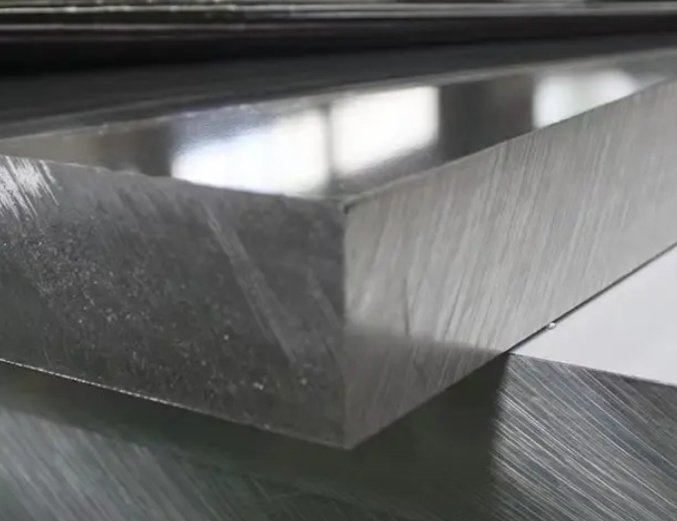
Aluminum 7049 is a heat-treatable 7xxx series aluminum alloy developed for high-strength structural parts that require a balanced combination of tensile strength, fatigue performance, fracture toughness and corrosion resistance. In engineering documents, it may also appear as 7049 aluminum alloy, UNS A97049, al alloy 7049 or Al 7049.
The alloy belongs to the aluminum-zinc-magnesium-copper family, the same broad class as 7075, 7050, 7175 and 7079. Compared with many general-purpose aluminum grades, Aluminum 7049 is selected for highly loaded aerospace and defense components where a standard commercial alloy such as 6061-T6 is not strong enough and where conventional 7075 may not provide the required stress-corrosion cracking margin in severe service.
What Is Aluminum 7049?
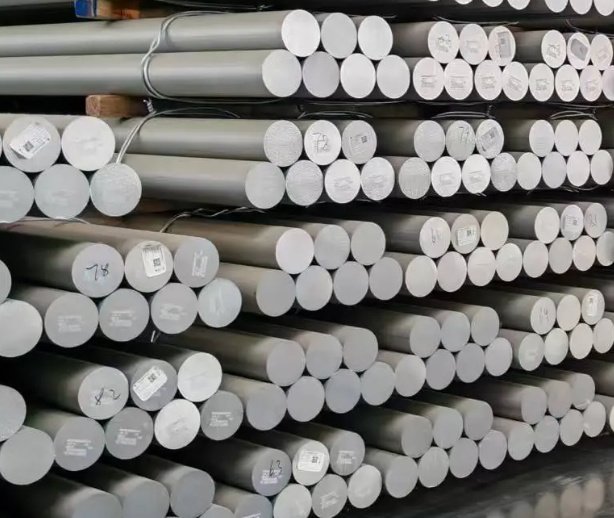
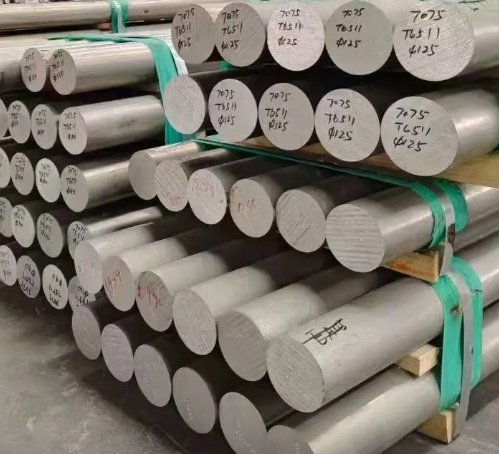
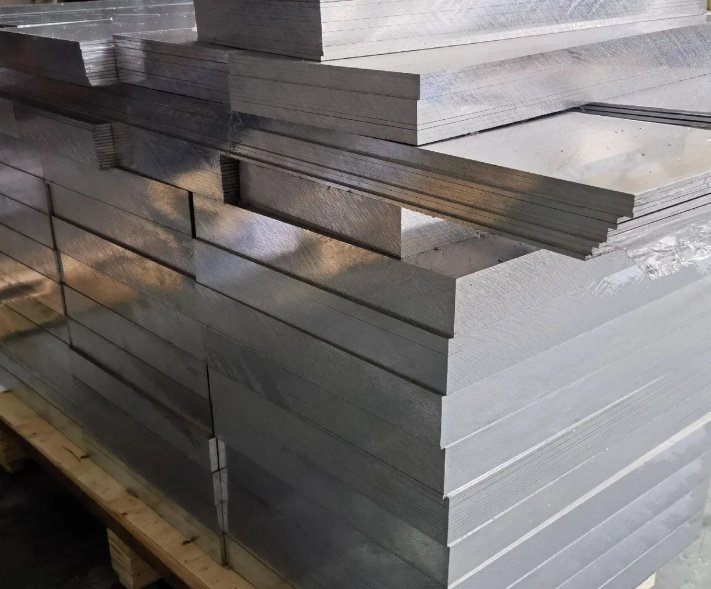
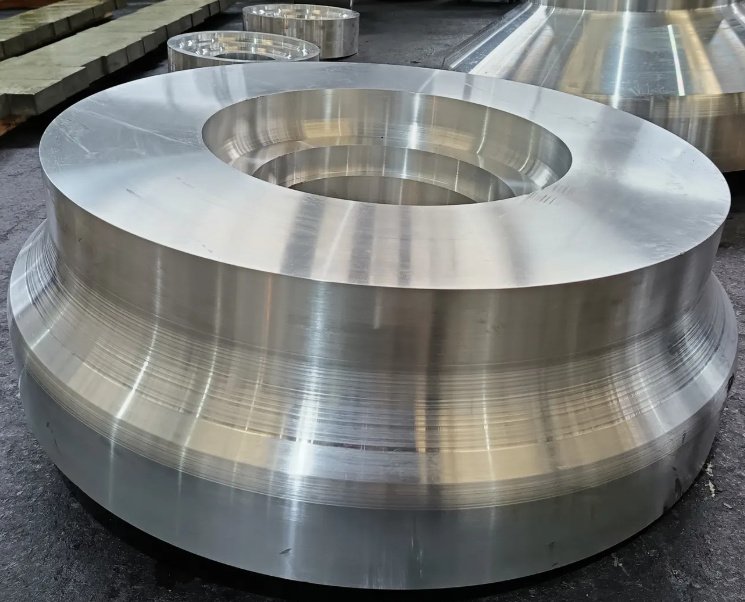
Aluminum 7049 is a precipitation-hardenable wrought aluminum alloy. Its strength comes primarily from controlled additions of zinc, magnesium and copper, followed by solution heat treatment, quenching and artificial aging. The alloy is typically supplied as plate, forging stock, die forgings, hand forgings, bars or custom aerospace shapes, depending on the mill and qualification route.
In practical terms, Aluminum 7049 is not usually specified for low-cost brackets, decorative parts or welded frames. It is more often considered when an engineer needs high static strength, good fatigue resistance, dimensional stability after machining and improved resistance to stress-corrosion cracking compared with older high-strength 7xxx alloys.
- Alloy family: 7xxx series aluminum, Al-Zn-Mg-Cu system
- UNS designation: A97049
- Typical product forms: plate, forged block, forged bar, closed-die forgings, machined aerospace blanks
- Common tempers: T73, T7351, T76 and application-specific overaged tempers
- Primary selection reason: high strength with improved corrosion and stress-corrosion performance
7049 Aluminum Chemical Composition
The performance of Al 7049 depends strongly on chemistry control. Zinc and magnesium provide the main precipitation-hardening response, copper contributes additional strength, and elements such as chromium or zirconium may be used to control grain structure and recrystallization behavior. Exact limits should always be verified against the current purchase specification, mill standard and material test certificate.
| Element | Typical range or maximum, wt.% | Engineering role |
|---|---|---|
| Aluminum | Balance | Base metal, low density and corrosion-resistant oxide film |
| Zinc | Approximately 7.2-8.4 | Main strengthening element in 7xxx alloys |
| Magnesium | Approximately 2.0-2.9 | Forms strengthening precipitates with zinc |
| Copper | Approximately 1.2-1.9 | Improves strength and hardening response |
| Chromium | Approximately 0.10-0.22 | Grain structure control and resistance to recrystallization |
| Iron | Typically 0.35 max | Impurity; excessive levels can reduce toughness |
| Silicon | Typically 0.25 max | Impurity; controlled for toughness and fatigue performance |
| Manganese, titanium and others | Specification-dependent limits | Grain refinement, impurity control or residual content |
Why composition control matters in 7049 aluminum
In thick forged or machined parts, small differences in zinc, magnesium, copper and impurity levels can influence quench sensitivity, fracture toughness and through-thickness strength. For aerospace work, buyers should treat chemistry as a controlled engineering variable, not just a catalog value.
Mechanical and Physical Properties of 7049 Aluminum
Published values for Aluminum 7049 vary by product form, section thickness, temper, test direction and heat-treatment route. The following ranges are representative engineering values and should not replace certified data from a mill test report, MMPDS allowables or an approved drawing specification. For design release, properties must be verified by lot-specific mill test reports and, where required, by independent testing.
| Property | Typical value or range | Notes for engineers |
|---|---|---|
| Density | About 2.83 g/cm³ | Similar to 7075 and 7050; about one-third the density of steel |
| Elastic modulus | About 71-72 GPa | Comparable to most wrought aluminum alloys |
| Ultimate tensile strength | Approximately 510-590 MPa | Depends on temper, thickness and test direction |
| Yield strength | Approximately 440-525 MPa | Higher than 6061-T6 and comparable to premium 7xxx alloys |
| Elongation | Approximately 5-11% | Lower ductility than 5xxx or 6xxx alloys, but acceptable for many machined structures |
| Hardness | Typically around 145-165 HB | Varies with aging condition |
| Thermal conductivity | Roughly 120-150 W/m·K | Lower than pure aluminum and many 6xxx alloys due to alloying content |
| Electrical conductivity | Usually lower than 6061 | Can be used as an indirect indicator of aging condition in quality control |
Aluminum 7049 vs 7075, 7050 and 6061
Many buyers compare Aluminum 7049 with 7075, 7050 and 6061 because these alloys are widely available and frequently appear in aircraft, motorsport, defense, tooling and precision-machined components. The best choice depends on loading, environment, thickness, inspection requirements, availability and total cost.
| Alloy | Strength level | Corrosion/SCC resistance | Machinability | Typical reason to select |
|---|---|---|---|---|
| 7049 | Very high | Good in overaged tempers such as T73/T7351 | Good with carbide tooling and controlled fixturing | Critical high-load forgings and aerospace structural parts |
| 7075 | Very high | Moderate; improved in T73 but lower strength than T6 | Excellent | Widely available high-strength plate, bar and machined parts |
| 7050 | High to very high | Very good, especially in thick sections | Good | Thick plate and aerospace structures needing toughness and low quench sensitivity |
| 7175 | Very high | Similar family to 7075 with improved cleanliness and toughness | Excellent | Aircraft forgings where premium toughness is required |
| 6061 | Medium | Good general corrosion resistance | Excellent | Cost-effective general machining, frames and welded structures |
If the project requires maximum availability, 7075 may be easier to buy. If the part is very thick and fracture-critical, 7050 can be a strong candidate. If the structure is moderate-load and must be welded, 6061 is usually more practical. Aluminum 7049 is most attractive when the design needs very high strength, qualified forging routes and stress-corrosion cracking resistance beyond what a basic high-strength aluminum grade can provide.
Heat Treatment and Temper Selection
Like other high-strength 7xxx alloys, al alloy 7049 is solution heat treated, quenched and artificially aged. Temper choice is a major design decision because higher peak strength can reduce corrosion margin, while overaged tempers can improve stress-corrosion resistance and dimensional stability at the cost of some tensile strength.
| Temper | General meaning | Typical engineering trade-off |
|---|---|---|
| T73 | Overaged condition | Improved resistance to stress-corrosion cracking with somewhat reduced peak strength |
| T7351 | Solution heat treated, stress relieved by stretching, overaged | Better dimensional stability for machined plate and forged stock |
| T76 | Controlled overaging condition | Balance between strength, exfoliation resistance and SCC behavior |
| Custom aerospace temper | Drawing- or program-specific aging route | Used when qualification data, fatigue testing or damage tolerance requirements govern |
Engineering note on T73/T7351 selection
For fracture-critical or corrosion-sensitive parts, T73/T7351 conditions are often preferred over peak-aged conditions because they improve resistance to stress-corrosion cracking. The final decision should consider static strength, fatigue spectrum, inspection interval, part thickness and environmental exposure.
Machining, Forming, Welding and Surface Finishing
Aluminum 7049 is generally considered machinable, but it behaves like a high-strength aerospace aluminum rather than a soft commercial grade. Residual stress, distortion after roughing, notch sensitivity and heat generation must be managed carefully, especially in thin-wall pockets, monolithic frames and precision forged blanks.
Machining recommendations
- Tooling: Use sharp carbide end mills, drills and inserts with polished flutes for efficient chip evacuation.
- Coolant: Flood coolant or minimum quantity lubrication can reduce built-up edge and control heat.
- Roughing strategy: Remove material symmetrically when possible to reduce distortion.
- Finishing allowance: Leave controlled stock after rough machining, then allow stress relaxation before final finishing on tight-tolerance aerospace parts.
- Chip control: High helix tools and proper feed rates help prevent recutting and surface damage.
- Inspection: Check flatness, parallelism and bore alignment after major material removal.
Forming and joining behavior
Formability is limited compared with 5xxx or 6xxx aluminum alloys because 7049 is designed for high strength. Severe cold forming is generally avoided in final aged tempers. Welding is also not the preferred joining method because heat-affected zones can lose strength and may require re-qualification. Mechanical fastening, interference-fit bushings, adhesive bonding or bolted assemblies are more common in critical structures.
Surface finishing options
Common finishing routes include chemical conversion coating, anodizing, hard anodizing, primer systems, shot peening and protective sealants. For parts exposed to salt, deicing fluids or humid environments, finish selection should be integrated with the temper and inspection plan.
Machining issue: distortion in a thin-wall 7049 component
A typical engineering problem is movement after rough machining a pocketed aerospace bracket from a thick 7049 forging. A practical process may use balanced roughing on both sides, an intermediate stabilization hold, re-clamping on controlled datum surfaces and a final finishing pass. In production, this approach can reduce post-machining flatness variation from the millimeter range to a few tenths of a millimeter, depending on geometry and stock condition. The most important rule is to use sharp carbide tools and remove material in a stress-balanced sequence.
Engineering Applications of Al 7049
Al 7049 is typically specified where the cost of material qualification is justified by performance. It is not a commodity aluminum alloy for casual fabrication; it is a structural material for demanding loads, limited weight budgets and controlled quality systems.
- Aircraft landing gear components and support structures
- High-strength forged aerospace fittings
- Missile, defense and launch-system structural parts
- Rotorcraft and fixed-wing machined components
- High-performance motorsport suspension or load-bearing parts where qualification permits
- Precision tooling plates or fixtures requiring high strength-to-weight ratio
Example: replacing steel in a weight-sensitive bracket
Consider a forged steel bracket with a density near 7.85 g/cm³. Replacing it with a properly designed 7049 aluminum part at approximately 2.83 g/cm³ can reduce material density by about 64%. In real parts, section sizes may need to increase because aluminum has a lower modulus than steel, so the final mass saving may be lower than the density difference. Even so, 30-50% component weight reduction can be realistic when stiffness, bearing stress and fatigue details are redesigned rather than copied directly from the steel geometry.
Example: choosing between 7075 and 7049 for a forged fitting
A buyer evaluating a high-load forged fitting may find 7075 easier to source and less expensive. However, if the fitting operates in a humid or marine atmosphere under sustained tensile stress, the design team may specify 7049 in an overaged temper to increase the stress-corrosion cracking margin. The decision should be based on allowables, corrosion exposure, inspection accessibility, procurement lead time and the cost of failure, not only on ultimate tensile strength.
Procurement and Quality Checklist for Buyers
Buyers should not purchase Aluminum 7049 by alloy name alone. For aerospace and safety-critical work, the purchase order should define product form, temper, thickness, applicable specification, test direction, ultrasonic inspection level, grain flow requirements for forgings and documentation requirements.
- Confirm alloy identity: Require 7049 or UNS A97049 on the mill certificate.
- Define temper: Specify T73, T7351, T76 or the drawing-controlled temper.
- Control product form: Plate, bar and forgings do not have identical properties or inspection needs.
- Request mechanical data: Tensile strength, yield strength, elongation and hardness should match the required test orientation.
- Check fracture-critical requirements: Include toughness, fatigue, ultrasonic inspection or grain-flow criteria where relevant.
- Review traceability: Heat number, lot number, processing route and certification chain should be clear.
- Plan machining stock: Allow enough material for cleanup, datum creation and distortion management.
- Verify finish compatibility: Confirm anodizing, conversion coating, shot peening or primer requirements before machining release.
For procurement teams, the highest-risk mistake is treating 7049 as an interchangeable substitute for every 7xxx alloy. The alloy can deliver excellent performance, but only when the drawing, certification and inspection plan preserve traceability and temper evidence from mill to final part.
Limitations and Design Considerations
Although 7049 aluminum offers impressive strength, it is not the right solution for every project. Engineers should evaluate the following limitations before specifying it:
- Availability: 7049 is less common than 6061 and 7075, and lead times can be longer.
- Cost: Premium forging, heat treatment and inspection requirements increase total part cost.
- Weldability: Fusion welding is generally not preferred for critical strength applications.
- Corrosion control: Protective finishes are still important, especially in chloride-rich environments.
- Design allowables: Certified data must match product form, temper, thickness and test direction.
- Machining distortion: Residual stress management is essential for close-tolerance parts.
Summary: When 7049 Aluminum Is the Right Choice
Aluminum 7049 is a high-strength Al-Zn-Mg-Cu alloy used for demanding aerospace, defense and precision-machined structural components. It competes with 7075, 7050 and 7175, but its value is strongest in highly loaded forgings and parts where overaged tempers provide a practical balance of strength, toughness and stress-corrosion resistance.
For engineers, the key decision is not simply whether 7049 has a high tensile strength. The real question is whether the alloy, temper, product form, machining process, inspection plan and surface protection system work together for the intended service environment. When those factors are controlled, Al 7049 can provide a reliable high-strength lightweight solution for critical metal components.