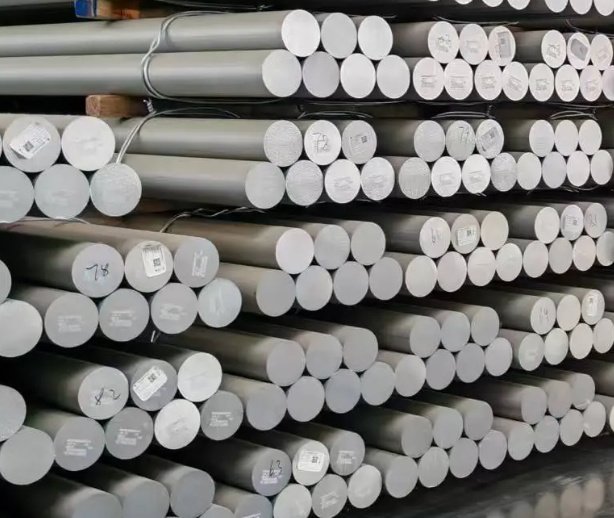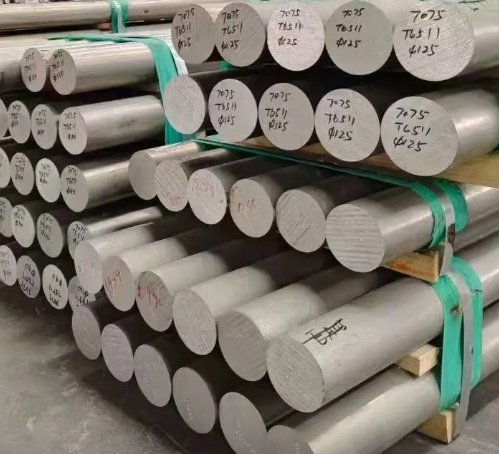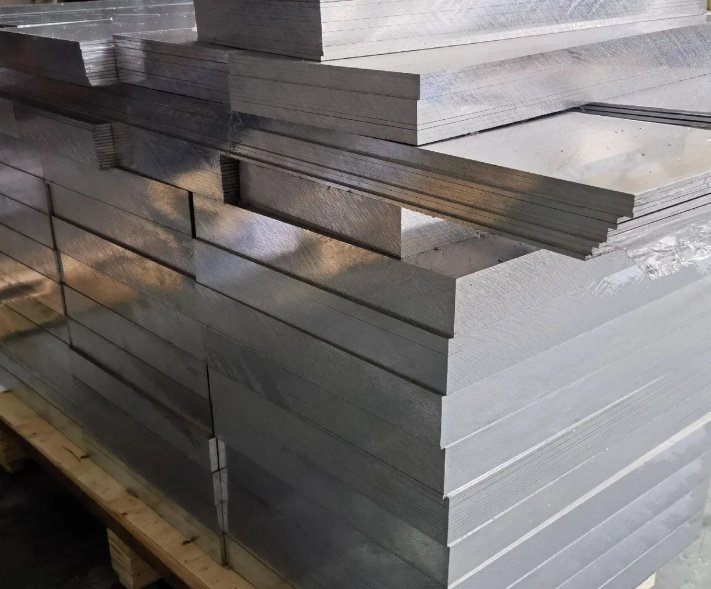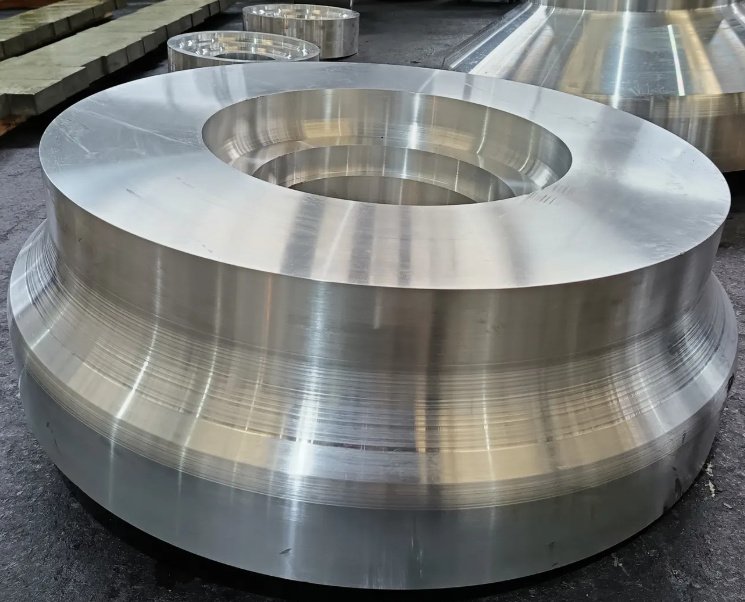
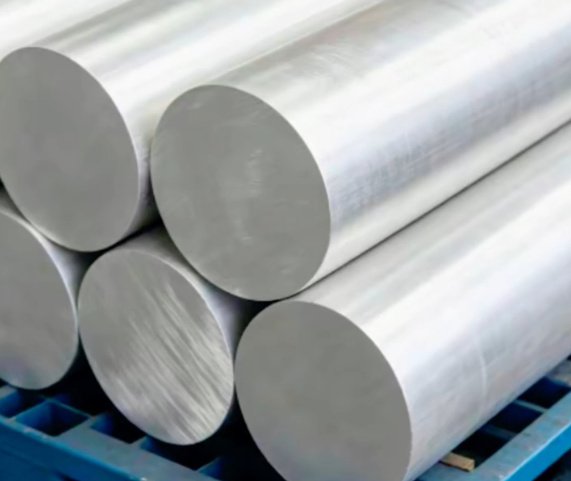
Aluminum 7039 is a heat-treatable Al-Zn-Mg alloy developed for applications that require a combination of high strength, weldability, ballistic resistance and relatively good corrosion performance. It is most often specified for armor plate, tactical vehicle structures, welded defense components, transportation equipment and high-strength fabricated assemblies where conventional 7xxx alloys may be too difficult to weld.
Also written as al alloy 7039 or Al 7039, this material belongs to the 7000-series aluminum family, but it is different from high-copper aerospace grades such as 7075. Its low copper content improves weldability and reduces some corrosion risks, while zinc and magnesium provide precipitation hardening response.
What Is Aluminum 7039?
Aluminum 7039 is an aluminum-zinc-magnesium alloy generally supplied as plate, sheet or forged/wrought product for structural and protective applications. It is valued because it can achieve higher strength than many 5xxx marine alloys while remaining more weldable than many high-strength 7xxx aerospace alloys.
In practical engineering selection, 7039 is often considered when the design needs:
- Higher yield strength than 5083 or 5456 aluminum plate
- Better fusion weldability than 7075 aluminum
- Good resistance to crack initiation under impact or blast loading
- Reduced vehicle mass compared with steel armor solutions
- Machinability suitable for milled brackets, panels, housings and structural details
Typical Chemical Composition of Al Alloy 7039
The following composition ranges are typical industry references for al alloy 7039. Final acceptance should always be based on the applicable standard, drawing requirement and mill test certificate.
| Element | Typical Range or Limit | Engineering Role |
|---|---|---|
| Zinc | 3.5–4.5% | Main strengthening element through age-hardening precipitates |
| Magnesium | 2.3–3.3% | Combines with zinc for precipitation hardening and strength |
| Manganese | 0.10–0.40% | Improves grain structure and toughness stability |
| Chromium | 0.15–0.25% | Helps control recrystallization and stress-corrosion behavior |
| Copper | Usually low, often max. about 0.10% | Kept low to support weldability and corrosion resistance |
| Iron + Silicon | Controlled impurities | Excess levels may reduce toughness and forming performance |
| Aluminum | Balance | Base metal |
Mechanical and Physical Properties
Properties of Aluminum 7039 depend on product form, plate thickness, heat treatment, testing direction and specification. Values below are representative engineering ranges, not guaranteed minimums.
| Property | Typical Value or Range | Notes |
|---|---|---|
| Density | About 2.74 g/cm³ | Roughly one-third the density of carbon steel |
| Elastic Modulus | About 70–72 GPa | Similar to most aluminum alloys |
| Ultimate Tensile Strength | About 420–480 MPa | Temper and thickness dependent |
| Yield Strength | About 330–400 MPa | Higher than common non-heat-treatable marine alloys |
| Elongation | About 8–14% | Varies by orientation and plate gauge |
| Hardness | About 120–150 HB | Useful for armor and wear-exposed structural surfaces |
| Coefficient of Thermal Expansion | About 23 × 10-6/K | Important for welded assemblies and mixed-material joints |
| Thermal Conductivity | Typically lower than 6061 | Depends on temper and exact chemistry |
Why property values vary between suppliers
7039 aluminum plate can show different tensile, toughness and ballistic results depending on reduction ratio, quench rate, artificial aging practice, plate thickness, grain direction and residual stress relief. Buyers should request test results for longitudinal and transverse directions when the part is safety-critical or armor-related.
Aluminum 7039 vs 5083, 6061, 7075 and 7020
Alloy comparison is often the most important step for engineers and buyers. Al 7039 is not simply a stronger 6061 or a weldable 7075; it occupies a more specialized position between marine-grade aluminum, general structural aluminum and aerospace-grade high-strength aluminum.
| Alloy | Main Strengths | Limitations | When to Choose It |
|---|---|---|---|
| 7039 | High strength, good weldability for a 7xxx alloy, armor performance, good weight reduction | More specialized supply chain, heat-treatment sensitivity, welding procedure control required | Armored vehicles, welded defense structures, high-strength transport panels |
| 5083 | Excellent marine corrosion resistance, very good weldability, stable non-heat-treatable behavior | Lower strength than 7039 in comparable plate applications | Marine structures, tanks, shipbuilding, lower-strength welded fabrications |
| 6061 | Easy to source, machine, extrude and weld; good general-purpose performance | Lower strength and ballistic capability than 7039 | General frames, brackets, machine parts, commercial structures |
| 7075 | Very high static strength, widely used in aerospace machining | Poor fusion weldability, greater stress-corrosion sensitivity in some tempers | Bolted or machined aerospace parts where welding is not required |
| 7020 | Weldable Al-Zn-Mg alloy, good structural use in Europe | Availability and specification alignment may differ by region | Welded transport structures and heavy-duty frames |
Comparison Summary for Engineers
If the design is welded and exposed to impact loading, 7039 may outperform 7075 because weldability and fracture behavior become more important than peak tensile strength. If the design is marine-focused and does not require high yield strength, 5083 may be simpler and more corrosion tolerant. If cost, availability and machining speed are more important than armor performance, 6061 is usually easier to justify.
Applications of 7039 Aluminum
The most recognized use of Aluminum 7039 is in military and protective structures, but its property profile can also be useful in transportation and industrial equipment where weldability, strength-to-weight ratio and toughness must be balanced.
- Armor plate and ballistic panels for tactical vehicles and protective structures
- Welded vehicle hulls, troop carrier components and blast-resistant assemblies
- High-strength transportation floors, access panels and structural covers
- Machined defense hardware, brackets, supports and mounting blocks
- Lightweight industrial structures where 6061 is not strong enough
- Prototype structures requiring a balance of weldability and high yield strength
For armor applications, performance is not determined by alloy name alone. Plate thickness, hardness window, projectile threat, obliquity, backing structure, weld placement and heat-affected zone behavior all affect final protection.
Example engineering trade-off: aluminum armor versus steel
A vehicle panel made from aluminum may require greater thickness than high-hardness steel to stop the same threat, but the density advantage is significant. Aluminum at about 2.7 g/cm³ is roughly 65% lighter by volume than steel at about 7.85 g/cm³. In a real structure, designers often trade increased panel thickness for lower total mass, improved mobility and reduced drivetrain load.
Welding and Fabrication Considerations
7039 is considered weldable compared with high-copper 7xxx alloys, but it still requires controlled fabrication practice. Gas metal arc welding and gas tungsten arc welding may be used with suitable filler selection, joint design and heat input control.
Common engineering concerns include:
- Strength reduction in the heat-affected zone after welding
- Distortion in thin plate or large panels due to aluminum’s high thermal expansion
- Residual stress and potential stress-corrosion cracking in highly restrained structures
- Loss of ballistic consistency near weld seams if the design does not account for HAZ properties
- Need for qualified weld procedures when used in defense or safety-critical applications
Weld design should not place the highest impact or tensile load directly across an unverified heat-affected zone. For armored assemblies, weld placement, backing details and post-weld inspection can be as important as base metal selection.
Filler Metal and Heat Input
Filler selection should follow the governing welding code, service environment and mechanical requirements. Aluminum-magnesium fillers are commonly considered for weldability and corrosion behavior, while design engineers must verify whether the welded joint strength, ductility and ballistic performance meet the project requirement.
Machining Aluminum 7039
Al 7039 can be machined using standard practices for high-strength aluminum alloys. It generally machines better than soft annealed aluminum, but tool geometry, chip evacuation and workholding remain important because large thin plates can vibrate or distort.
| Machining Factor | Recommended Practice | Reason |
|---|---|---|
| Cutting Tools | Use sharp carbide tools with polished flutes | Reduces built-up edge and improves surface finish |
| Coolant | Use flood coolant or mist lubrication where appropriate | Controls heat and improves chip evacuation |
| Workholding | Support thin plate and use stress-relieved stock when possible | Minimizes chatter and movement after material removal |
| Finishing | Use light finishing passes after roughing | Improves flatness and dimensional repeatability |
| Deburring | Remove sharp edges after milling, drilling or sawing | Reduces crack initiation and handling damage |
For precision-machined 7039 components, engineers should consider rough machining, stress relief where permitted, and final machining after the part has stabilized. This is especially important for large pockets, asymmetric parts and armor panels with tight flatness requirements.
Practical machining issue: plate movement after pocketing
A common production issue is panel bowing after heavy pocket milling. Removing material from one side of a high-strength aluminum plate can release residual stress and shift flatness beyond tolerance. A balanced machining strategy, intermediate inspection and controlled clamping can reduce scrap risk.
Heat Treatment, Tempers and Performance Control
7039 aluminum obtains its strength primarily from precipitation hardening. Solution treatment, quenching and artificial aging control the distribution of strengthening phases. Commonly referenced tempers may include T6-type or overaged/stabilized conditions depending on product specification and required corrosion or toughness performance.
Buyers should not assume that every 7039 plate with the same nominal thickness has the same performance. Heat treatment affects tensile strength, elongation, hardness, exfoliation resistance, stress-corrosion behavior and ballistic consistency.
Key Quality Checks
- Confirm alloy designation, temper and applicable material standard
- Review mill test certificate chemistry and mechanical properties
- Verify plate thickness tolerance, flatness and ultrasonic inspection requirements
- Request hardness range if ballistic or wear-related performance is critical
- Confirm whether longitudinal, long-transverse and short-transverse properties are required
- Define acceptable surface condition, protective film, marking and traceability
Corrosion Resistance and Surface Protection
Compared with high-copper 7075, Aluminum 7039 generally offers better weldability and more favorable corrosion behavior. However, like other high-strength aluminum alloys, it still requires appropriate environmental design when exposed to salt spray, trapped moisture, galvanic contact or cyclic stress.
Surface protection options may include conversion coating, anodizing where suitable, primer and paint systems, sealants at joints, drainage design and isolation from dissimilar metals. In assemblies with steel fasteners, galvanic isolation is especially important.
Corrosion performance should be validated in the actual service environment, especially for military vehicles, coastal transport equipment and structures exposed to deicing salts.
Procurement Guidance for Buyers and Project Engineers
Sourcing 7039 is more specialized than buying 6061 or 5052. Lead time, minimum order quantity, plate size, certification level and export-control considerations may affect project planning.
| Procurement Item | Why It Matters | Recommended Buyer Action |
|---|---|---|
| Temper | Controls strength, toughness and corrosion behavior | Specify exact temper on RFQ and drawing |
| Certification | Required for defense, safety and traceability | Request full mill test report and heat number traceability |
| Plate Size | Affects nesting, weld count and scrap rate | Optimize cut plan before ordering |
| Flatness | Critical for CNC machining and armor panel fit-up | Define flatness tolerance and inspection method |
| Surface Condition | Impacts coating, bonding and visual acceptance | Clarify scratches, stains, mill finish and protective packaging |
| Weld Qualification | Base metal certification does not qualify the welded assembly | Require procedure qualification and sample testing when needed |
When Aluminum 7039 Is the Right Choice
Aluminum 7039 is a strong candidate when a project requires a high-strength aluminum plate that can be welded more reliably than many high-copper 7000-series alloys. It is especially relevant for armored vehicles, welded protective structures and transportation components where mass reduction is tied directly to payload, mobility or fuel efficiency.
It may not be the best option when the project requires commodity availability, complex extrusion profiles, maximum corrosion resistance in marine immersion, or the lowest material cost. In those cases, 6061, 6082, 5083 or another alloy may provide a better commercial and technical balance.
For engineering teams evaluating Aluminum 7039, the best decision process is to compare not only tensile strength, but also weld performance, heat-affected zone behavior, corrosion protection, machining stability, certification requirements and total fabricated cost.