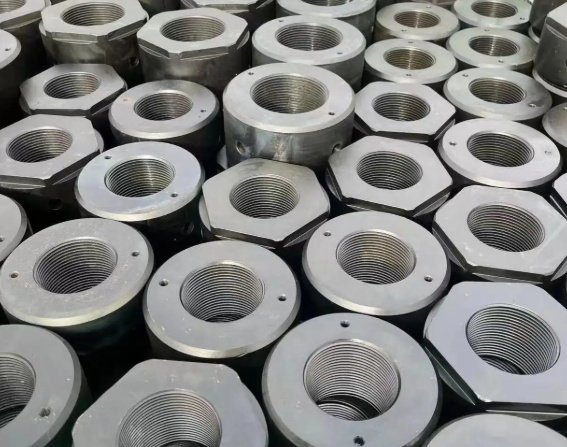
An aluminum bushing is a cylindrical or flanged mechanical component used to locate, space, guide, insulate, or reduce wear between mating parts. In many assemblies it is also called an aluminum sleeve bushing, aluminum spacer bushing, aluminum bearing sleeve, aluminum insert, or machined aluminum collar. Compared with steel or bronze, aluminum provides a high strength-to-weight ratio, good machinability, corrosion resistance after surface treatment, and excellent dimensional versatility for custom designs.
For engineering and procurement teams, the key question is not simply whether aluminum is “strong enough.” The correct decision depends on load, shaft speed, fit class, corrosion exposure, surface finish, coating, lubrication, temperature range, and total part cost. A precision-machined sleeve, flange, or spacer bushing can reduce assembly weight while maintaining accurate alignment when the alloy, tolerance, and finish are selected correctly.
What Is an Aluminum Bushing Used For?
Aluminum bushings are used wherever a component needs a controlled bore, wear-resistant surface, lightweight spacer, or accurately positioned rotating or sliding interface. They are common in automation equipment, aerospace brackets, electric vehicles, robotics, packaging machinery, medical devices, sporting equipment, marine hardware, and electronic enclosures.
- Locating and alignment: keeps shafts, pins, fasteners, and housings centered.
- Spacing: maintains a fixed distance between panels, brackets, wheels, pulleys, or linkages.
- Load distribution: spreads bearing or fastening load over a larger area.
- Wear control: protects softer housings when paired with coatings, inserts, liners, or lubrication.
- Electrical or thermal design: provides conductivity, heat transfer, or controlled isolation depending on finish and assembly design.
Aluminum is often chosen when the application requires lightweight metal construction, corrosion resistance, and CNC-machined accuracy rather than maximum load capacity alone.
Common Types of Aluminum Bushings
| Type | Typical Geometry | Best-Fit Applications | Engineering Notes |
|---|---|---|---|
| Sleeve bushing | Straight cylindrical body with through bore | Pivot pins, shafts, hinge points, guide rods | Requires controlled ID, OD, length, and chamfers for press-fit or slip-fit assemblies. |
| Flanged bushing | Sleeve with one integral flange | Axial location, thrust face, panel mounting | Flange prevents axial movement and can distribute load against a housing face. |
| Spacer bushing | Short or long tube used as a standoff | Bolted joints, brackets, wheel spacers, electronic assemblies | Length tolerance and face squareness often control stack-up accuracy. |
| Shoulder bushing | Stepped OD or stepped ID | Fixture locating, custom pivots, machine guards | Useful when two diameters must locate different mating parts. |
| Threaded aluminum bushing | Internal or external thread | Adjustable spacers, inserts, mounting adapters | Thread engagement must be checked because aluminum threads are softer than steel threads. |
| Lined or coated aluminum bushing | Aluminum body with anodized, PTFE, polymer, or composite surface | Low-friction sliding, dry-running mechanisms, lightweight wear surfaces | Coating thickness affects final bore size and must be included in the tolerance plan. |
Engineering note: sleeve bushing vs spacer bushing
A sleeve bushing usually has a functional bore that interacts with a shaft, pin, or guide. A spacer bushing primarily controls distance in a bolted or stacked assembly. The shapes may look similar, but the critical dimensions differ: sleeve bushings normally prioritize ID tolerance, roundness, and surface finish, while spacer bushings often prioritize length, parallelism, and face squareness.
Aluminum Alloys for Bushings
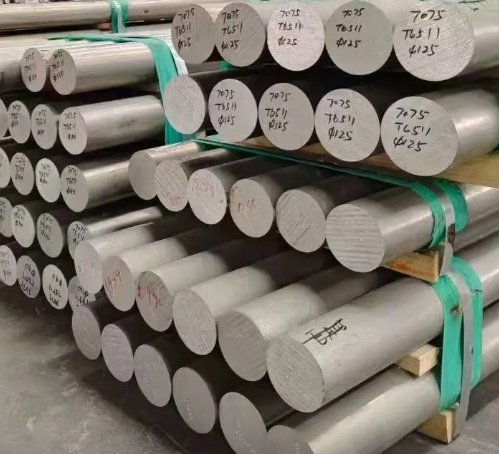
Alloy selection determines strength, machinability, corrosion resistance, anodizing response, and cost. For most custom machined bushings, 6061-T6 is the baseline choice because it balances availability, price, mechanical properties, and surface finish. Higher-strength alloys such as 7075-T6 are used when loads are higher and corrosion conditions are controlled.
| Alloy | Typical Tensile Strength | Machinability | Corrosion Resistance | Typical Use |
|---|---|---|---|---|
| 6061-T6 | About 290 MPa | Good | Good | General-purpose sleeve, flange, spacer, and mounting bushings. |
| 6082-T6 | About 300 MPa | Good | Good | Structural components, European-spec machined parts. |
| 7075-T6 | About 570 MPa | Good | Moderate | High-strength lightweight parts where fatigue and load capacity matter. |
| 2024-T3/T4 | About 470 MPa | Good | Lower than 6061 | Aerospace-style applications where strength is prioritized and protection is applied. |
| 5052 | About 210 MPa | Fair | Very good | Marine or sheet-formed components; less common for precision turned bushings. |
As a practical default, 6061-T6 aluminum bushing material is suitable for many spacers, housings, light-duty pivots, and structural sleeves. For high load, thin wall, or fatigue-sensitive applications, 7075-T6 may be preferred, but it normally needs careful corrosion protection and material traceability.
Key Engineering Advantages
Aluminum bushings are selected for measurable assembly-level benefits. The most visible benefit is mass reduction. Aluminum density is approximately 2.70 g/cm³, compared with about 7.85 g/cm³ for carbon steel and about 8.8 g/cm³ for many bronzes. For the same geometry, this represents a weight reduction of roughly 65% compared with steel and around 69% compared with bronze.
- Low weight: valuable in aerospace, automotive, robotics, handheld devices, and moving machine axes.
- Excellent machinability: supports tight tolerances, fine surface finishes, and economical CNC turning or milling.
- Good corrosion resistance: especially with anodizing, passivation-compatible assemblies, or sealed environments.
- Thermal conductivity: useful where the bushing also functions as a heat path.
- Non-sparking behavior: beneficial in selected environments, subject to full safety validation.
- Finish flexibility: clear anodized, black anodized, hardcoat anodized, chem-film, nickel plating, PTFE coating, or dry-film lubricant.
Limitations and When Not to Use Aluminum
Aluminum is not a universal replacement for bronze, hardened steel, or engineered plastic. Its surface hardness and galling resistance are limited in uncoated metal-on-metal sliding. When used against steel shafts under oscillating or rotating load, uncoated aluminum can wear rapidly unless the contact pressure, speed, lubrication, and surface treatment are controlled.
Hard anodizing can significantly improve wear resistance, but it also changes dimensions and can introduce brittleness at sharp edges. The coating thickness must be included in the final bore size, press-fit calculation, and edge break specification.
- Avoid uncoated aluminum for high-load, poorly lubricated, continuous rotary bearing service.
- Use bronze, steel-backed composite, PTFE-lined, or polymer bushings when PV load is high.
- Check galvanic corrosion if the bushing contacts stainless steel, carbon steel, copper alloys, or carbon fiber in wet environments.
- Account for lower thread strength if the bushing includes internal or external threads.
- Consider creep or relaxation if the aluminum spacer is clamped under high bolt preload at elevated temperature.
Practical warning for bearing applications
For a rotating shaft, aluminum should not automatically be treated like bronze bearing material. A safe design normally includes hard anodizing, a wear liner, lubricant, a compatible shaft finish, or a separate bearing element. For critical motion systems, calculate contact stress and PV value, then validate by testing under real temperature, contamination, and duty-cycle conditions.
Machining and Manufacturing Process
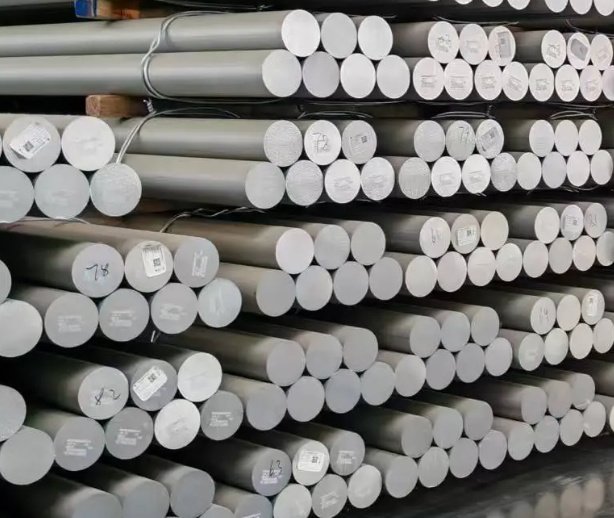
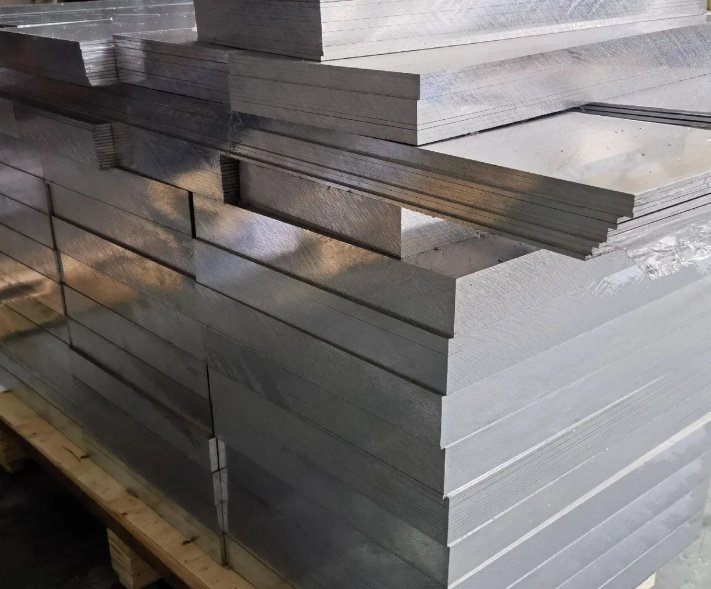
Most aluminum bushings are produced by CNC turning from round bar, tube, or billet. Simple sleeve and spacer bushings can be manufactured efficiently on automatic lathes or Swiss-type machines. Flanged, stepped, cross-drilled, slotted, or threaded designs may require secondary milling, drilling, broaching, reaming, deburring, and finishing operations.
Typical CNC Operations
- Facing: establishes controlled overall length and square end faces.
- Drilling and boring: creates the internal diameter with better concentricity than drilling alone.
- Reaming: improves bore size consistency and finish for slip-fit shafts or dowel pins.
- OD turning: controls the outside diameter for press-fit or housing location.
- Grooving: adds lubrication grooves, retaining-ring grooves, or clearance features.
- Threading: creates internal or external threads for adjustable or mounting bushings.
- Chamfering and deburring: prevents shaving during assembly and protects anodized edges.
- Surface finishing: includes anodizing, hardcoat anodizing, chem-film, plating, polishing, or coating.
Machining Tolerances
Tolerance depends on bushing size, wall thickness, alloy, machine capability, inspection method, and finish. For many CNC-machined aluminum bushings, general dimensions can be held within ±0.05 mm, while precision bores may be controlled to ±0.01 mm or tighter when geometry and production volume justify the process. Thin-wall bushings require special attention because clamping pressure and cutting heat can distort the part.
| Feature | Common Commercial Tolerance | Precision Machined Tolerance | Important Control |
|---|---|---|---|
| Inside diameter | ±0.05 mm | ±0.01 to ±0.02 mm | Fit, shaft clearance, coating allowance |
| Outside diameter | ±0.05 mm | ±0.01 to ±0.03 mm | Press fit, housing location, concentricity |
| Overall length | ±0.10 mm | ±0.02 to ±0.05 mm | Stack height, clamp load, spacing accuracy |
| Concentricity | 0.05 to 0.10 mm | 0.01 to 0.03 mm | Runout, shaft alignment, vibration |
| Surface roughness | Ra 1.6 to 3.2 µm | Ra 0.4 to 0.8 µm | Sliding friction, seal contact, appearance |
Surface Treatments and Coatings
Surface treatment is often the difference between a simple aluminum spacer and a functional aluminum bearing bushing. The finish affects wear life, corrosion resistance, electrical conductivity, color, friction, and dimensional tolerance.
| Finish | Typical Purpose | Approximate Thickness | Design Consideration |
|---|---|---|---|
| Clear or black anodizing | Corrosion protection, appearance, light wear resistance | 5 to 25 µm | About half of the anodic layer grows into the surface and half builds outward. |
| Hardcoat anodizing | Improved hardness and wear resistance | 25 to 75 µm | Can reduce bore size; sealing and edge radius should be specified. |
| Chem-film conversion coating | Corrosion resistance with electrical conductivity | Very thin | Useful where grounding or conductivity is needed. |
| PTFE or dry-film lubricant | Lower friction and improved dry-running behavior | Varies by system | Requires adhesion testing and final bore verification. |
| Nickel plating | Hardness, corrosion protection, appearance | Typically 5 to 25 µm | May be used when anodizing is not suitable for the mating environment. |
Coating allowance example
If a bushing bore is machined to 20.000 mm before hardcoat anodizing and the coating builds inward by approximately 15 µm per side, the finished bore may be close to 19.970 mm before post-finishing. For sliding fits, the machining drawing should state whether the dimension applies before or after anodizing.
Fit, Clearance, and Tolerance Design
Fit design determines whether the bushing installs easily, stays retained, or allows the required shaft motion. A slip-fit aluminum sleeve bushing may need running clearance between the shaft and bore. A press-fit bushing must account for housing material, wall thickness, insertion force, thermal expansion, and coating compression.
Aluminum expands more than steel under temperature change. The coefficient of thermal expansion for aluminum is approximately 23 × 10⁻⁶ /°C, while carbon steel is about 12 × 10⁻⁶ /°C. In assemblies with steel shafts and aluminum bushings, clearance may increase or decrease depending on which part is constrained and how heat flows through the assembly.
Common Fit Conditions
- Slip fit: used when the bushing must slide over a shaft, screw, or pin during assembly.
- Running clearance: used when relative motion occurs between shaft and bore.
- Transition fit: used for accurate location with light assembly force.
- Press fit: used when the bushing must be retained in a housing without fasteners.
- Bonded fit: used when adhesive retention is preferred to avoid distortion from press-fit load.
Real Engineering Example: Weight Reduction in a Robotic Arm
A robotic gripper assembly used twelve steel spacer bushings with an outside diameter of 18 mm, inside diameter of 8 mm, and length of 22 mm. Replacing them with 6061-T6 aluminum spacer bushings changed only the spacer material and finish while keeping the same geometry.
| Parameter | Steel Spacer | 6061-T6 Aluminum Spacer | Result |
|---|---|---|---|
| Density | 7.85 g/cm³ | 2.70 g/cm³ | About 65.6% lower material density |
| Approximate mass per part | About 34 g | About 12 g | About 22 g saved per bushing |
| Quantity per assembly | 12 pieces | 12 pieces | About 264 g saved per gripper |
| Functional change | Baseline stiffness | Clear anodized, same stack height | Lower moving mass without redesigning the joint |
The most important engineering result was not just lower static weight. Reduced moving mass lowered acceleration load on the wrist axis and helped improve cycle consistency. In similar automation applications, aluminum spacer bushings can be a cost-effective weight reduction measure when compressive load and joint stiffness remain within limits.
Aluminum Bushing vs Bronze, Steel, and Plastic Bushings
| Material | Main Strength | Main Limitation | Best Use Case |
|---|---|---|---|
| Aluminum | Lightweight, machinable, corrosion resistant with finish | Lower uncoated wear resistance than bronze or hardened steel | Light-duty pivots, spacers, sleeves, housings, weight-sensitive assemblies |
| Bronze | Excellent bearing behavior and galling resistance | Heavy and often higher material cost | Loaded rotating or oscillating shafts with lubrication |
| Steel | High strength and stiffness | Heavy and may require corrosion protection | High-load structural sleeves, hardened wear surfaces, impact applications |
| Stainless steel | Strength plus corrosion resistance | Higher cost, harder to machine than aluminum | Food, medical, marine, and chemical environments |
| Engineering plastic | Low friction, lightweight, chemical resistance | Lower stiffness, creep, thermal sensitivity | Dry-running light-load bearings, electrical isolation, low-noise mechanisms |
A useful rule for early material screening is simple: do not use an uncoated aluminum bushing as a direct bronze bearing substitute unless the load, speed, lubrication, and wear testing support it. Use aluminum when mass, machinability, corrosion resistance, and dimensional customization are the dominant requirements.
Design Checklist for Custom Aluminum Bushings
A complete drawing or purchase specification reduces production risk and avoids fit problems after anodizing or plating. The following items are especially important for buyers, design engineers, and manufacturing engineers.
- Part name and function: sleeve, spacer, flange, shoulder, threaded, or lined bushing.
- Material grade and temper: for example, 6061-T6, 6082-T6, 7075-T6, or 2024-T3.
- Critical dimensions: ID, OD, length, flange diameter, flange thickness, shoulder length, groove position.
- Fit requirement: clearance fit, press fit, slip fit, transition fit, or bonded installation.
- Surface finish: bore roughness, OD roughness, visual finish, and deburring requirements.
- Coating: anodizing type, hardcoat thickness, sealing, color, masking, or post-machining after coating.
- Load case: radial load, axial load, clamp load, shock, vibration, and duty cycle.
- Mating components: shaft material, housing material, lubricant, seal, fastener, or adhesive.
- Environmental exposure: temperature, humidity, salt spray, chemicals, UV exposure, or washdown.
- Inspection standard: AQL, first article inspection, CMM report, bore gauge report, material certificate.
- Production quantity: prototype, low-volume CNC batch, or mass production.
Buyer tip: dimensions after finishing
For anodized aluminum bushings, state clearly whether dimensions are required before or after finishing. If the drawing only shows final dimensions but the coating thickness is not specified, the supplier may machine the part correctly but deliver a bore or OD that does not meet the intended assembly fit.
Quality Inspection Points
Aluminum bushings often appear simple, but small errors in bore size, concentricity, burrs, or coating thickness can cause assembly failure. Reliable inspection should focus on functional dimensions and installation surfaces, not only appearance.
- Bore diameter: inspect with plug gauges, air gauges, bore gauges, or CMM depending on tolerance.
- OD and roundness: important for press-fit retention and alignment.
- Concentricity: critical for rotating shafts, guide pins, and multi-bushing assemblies.
- Face parallelism: important for spacer bushings and bolted stack-ups.
- Coating thickness: verify anodizing or plating where fit and wear life depend on it.
- Edge condition: burrs can damage seals, scrape coatings, or create false stack height.
- Material traceability: important for aerospace, medical, defense, transportation, and safety-related equipment.
In high-reliability assemblies, surface finish, concentricity, and bore tolerance are often more important than nominal strength. A lightweight aluminum bushing that is dimensionally unstable or poorly deburred can create more failures than a heavier part with controlled manufacturing quality.
Summary
Aluminum bushings are a strong choice for lightweight spacing, locating, guiding, and light-duty bearing functions. They are especially effective when CNC machining accuracy, low mass, corrosion-resistant finishing, and custom geometry are required. The best results come from selecting the right alloy, defining the fit condition, accounting for anodizing or coating buildup, and validating wear behavior under real load and temperature conditions.
For buyers and engineers comparing aluminum sleeve bushings, flanged bushings, spacer bushings, and coated bearing sleeves, the most important specification details are material grade, ID and OD tolerance, length tolerance, surface finish, coating thickness, edge break, and inspection method. When these details are controlled, a custom aluminum bushing can deliver measurable weight savings, reliable assembly fit, and repeatable mechanical performance.