
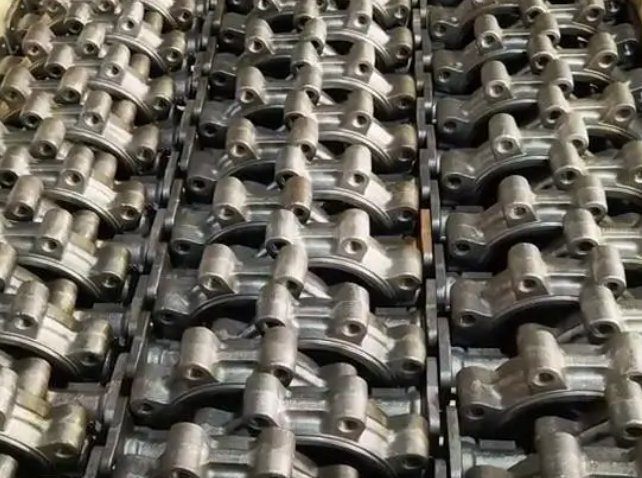
Ductile iron, also known as nodular cast iron, spheroidal graphite iron or SG iron, is a cast ferrous alloy engineered to combine the castability of gray iron with significantly higher toughness, elongation and impact resistance. Its performance comes from graphite that forms as rounded nodules rather than flakes, reducing internal stress concentration and improving mechanical behavior.
For engineers, buyers and manufacturers, ductile iron is often selected when a component needs strength, vibration damping, pressure tightness, wear resistance and economical production in complex shapes. It is widely used in automotive parts, hydraulic components, pipe fittings, valves, pumps, agricultural machinery, construction equipment and CNC-machined industrial castings.
What Is Ductile Iron?
Ductile iron is a type of cast iron in which graphite appears as spheroids or nodules. This microstructure is achieved by treating molten iron with magnesium or magnesium alloy before casting, followed by inoculation to control graphite formation.
Compared with gray cast iron, ductile iron has higher tensile strength, yield strength and elongation. Compared with cast steel, it usually offers better castability, lower melting temperature, better vibration damping and competitive cost for complex geometry.
Common Names for Ductile Iron
- Nodular cast iron
- Spheroidal graphite cast iron
- SG iron
- Ductile cast iron
- EN-GJS iron under European standards
How Ductile Iron Gets Its Strength
The key difference between ductile iron and gray iron is graphite shape. In gray iron, graphite flakes act as crack initiators. In ductile iron, graphite nodules distribute stress more evenly, allowing the metal matrix to carry higher loads before fracture.
The final performance depends on both graphite nodularity and matrix structure. A ferritic matrix improves ductility and machinability, while a pearlitic matrix increases strength and hardness. Heat treatment can further modify properties, especially in austempered ductile iron, commonly called ADI.
- Ferritic ductile iron: high elongation, good toughness and excellent machinability.
- Pearlitic ductile iron: higher tensile strength, better wear resistance and reduced ductility.
- Ferritic-pearlitic ductile iron: balanced strength, ductility and cost.
- Austempered ductile iron: very high strength-to-weight ratio and fatigue resistance after austempering heat treatment.
Ductile Iron Grades and Standards
Ductile iron is specified by mechanical properties rather than only chemical composition. Standards such as ASTM A536, EN 1563, ISO 1083 and JIS G5502 define common grades by tensile strength, yield strength and elongation.
| Standard / Grade | Typical Description | General Use |
|---|---|---|
| ASTM A536 60-40-18 | Ferritic, high ductility | Pressure parts, brackets, housings and safety-critical castings |
| ASTM A536 65-45-12 | Ferritic-pearlitic balance | General engineering components and machined castings |
| ASTM A536 80-55-06 | Higher strength with moderate ductility | Gears, crankshafts, hubs and structural parts |
| ASTM A536 100-70-03 | Pearlitic high-strength ductile iron | Wear-resistant and heavily loaded components |
| EN-GJS-400-15 | European ferritic grade | Valves, fittings, housings and general castings |
| EN-GJS-500-7 | Medium-strength European grade | Machine frames, levers, supports and mechanical parts |
For many applications, 60-40-18 is chosen when elongation and toughness are more important than maximum strength, while 80-55-06 or EN-GJS-600 grades are selected when higher load capacity is required.
Buyer and engineering note: how to specify ductile iron correctly
When requesting a quotation, specify the material standard and grade, casting process, drawing revision, dimensional tolerance, machining requirements, heat treatment, surface coating, pressure test requirements and inspection documents. Avoid vague requests such as “ductile iron casting” without a grade, because ferritic and pearlitic grades can behave very differently in service and during CNC machining.
Mechanical and Physical Properties
Ductile iron properties vary by grade, section thickness, heat treatment and foundry process control. Typical engineering considerations include tensile strength, yield strength, elongation, hardness, fatigue strength, modulus of elasticity, impact toughness and damping capacity.
- Tensile strength: commonly ranges from about 400 MPa to more than 700 MPa depending on grade.
- Yield strength: generally higher than gray iron and suitable for load-bearing parts.
- Elongation: can exceed 15% in ferritic grades and decrease in high-strength pearlitic grades.
- Hardness: controlled by matrix structure and heat treatment.
- Damping capacity: better than steel, useful for machine bases and housings.
- Thermal conductivity: generally lower than gray iron but adequate for many industrial uses.
Because ductile iron is cast, properties may differ between separately cast test bars and actual components. For critical parts, engineers often require test coupons cast with the part or from representative locations.
Ductile Iron vs Gray Iron, Steel and Malleable Iron
Ductile iron is often compared with gray cast iron, cast steel and malleable iron. The right choice depends on strength, ductility, damping, cost, casting complexity and machining needs.
Ductile Iron vs Gray Cast Iron
Gray iron is highly machinable and provides excellent vibration damping, but its flake graphite structure limits ductility and impact resistance. Ductile iron is preferred for components exposed to shock loading, pressure, bending or cyclic stress.
Ductile Iron vs Cast Steel
Cast steel offers excellent toughness and weldability in many grades, but it may require higher melting energy and can be more difficult to cast into complex shapes. Ductile iron can provide comparable strength for many applications while improving damping and reducing manufacturing cost.
Ductile Iron vs Malleable Iron
Malleable iron is produced by heat treating white iron, while ductile iron achieves nodular graphite directly through melt treatment. Ductile iron has largely replaced malleable iron in many industrial applications because it is more efficient to produce and available in a wider range of section sizes.
Common Applications of Ductile Iron
Ductile iron is used where cast geometry, strength and durability must be combined. Its ability to form complex shapes makes it suitable for parts that would be expensive to fabricate from steel plate or billet.
- Automotive suspension parts, steering knuckles, crankshafts and differential cases
- Valve bodies, pump housings, flanges and pipe fittings
- Hydraulic manifolds, cylinders and pressure-retaining components
- Agricultural machinery brackets, hubs, arms and gearbox housings
- Construction machinery parts, rollers, supports and bearing housings
- Wind power, rail, mining and heavy equipment castings
- Machine tool bases, frames and vibration-damping structures
For pressure-containing components, ductile iron is commonly selected because it can combine pressure tightness, machinability and mechanical reliability when properly cast, tested and inspected.
Casting, Heat Treatment and Quality Control
Reliable ductile iron production requires strict foundry control. Magnesium treatment, inoculation, pouring temperature, mold design, feeding, cooling rate and chemical composition all influence graphite nodularity, carbide formation and shrinkage tendency.
Common casting processes include sand casting, resin sand casting, shell molding, lost foam casting and centrifugal casting. The best process depends on part size, annual volume, dimensional tolerance, surface finish and tooling budget.
Quality Checks Often Used for Ductile Iron Castings
- Chemical composition analysis
- Metallographic inspection for nodularity, nodule count and matrix structure
- Tensile testing and hardness testing
- Dimensional inspection with CMM, gauges or 3D scanning
- Ultrasonic testing, magnetic particle testing or radiographic testing when required
- Pressure testing for valves, pumps and hydraulic parts
Procurement note: documents that reduce sourcing risk
For engineered ductile iron components, request quality documentation such as a material certificate, heat number traceability, hardness report, dimensional inspection report, metallographic report and non-destructive testing records if required by the drawing. These records help verify that the delivered casting matches the specified grade and service requirements.
Ductile Iron CNC Machining
Ductile iron CNC machining is widely used after casting to produce precision surfaces, bores, threads, sealing faces, bearing seats and mounting features. Although ductile iron is generally machinable, its behavior depends on grade, hardness, pearlite content, casting skin, carbides and part rigidity.
Ferritic ductile iron tends to machine more easily and with lower tool wear. Pearlitic and high-strength grades can generate higher cutting forces and may require optimized carbide inserts, coated tools, stable fixturing and controlled cutting parameters.
Machining Considerations for Ductile Iron Parts
- Remove abrasive casting skin before finishing critical surfaces.
- Allow sufficient machining allowance for casting variation, draft and distortion.
- Use rigid fixturing to reduce vibration during milling, turning and boring.
- Control dust and chips because cast iron machining can create fine particulate material.
- Check hardness before machining large batches to prevent unexpected tool wear.
- Plan datum surfaces early so casting and machining teams use consistent references.
Typical CNC operations for ductile iron include turning, milling, drilling, boring, reaming, tapping, thread milling, surface grinding and multi-axis machining for complex castings. For sealing faces and hydraulic components, surface roughness and flatness requirements should be clearly defined on the drawing.
Engineer note: designing ductile iron castings for machining
Place machining stock only where it is needed, avoid deep blind pockets that trap chips, add generous internal radii, maintain uniform wall thickness where possible and confirm tool access before tooling is built. Early design-for-manufacturing review can reduce scrap, shorten CNC cycle time and improve dimensional repeatability.
Surface Treatment and Corrosion Protection
Ductile iron has moderate corrosion resistance in normal environments but usually requires surface protection for outdoor, buried, marine, chemical or high-humidity service. The coating choice depends on exposure, temperature, appearance and maintenance requirements.
- Black oxide for light corrosion resistance and appearance
- Phosphate coating for oil retention and paint adhesion
- Epoxy painting for industrial and pipeline components
- Zinc-rich primer or galvanizing for outdoor structures where applicable
- E-coating or powder coating for automotive and machinery parts
- Nickel plating or specialized coatings for wear and corrosion control
Before coating, machined ductile iron surfaces should be cleaned to remove cutting fluids, dust, scale and graphite residues. Coating thickness should also be considered when tight fits, threaded interfaces or sealing surfaces are involved.
How to Choose the Right Ductile Iron Grade
The best ductile iron grade is not always the strongest one. A high-strength pearlitic grade may increase tool wear or reduce impact toughness, while a ferritic grade may provide better machinability and elongation but lower tensile strength.
- Define the load type: static, cyclic, impact, pressure or wear.
- Choose the relevant standard, such as ASTM A536, EN 1563 or ISO 1083.
- Match tensile strength, yield strength, elongation and hardness to the application.
- Review wall thickness and casting complexity with the foundry.
- Confirm CNC machining tolerances, datum strategy and surface roughness.
- Specify heat treatment, coating and inspection requirements.
- Validate the first article before approving mass production.
Buyer note: cost drivers in ductile iron components
Major cost drivers include casting weight, tooling complexity, annual volume, grade selection, rejection risk, machining time, tolerance level, inspection requirements and surface treatment. A slightly more expensive casting design may reduce CNC machining time and lower total landed cost.
Key Takeaways
Ductile iron is a versatile engineering material that offers a practical balance of strength, ductility, castability, damping and cost. Its nodular graphite structure makes it suitable for components that need more toughness than gray iron while still benefiting from cast iron manufacturing efficiency.
For the best results, specify the correct grade, verify foundry process capability, design with casting and CNC machining in mind, and align inspection requirements with the actual service risk. When properly selected and manufactured, ductile iron can deliver long service life in demanding mechanical, hydraulic, automotive and industrial applications.