
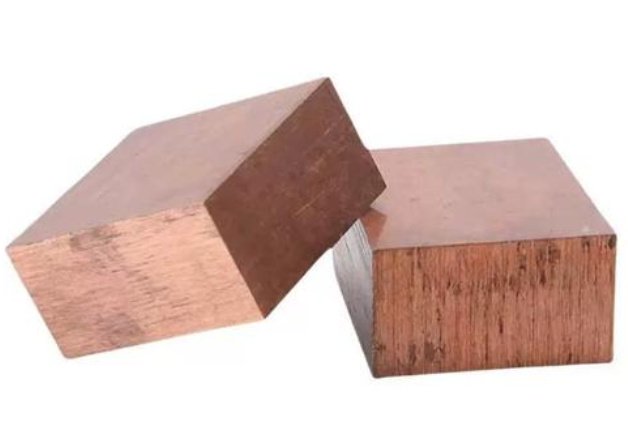
C18150 is a high-performance copper alloy used when a component must carry current or heat while retaining better strength, wear resistance and softening resistance than pure copper. It is widely known as C18150 copper chromium zirconium alloy, UNS C18150, or CuCrZr copper. Typical applications include resistance welding electrodes, electrical contacts, heat sinks, high-current connectors, continuous casting mold parts and CNC-machined thermal management components.
The search intent behind C18150 is usually practical: engineers want property data, machinists want production guidance, and buyers want to confirm whether the material is suitable, available and correctly specified. This guide covers those points with an emphasis on real manufacturing decisions.
What Is C18150 Copper Alloy?
C18150 is a precipitation-hardenable copper alloy containing chromium and zirconium. Chromium contributes strength and electrical performance after aging, while zirconium improves resistance to softening at elevated temperature. Compared with commercially pure copper such as C11000, C18150 provides a stronger balance of conductivity, hardness and temperature stability.
In international material conversations, you may also see CuCrZr / CuCr1Zr terminology. Exact equivalency should always be confirmed by the applicable standard, chemical limits and supplied temper, but the terms often refer to the same family of chromium zirconium copper alloys used for conductive and thermally demanding components.
C18150 Chemical Composition and Material Standards
C18150 is primarily copper, with controlled additions of chromium and zirconium. The exact limits depend on the governing specification, but a typical composition range is:
| Element | Typical Range or Limit | Function in C18150 |
|---|---|---|
| Copper, Cu | Balance | Provides high electrical and thermal conductivity |
| Chromium, Cr | About 0.50% to 1.50% | Improves strength after aging and supports conductivity |
| Zirconium, Zr | About 0.03% to 0.30% | Improves softening resistance and high-temperature stability |
| Other elements | Controlled residuals | Limited to protect conductivity and performance |
Common supply forms include bar, rod, plate, sheet, strip, forged blanks and custom CNC-machined parts. For purchasing or engineering documentation, specify UNS C18150, material condition, dimensions, tolerance requirements, testing requirements and the applicable ASTM, AMS, EN, customer or internal specification.
Key Mechanical, Electrical and Thermal Properties
C18150 is valued because it combines conductivity with mechanical strength. It is a precipitation-hardened copper alloy, so its final properties depend strongly on solution treatment, cold work, aging and supplied temper.
| Property | Typical Value Range | Engineering Meaning |
|---|---|---|
| Electrical conductivity | Approximately 75% to 85% IACS, depending on temper | Suitable for high-current conductive parts |
| Thermal conductivity | High, commonly above many bronzes and brasses | Useful for heat sinks, molds and thermal transfer parts |
| Tensile strength | Condition-dependent; commonly higher than pure copper | Supports load-bearing conductive components |
| Hardness | Varies by temper and aging condition | Affects wear resistance, machining and electrode life |
| Softening resistance | Better than many high-conductivity coppers | Helps maintain performance under thermal cycling |
| Corrosion behavior | Generally good in many industrial environments | Suitable for many electrical and cooling applications |
Property values should be treated as typical unless tied to a certified specification. For design allowables, always use values from the mill test report, applicable material standard or validated internal testing.
Why Engineers Choose C18150 Instead of Pure Copper
Pure copper is excellent for conductivity, but it can deform, wear or soften too easily in demanding mechanical and thermal environments. C18150 provides high electrical conductivity with higher strength, making it a practical option when C11000, C10100 or C10200 copper is too soft for the job.
Advantages of C18150
- Higher strength than pure copper while maintaining strong conductivity
- Good thermal conductivity for heat transfer and mold cooling
- Improved resistance to softening at elevated temperatures
- Good wear behavior for welding electrodes and high-contact-pressure parts
- Better dimensional stability than soft copper in many machined components
- Lower health and compliance concerns than beryllium copper in many use cases
Limitations to Consider
- Conductivity is lower than high-purity copper grades
- Material cost is usually higher than standard copper
- Final properties depend on the correct heat treatment and temper
- Tooling and fixturing must account for copper’s ductility and heat transfer
- Substitution with C18200 or other copper alloys should be engineering-approved
Engineer note: when C18150 is most likely the right choice
C18150 is often a strong candidate when the part must conduct electricity or heat, resist deformation, survive repeated thermal cycles and maintain contact geometry. Examples include resistance welding caps, high-current bus components, EDM-related parts, hot runner mold inserts, heat spreaders and precision connectors. It is less ideal when maximum conductivity is the only priority and mechanical stress is low.
Heat Treatment, Temper and Workability
C18150 gains its performance through a controlled heat-treatment route. A typical process may include solution treatment, rapid cooling and aging. Cold work may also be used to adjust strength and hardness. The final material condition is critical because two C18150 bars with the same chemistry can perform differently if supplied in different tempers.
Commonly requested conditions may include solution heat treated, cold worked, aged, hard drawn or customer-specified hardness conditions. For precision components, specify hardness range, conductivity requirement, grain size if relevant, and whether subsequent forming, brazing, welding or CNC machining will occur after supply.
Forming and Fabrication
C18150 can be formed and fabricated, but it is not as soft as pure copper in hardened conditions. Sharp bends, severe forming or post-machining straightening should be reviewed based on thickness, temper and direction of grain flow. Stress relief may be considered for parts with tight dimensional requirements after heavy machining.
CNC Machining of C18150 Copper Alloy
C18150 is commonly CNC machined into precision electrical, thermal and mold components. It machines better than very soft pure copper because its chromium-zirconium strengthening improves chip control, but it still requires proper tooling, feeds, cooling and workholding. Copper’s high thermal conductivity can pull heat away quickly, while its ductility can cause built-up edge if cutting conditions are poor.
Typical C18150 CNC machining operations include turning, milling, drilling, boring, threading, reaming, tapping, wire EDM and surface finishing. The alloy is suitable for tight-tolerance parts when stock condition, tool geometry and burr control are managed carefully.
CNC Machining Recommendations
- Use sharp carbide tools with polished flutes to reduce built-up edge.
- Apply positive rake geometry for cleaner shearing and lower cutting forces.
- Use appropriate coolant or lubrication to improve finish and tool life.
- Avoid rubbing cuts; maintain enough feed to produce a stable chip.
- Control burrs at cross holes, slots, thin walls and threaded features.
- Use rigid fixturing because copper alloys can deflect in thin sections.
- Plan stress relief or process sequencing for high-precision components.
For CNC-machined heat sinks, electrode holders and mold inserts, the part drawing should define critical surfaces, flatness, parallelism, surface roughness and inspection method. CNC-machined heat sinks, electrodes and connector parts often fail not because the alloy is wrong, but because tolerances, temper and finishing expectations were not specified clearly.
Manufacturing note: controlling burrs, threads and surface finish
C18150 can produce edge burrs on milled pockets, drilled holes and fine threads. Deburring should be planned as part of the machining route, not treated as an afterthought. For electrical contact surfaces, avoid aggressive finishing that changes geometry or embeds abrasive particles. For threaded holes, consider thread-forming versus thread-cutting based on wall thickness, hardness and assembly load.
Common Applications of C18150
C18150 is used across electrical, thermal, welding, molding and industrial manufacturing sectors. Its value comes from maintaining conductivity while improving mechanical life under load or heat.
Resistance Welding
C18150 is frequently used for spot welding electrodes, projection welding electrodes, seam welding wheels, electrode caps and shanks. The alloy’s strength, conductivity and softening resistance help improve electrode life and dimensional stability under repeated heating and pressure.
Electrical and Power Components
Applications include high-current connectors, terminals, busbar components, contact arms, switchgear parts, relay components and conductive fasteners. The alloy is useful where current-carrying ability must be paired with mechanical strength and wear resistance.
Molds, Tooling and Thermal Management
C18150 is used for injection mold inserts, die-casting components, hot runner parts, cooling blocks, heat spreaders and thermal transfer plates. Its thermal conductivity helps remove heat, while its hardness supports service life in tooling environments.
Aerospace, Automotive and Industrial Equipment
In demanding equipment, C18150 can be selected for conductive structural parts, sensor-related components, high-temperature current paths and precision machined copper alloy parts where pure copper lacks mechanical strength.
C18150 vs C18200, C17510, C17200 and Pure Copper
Material selection often involves comparing C18150 with other copper alloys. The correct choice depends on conductivity, strength, temperature, wear, compliance and cost.
| Material | General Profile | Typical Reason to Choose or Avoid |
|---|---|---|
| C18150 CuCrZr | High-conductivity copper alloy with chromium and zirconium | Choose for conductivity, strength and softening resistance balance |
| C18200 chromium copper | Chromium copper without intentional zirconium addition | Often similar in use, but may have lower softening resistance depending on condition |
| C17510 beryllium copper | High-conductivity beryllium copper alloy | Strong performance, but compliance and safety considerations may apply |
| C17200 beryllium copper | Very high strength copper alloy | Choose for strength and spring properties, not maximum conductivity |
| C11000 pure copper | Very high conductivity, low strength | Choose for maximum conductivity when mechanical loads are modest |
A common error is to avoid substituting C18200 for C18150 without approval when high-temperature stability, electrode life or customer specification compliance matters. Even if two alloys look similar on a quotation, they may not perform identically in production.
Buying, Specification and Quality Considerations
For purchasing teams, C18150 sourcing should focus on more than price per kilogram. Conductivity, hardness, straightness, flatness, traceability, ultrasonic testing, surface condition and machining allowance may all affect the final cost of a component.
A reliable specification should identify alloy, standard, temper, size, tolerance, quantity, heat lot traceability, certification requirements and any special processing such as stress relief, cutting, grinding or CNC machining.
Buyer note: what to include in an RFQ for C18150
Include UNS C18150 or CuCrZr designation, product form, dimensions, tolerances, required temper, hardness or conductivity target, surface finish, certification level, inspection requirements, country-of-origin needs and whether the material will be machined, welded, brazed or used as an electrode. Ask for a mill test report showing chemistry and relevant mechanical or conductivity data when traceability matters.
Quality Checks for Critical Parts
- Chemical composition verification
- Electrical conductivity testing, often reported as % IACS
- Hardness testing according to the specified scale
- Dimensional inspection for bar, plate or finished machined parts
- Surface inspection for cracks, laps, pits or handling damage
- Traceability to heat number and production lot
- Review of heat treatment condition and aging response
Design Tips for C18150 Components
When designing C18150 parts, treat the material as a conductive engineering alloy rather than a generic copper substitute. Geometry, current density, thermal path, contact pressure and machining sequence should be reviewed together.
- Use generous radii where current density and mechanical stress concentrate.
- Define contact surfaces clearly if electrical resistance is critical.
- Account for thermal expansion in assemblies with steel, aluminum or ceramics.
- Avoid unnecessary thin walls in machined copper alloy parts.
- Specify grain direction when mechanical loading or bending is directional.
- Confirm plating compatibility if nickel, silver, tin or gold plating is required.
- Validate performance under real operating temperature, not only room-temperature data.
Conclusion
C18150 is a practical, high-value copper alloy for components that need conductivity, strength, thermal performance and resistance to softening. It is especially useful for resistance welding electrodes, high-current electrical parts, mold components, heat transfer parts and CNC-machined precision copper components.
For successful use, define the alloy and temper accurately, verify conductivity and hardness, and align machining requirements with the final application. When properly specified and processed, C18150 offers a strong balance of manufacturability and service performance in demanding electrical and thermal environments.