
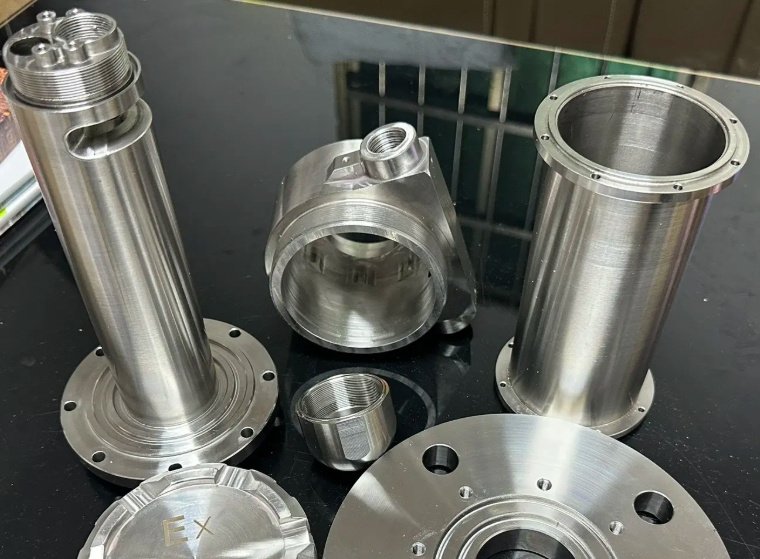
Machining Hastelloy superalloys to achieve consistent quality, economic viability, and reliable performance is a cornerstone capability for industries ranging from aerospace to chemical processing. Unlike conventional materials, Hastelloy demands a holistic, disciplined approach that integrates material science understanding with practical shop floor execution. This guide synthesizes proven best practices from tooling strategy and parameter optimization to thermal management and post-processing, providing a comprehensive framework to transform Hastelloy from a problematic material into a predictable and profitable machining operation.
1. Foundational Principle: Respect the Material's Nature
Successful Hastelloy machining begins with understanding its inherent challenges: rapid work hardening, low thermal conductivity, high strength at elevated temperatures, and a strong chemical affinity for tool materials. The core best practice is to adopt a mindset of controlled aggression—applying sufficient power and rigidity to cut the material decisively, while meticulously managing heat and mechanical stress. This principle informs every subsequent step, from initial blank preparation to final deburring. Attempting to "baby" the material with light cuts often exacerbates work hardening, while overly aggressive parameters generate destructive heat.
2. Systematic Tooling Selection and Management
Tooling is not a commodity but a engineered system for Hastelloy. The best practice mandates the use of premium-grade, uncoated or PVD-coated micro-grain carbide for most operations. For high-volume or high-speed finishing, ceramic or CBN (cubic boron nitride) tools may be justified. Geometry is critical: tools must have a sharp, positive rake angle (≥ 10°) and a honed edge preparation to promote shearing over plowing. A dedicated tool management protocol is essential—tools used for Hastelloy should never be intermixed with those for steel or aluminum to prevent cross-contamination and edge degradation. Implementing a tool wear monitoring system, where inserts are changed at a predetermined flank wear limit (e.g., 0.3 mm), prevents catastrophic failure and ensures consistent finish quality.
Tool material & coating selection matrix for common Hastelloy grades
- Hastelloy C-276 / C-22 (General Machining): Sub-micron carbide with AlTiN or TiAlN PVD coating.
- Hastelloy B-2 / B-3 (Low-speed, heavy cuts): Tough, uncoated micro-grain carbide or M-class carbide.
- Hastelloy X (High-temperature finishing): Silicon Nitride (SiAlON) ceramics or CBN for stable, high-speed operations.
- Drilling & Tapping: Solid carbide tools with high helix angles and specialized lubricant-through channels.
3. Optimized Cutting Parameters and Toolpath Strategy
Parameters must be engineered, not guessed. The established best practice is the "Low Speed, High Feed, Constant Load" methodology. Cutting speeds (Vc) should be conservative, typically 30-50 m/min for carbide, to limit heat generation. Feed rates should be maximized within machine and fixture limits to ensure positive cutting action and chip evacuation. Depth of cut should be sufficient to always cut beneath any work-hardened layer from the previous pass—a minimum of 0.1 mm for finishing is a good rule.
Toolpath strategy is equally important. Use trochoidal, peel, or plunge milling for pockets to maintain constant tool engagement, avoiding sharp directional changes that cause shock loading. For turning, use a lead angle to engage the insert's stronger nose radius and distribute heat. CNC programs should avoid tool retraction and re-entry into a cut on the same Z-level, as this creates dwell marks that locally work-harden the surface.
4. Rigorous Thermal and Mechanical Stability Control
Heat management is the single greatest determinant of tool life and part accuracy. The best practice is to use high-pressure through-tool coolant (≥70 bar) not just for lubrication, but primarily for chip evacuation and heat removal from the cutting zone. For operations where coolant is impractical (e.g., certain turning), use compressed air with a directed mist. To combat thermal distortion in precision parts, implement a staged machining and stress-relief process: rough the part to within 1-2 mm of final dimensions, remove it from the fixture for a stabilization anneal, then re-fixture for semi-finishing and final finishing. This breaks the cycle of stress redistribution that causes post-machining distortion.
5. Post-Machining Handling and Validation
The job is not finished when the part comes off the machine. Hastelloy's corrosion resistance can be compromised by improper handling. Best practices include:
- Dedicated Deburring: Use ceramic or carbide burrs. Never use steel files or wire brushes, which can embed iron particles and create sites for galvanic corrosion.
- Cleaning: Thoroughly clean parts with a non-chlorinated solvent to remove all cutting fluid and chips.
- Passivation: For maximum corrosion resistance, especially for welds or deeply machined surfaces, a nitric acid passivation treatment is recommended to restore the protective oxide layer.
- Inspection: Beyond dimensional checks, inspect for surface integrity. Use dye penetrant testing on critical areas to check for micro-cracks induced by machining stress.
Conclusion: A Culture of Process Control
Mastering Hastelloy machining is less about a single brilliant technique and more about cultivating a culture of disciplined process control. By systematically applying these best practices—understanding the material, selecting and managing tools precisely, optimizing parameters and toolpaths, controlling heat and stress, and handling the finished part with care—manufacturers can achieve predictable, high-quality results, extended tool life, and ultimately, a strong competitive advantage in producing components for the world's most demanding applications.