
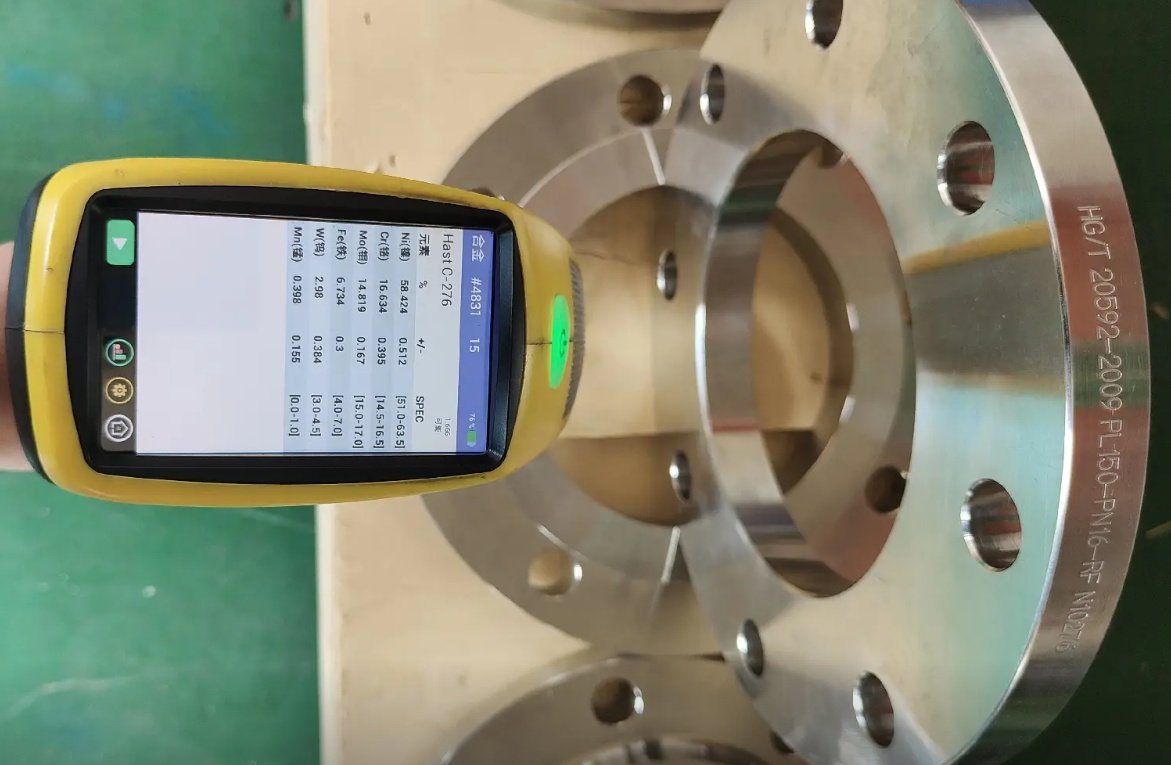
In industries where material failure can lead to catastrophic environmental incidents, production shutdowns, and multi-million dollar losses, selecting the right corrosion-resistant alloy is not just a design choice—it’s a critical operational decision. While stainless steels and other nickel alloys are common, Hastelloy stands apart as the benchmark for performance in the most aggressive environments. Its reputation is built on a unique, purpose-driven chemistry and microstructure that systematically overcomes the fundamental limitations of other materials. This article dives into the specific mechanisms, comparative data, and field results that make Hastelloy the superior choice for engineers fighting against severe corrosion.
1. Engineered Elemental Synergy: The Core Chemistry of Unmatched Resistance
Hastelloy’s corrosion resistance isn't an accidental property; it’s the direct result of a carefully balanced, synergistic alloying system. At its core is a nickel matrix, chosen for its inherent stability in a wide range of chemical environments. The strategic addition of molybdenum provides exceptional resistance to reducing acids like hydrochloric and sulfuric. Chromium is added to combat oxidizing conditions, such as those containing nitric acid or ferric chloride. Tungsten further enhances the alloy's resistance to localized pitting and crevice corrosion.
More critically, Hastelloy is produced with extremely low levels of carbon and silicon—impurities that form harmful carbides and silicides in other alloys, creating weak points for corrosive attack. This precise control of composition is what allows grades like Hastelloy C-276 to maintain a "passive film"—a stable, self-healing oxide layer on its surface—even in environments that rapidly break down the protective layers on stainless steel.
Key corrosive media where Hastelloy significantly outperforms 316L stainless steel
- Hot (>60°C) concentrated hydrochloric acid (HCl)
- Chlorine gas and wet chlorine environments
- Phosphoric acid with fluoride impurities
- Seawater and chloride-containing brines at elevated temperatures
- Sulfuric acid (H2SO4) across a wide concentration and temperature range
2. Conquering the Trio of Critical Corrosion Failure Modes
General uniform corrosion is often predictable and manageable. The real challenges that lead to sudden, catastrophic failures are localized and stress-related corrosion modes. Hastelloy is specifically designed to excel where other materials consistently fail.
Pitting and Crevice Corrosion: Chloride ions are the nemesis of stainless steel, readily attacking its passive layer to create deep, penetrating pits. Hastelloy’s high molybdenum and tungsten content dramatically increases its "Pitting Resistance Equivalent Number" (PREN). For example, Hastelloy C-276 has a PREN > 65, compared to ~25 for 316L stainless steel, making it virtually immune to pitting in most chloride-rich process streams.
Stress Corrosion Cracking (SCC): This brittle, unpredictable failure occurs under tensile stress in specific corrosive environments (e.g., chlorides + heat). Austenitic stainless steels are highly susceptible. Hastelloy’s low carbon content and optimized microstructure make it one of the few commercially available alloys with proven resistance to chloride-induced SCC, a key reason for its use in heat exchanger tubing and reactor vessels.
Intergranular Corrosion: This attack occurs along grain boundaries, often after welding or improper heat treatment sensitizes the material. By maintaining ultra-low carbon levels and adding stabilizing elements, Hastelloy grades like C-276 are supplied in a "solution-annealed" condition that resists this form of degradation, even after standard fabrication.
3. Real-World Performance Data: From Lab Tests to Field Results
Laboratory corrosion rate tables tell only part of the story. The true measure of an alloy's worth is its performance in actual, complex industrial service. Field data consistently validates Hastelloy’s superiority. In a major chemical plant processing hot mixed acids, Hastelloy C-276 heat exchanger tubes showed a corrosion rate of less than 0.025 mm/year after 5 years of continuous operation. Identical units made from a high-grade duplex stainless steel required replacement after just 18 months due to through-wall pitting, with a recorded corrosion rate over 0.5 mm/year.
In flue gas desulfurization (FGD) systems, where environments cycle between acidic, chloride-laden slurry and oxidizing gas, Hastelloy C-276 and C-22 outlet ducts and dampers routinely achieve 15-20 year service lives. Alternative materials like 6Mo super-austenitic stainless steels often fail by crevice corrosion at welds and under deposits within 5-7 years, leading to unplanned outages and expensive repairs.
4. Beyond Chemistry: Fabricability and Lifecycle Cost Advantage
The best corrosion-resistant alloy is useless if it cannot be reliably fabricated into complex components. Hastelloy’s advantage extends here as well. Its weldability is excellent, and with proper procedures (using matching filler metals and post-weld heat treatment when required), the weld zones retain corrosion resistance nearly equal to the base metal. This is a critical factor often overlooked; many alloys lose their corrosion resistance at welds, creating the system's weakest link.
While the initial cost of Hastelloy is higher than stainless steel, its total lifecycle cost is almost always lower for demanding applications. A 2024 analysis of offshore oil and gas piping showed that switching from duplex stainless to Hastelloy C-276 increased the mean time between failures (MTBF) from 4 years to over 15 years. When factoring in the costs of replacement parts, production downtime, and environmental/safety risks of a failure, the Hastelloy system delivered a 40% lower total cost of ownership over a 20-year period.
Conclusion: The Definitive Choice for Defining Challenges
Hastelloy earns its status as the best choice for corrosion resistance not through a single magical property, but through a holistic engineering solution. It combines a purpose-built chemical composition to attack the root causes of corrosion, proven resistance to the most dangerous localized failure modes, and validated long-term performance in the field. For engineers designing systems where failure is not an option—in chemical processing, pollution control, pharmaceutical production, and offshore energy—specifying Hastelloy is a decision backed by chemistry, data, and decades of operational success.