
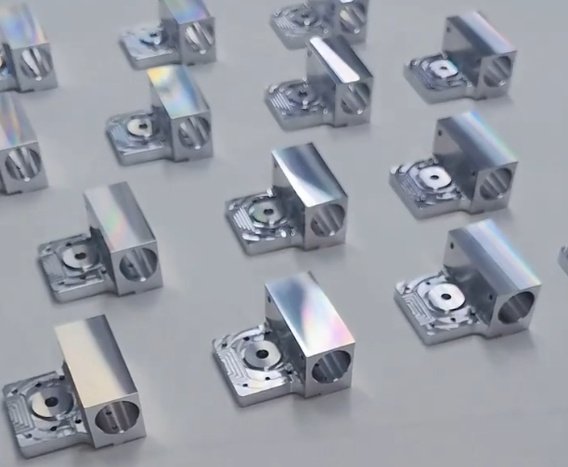
Titanium alloys occupy a unique position in advanced materials engineering, combining the highest strength-to-weight ratio of any structural metal with exceptional corrosion resistance and biocompatibility. Despite representing less than 1% of global metal consumption, titanium alloys enable technologies from supersonic aircraft to implantable medical devices that would be impossible with conventional materials. This guide examines the major titanium alloy grades, their distinctive properties, and the industrial applications where their performance justifies premium cost.
Titanium Metallurgy Fundamentals
Pure titanium exists in two allotropic forms. Below 1,620°F (882°C), the hexagonal close-packed alpha phase dominates, providing moderate strength and excellent corrosion resistance. Above this transition temperature, the body-centered cubic beta phase emerges, offering superior formability and heat treatability. Alloy designers manipulate this phase transformation through specific elemental additions to create materials with tailored property combinations.
Alloying elements are classified by their effect on phase stability. Alpha stabilizers—aluminum, oxygen, nitrogen, carbon—raise the beta transus temperature and strengthen the alpha phase. Beta stabilizers—vanadium, molybdenum, niobium, iron, chromium—depress the beta transus and enable heat treatment response. Neutral elements—tin, zirconium—provide solid solution strengthening without strongly favoring either phase.
This alloying philosophy produces four primary titanium alloy families: commercially pure grades, alpha alloys, alpha-beta alloys, and beta alloys. Each family serves distinct application requirements with specific trade-offs between strength, ductility, heat resistance, and processing complexity.
Commercially Pure Titanium Grades
Commercially pure (CP) titanium contains no intentional alloying additions beyond the residual interstitial elements (oxygen, nitrogen, carbon, iron) that naturally occur during sponge production and melting. These grades offer the best corrosion resistance and formability within the titanium spectrum but the lowest strength.
Grade 1: Maximum Ductility and Corrosion Resistance
Grade 1 contains the lowest interstitial content, with oxygen limited to 0.18% maximum. This composition yields the highest ductility (elongation exceeding 24%) and lowest yield strength (25,000-35,000 psi) among titanium grades. The material machines relatively easily compared to alloyed grades and exhibits excellent cold formability.
Applications emphasize corrosion resistance in chemically aggressive environments. Grade 1 serves chemical processing equipment, desalination plant components, anode substrates, and architectural elements where strength requirements are modest but longevity in chloride environments is critical. The grade also finds use in medical applications requiring maximum biocompatibility without the elevated modulus of alloyed variants.
Grade 2: The Industrial Workhorse
Grade 2 represents the most widely used commercially pure grade, with oxygen content of 0.25% maximum. The moderate interstitial level increases yield strength to 40,000-50,000 psi while maintaining good ductility (elongation 20% minimum). This balance makes Grade 2 the default specification for industrial corrosion-resistant applications.
The grade dominates heat exchanger tubing, pressure vessel linings, marine hardware, and exhaust system components. In medical device manufacturing, Grade 2 provides the biocompatibility foundation for dental implants and orthopedic fixation hardware where moderate strength suffices. Machinability is acceptable with sharp carbide tooling and rigid setups, though the material's tendency to gall and work-harden requires attention.
Grade 3 and Grade 4: Higher Strength CP Variants
Grades 3 and 4 progressively increase interstitial content to achieve higher strength at the expense of ductility. Grade 4, with 0.40% maximum oxygen, achieves yield strengths of 70,000-80,000 psi—approaching the lower end of alloyed titanium performance. However, elongation drops to 15% minimum, and formability becomes increasingly limited.
These higher-strength CP grades serve applications where corrosion resistance must be combined with moderate structural load: fasteners, springs, cryogenic vessels, and certain aerospace secondary structures. Grade 4 specifically finds use in surgical implant applications requiring strength beyond Grade 2 capability without introducing aluminum or vanadium alloying elements that raise biocompatibility concerns.
Alpha and Near-Alpha Alloys
Alpha alloys contain primarily alpha stabilizers, maintaining hexagonal close-packed structure at all practical temperatures. These alloys cannot be strengthened by heat treatment but offer the best creep resistance and oxidation resistance at elevated temperatures.
Grade 7: Palladium-Enhanced Corrosion Resistance
Grade 7 adds 0.12-0.25% palladium to a Grade 2 base composition. The palladium addition dramatically improves resistance to reducing acids and crevice corrosion, extending titanium's applicability into environments where unalloyed grades would suffer attack. Mechanical properties closely mirror Grade 2, with equivalent strength and ductility.
The grade serves chemical processing equipment handling sulfuric acid, hydrochloric acid, and other reducing media. The palladium premium adds significant material cost, so specification is reserved for applications where corrosion testing or service history confirms the requirement. Grade 16 offers a lower-palladium alternative (0.04-0.08%) for moderately aggressive environments.
Grade 12: Enhanced Strength with Good Weldability
Grade 12 contains 0.3% molybdenum and 0.8% nickel, providing solid solution strengthening without the heat treatment complexity of alpha-beta alloys. Yield strength reaches 65,000-75,000 psi with 18% minimum elongation. The grade offers excellent weldability and maintains good ductility in the heat-affected zone.
Applications include heat exchangers, marine components, and chemical processing equipment where welded fabrication is required and alpha-beta alloy properties are unnecessary. The grade's moderate cost premium over CP grades makes it attractive for large structural fabrications.
Ti-5Al-2.5Sn: High-Temperature Alpha Alloy
This alloy combines aluminum and tin for solid solution strengthening while maintaining fully alpha microstructure. The composition delivers exceptional creep resistance up to 900°F and good weldability. Yield strength of 110,000 psi in the annealed condition provides structural capability for elevated-temperature applications.
Aerospace applications dominate, particularly in jet engine casings, compressor sections, and airframe components exposed to sustained elevated temperatures. The alloy's weldability enables fabrication of large structural assemblies that would be impractical with heat-treated alpha-beta grades. Cryogenic applications also benefit from Ti-5Al-2.5Sn's retention of toughness at liquid hydrogen temperatures.
Alpha-Beta Alloys
Alpha-beta alloys contain both alpha and beta stabilizers, enabling microstructure manipulation through heat treatment. These alloys represent the most widely used titanium grade category, combining high strength, good ductility, and heat treatability.
Grade 5 (Ti-6Al-4V): The Dominant Structural Alloy
Grade 5 contains 6% aluminum and 4% vanadium, establishing the alpha-beta microstructure that has made it the most produced titanium alloy globally. In the annealed condition, yield strength reaches 120,000-130,000 psi with 10% minimum elongation. Solution treatment and aging can increase yield strength to 150,000 psi while maintaining acceptable ductility.
The alloy's dominance stems from its balanced property profile and extensive processing database. Decades of aerospace application have generated comprehensive design data, welding procedures, and machining parameters. This maturity reduces engineering risk and enables confident specification for critical structural components.
Aerospace applications include airframe structural members, landing gear components, engine compressor blades and disks, and fasteners. The alloy's specific strength (strength divided by density) exceeds that of most steels by 40-50%, enabling significant weight reduction in aircraft and spacecraft structures.
Medical applications leverage Grade 5's biocompatibility, strength, and fatigue resistance for orthopedic implants (hip stems, bone screws, spinal fixation) and dental implants. The alloy's modulus (16.5 million psi) is closer to human bone than stainless steel or cobalt-chrome alternatives, reducing stress shielding effects.
Machinability presents significant challenges. Grade 5's low thermal conductivity concentrates heat at the cutting edge, accelerating tool wear. Chemical reactivity at elevated temperatures promotes built-up edge formation and workpiece surface damage. Successful machining requires low cutting speeds (50-100 SFM for high-speed steel, 150-250 SFM for carbide), rigid setups, flood coolant, and sharp positive-rake tooling.
Grade 23 (Ti-6Al-4V ELI): Extra Low Interstitial Variant
Grade 23 restricts interstitial elements (oxygen, nitrogen, carbon, iron) to lower levels than standard Grade 5. This reduction improves fracture toughness and fatigue crack growth resistance at a modest strength penalty (yield strength approximately 110,000-120,000 psi). The ELI designation indicates suitability for cryogenic and critical structural applications.
Medical implant specification increasingly favors Grade 23 over standard Grade 5 due to improved fatigue performance and reduced notch sensitivity. Aerospace cryogenic tankage and pressure vessels also specify the grade for its superior toughness at liquid oxygen and liquid hydrogen temperatures. Machinability is slightly improved over standard Grade 5 due to reduced work-hardening tendency.
Ti-6Al-6V-2Sn: Higher Strength Alpha-Beta
This alloy adds 6% vanadium and 2% tin to the 6Al-4V base, achieving higher strength through increased beta stabilizer content. Solution treated and aged condition yields 160,000-180,000 psi yield strength. The trade-off is reduced ductility (8% minimum elongation) and more challenging heat treatment response control.
Applications include high-strength fasteners, springs, and airframe components where the strength premium justifies processing complexity. The alloy's higher vanadium content increases beta phase volume fraction, improving response to heat treatment but reducing weldability compared to Ti-6Al-4V.
Beta and Near-Beta Alloys
Beta alloys contain sufficient beta stabilizers to retain body-centered cubic structure at room temperature after appropriate heat treatment. These alloys offer the highest strength potential, best formability in the solution-treated condition, and excellent hardenability in thick sections.
Ti-10V-2Fe-3Al: High-Strength Beta Alloy
This alloy was developed specifically for high-strength aerospace applications requiring deep hardenability. Solution treatment followed by aging produces yield strengths of 160,000-200,000 psi depending on aging temperature and time. The alloy maintains these properties in sections up to 6 inches thick—capability beyond alpha-beta alloys.
Primary applications include landing gear components, flap tracks, and other heavily loaded airframe structures. The alloy's formability in the solution-treated condition enables complex forging geometries that would be impractical with Ti-6Al-4V. Machinability in the solution-treated condition is superior to aged material but still requires carbide tooling and conservative parameters.
Ti-15V-3Cr-3Al-3Sn: Cold-Formable Beta Alloy
This alloy offers exceptional cold formability in the solution-treated condition, enabling complex sheet metal fabrication without hot working. After forming, aging treatment develops yield strength of 140,000-160,000 psi. The alloy serves aerospace sheet applications including ducting, brackets, and structural channels.
The cold formability derives from the stable beta microstructure that suppresses strain-induced alpha transformation. This characteristic makes the grade valuable for applications where hot forming tooling is unavailable or where complex bends and draws are required.
Ti-3Al-8V-6Cr-4Mo-4Zr (Beta C): Corrosion-Resistant Beta Alloy
Beta C combines high strength with improved corrosion resistance through chromium and molybdenum additions. The alloy achieves 160,000-180,000 psi yield strength after aging while maintaining good resistance to chloride stress corrosion cracking. Applications include high-strength springs, fasteners, and chemical processing components.
Physical and Mechanical Properties Summary
Titanium alloys share several distinctive physical properties that influence design and manufacturing:
Density: 0.163 lb/in³ for all grades—approximately 56% of steel and equivalent to aluminum alloys. This low density drives the exceptional specific strength that makes titanium indispensable for weight-critical applications.
Melting point: 3,034°F (1,668°C) for pure titanium, slightly modified by alloying. The high melting point contributes to good elevated-temperature strength retention.
Thermal conductivity: 4-11 Btu/hr-ft-°F depending on grade—significantly lower than steel (25-30) or aluminum (80-120). This poor conductivity concentrates machining heat at the cutting edge, creating the primary manufacturing challenge.
Thermal expansion: 4.5-5.5 × 10⁻⁶ /°F—approximately half that of steel. This low expansion improves dimensional stability during thermal cycling and reduces thermal stress in joined assemblies.
Modulus of elasticity: 15-17 million psi—half that of steel. The lower modulus provides greater elastic deflection under load, requiring stiffer section design for equivalent rigidity.
Corrosion Resistance Mechanisms
Titanium's corrosion resistance stems from a tenacious passive oxide film (TiO₂) that forms spontaneously in oxidizing environments. This film is self-healing: if mechanically damaged, it reforms immediately upon oxygen exposure. The film's stability in chloride environments distinguishes titanium from stainless steels that suffer pitting and stress corrosion cracking.
Reducing acid environments can compromise the passive film. Hydrofluoric acid, concentrated hot hydrochloric acid, and certain fluoride-containing solutions attack titanium directly. Palladium additions (Grade 7, Grade 11) or nickel-molybdenum systems address these limitations by promoting cathodic depolarization that maintains passivity.
Galvanic corrosion requires attention when titanium contacts dissimilar metals. Titanium is highly cathodic in the galvanic series, accelerating corrosion of coupled aluminum, steel, or copper alloys. Proper insulation or cathodic protection of the less noble metal prevents galvanic attack in mixed-metal assemblies.
Industrial Application Domains
Titanium alloy selection is ultimately driven by application-specific requirements that justify the material's cost premium over steel or aluminum alternatives.
Aerospace and Defense
Aerospace consumes approximately 60% of global titanium production. Weight reduction drives specification: every pound saved in aircraft structure enables additional payload or fuel capacity. Specific applications span:
Airframe structural components in Ti-6Al-4V and Ti-10V-2Fe-3Al. Engine compressor blades, disks, and casings in Ti-6Al-4V and Ti-5Al-2.5Sn. Landing gear components in high-strength beta alloys. Fasteners and springs across multiple grades. Spacecraft pressure vessels and propellant tanks in Grade 23 ELI for cryogenic toughness.
Defense applications extend to armor systems, naval ship components, and missile structures where the strength-to-weight advantage directly enhances mission capability.
Medical and Dental
Biocompatibility, corrosion resistance, and modulus compatibility make titanium alloys the dominant material for permanent implants. Osseointegration—the direct structural connection between living bone and implant surface—occurs reliably with titanium oxide surfaces.
Orthopedic implants favor Grade 5 and Grade 23 for strength and fatigue resistance. Dental implants predominantly use commercially pure grades (Grade 2, Grade 4) for their excellent tissue integration and lower modulus. Surgical instruments employ Grade 5 for strength and autoclave sterilization resistance. Pacemaker cases and neurostimulation devices use titanium hermetic sealing.
Chemical Processing and Marine
Corrosion resistance justifies titanium specification in chemical plants handling chlorine, chlorinated organics, and strong oxidizers. Heat exchanger tubing in Grade 2 and Grade 12 dominates seawater-cooled power plant and desalination applications. The material's immunity to seawater corrosion eliminates the maintenance and replacement cycles required by copper-nickel or stainless steel alternatives.
Offshore oil and gas platforms use titanium for risers, flowlines, and subsea equipment where chloride exposure would destroy conventional materials. The initial cost premium is recovered through extended service life and reduced inspection requirements.
Automotive and Consumer
Automotive titanium applications remain limited to high-performance and racing segments due to cost constraints. Exhaust valves, connecting rods, and suspension springs in Ti-6Al-4V and beta alloys reduce reciprocating mass and improve engine response. Consumer applications include high-end bicycle frames, golf clubs, and watches where the titanium brand carries marketing value.
Machining and Manufacturing Considerations
Titanium alloy manufacturing requires specialized knowledge and equipment. The material's characteristics demand approaches distinct from steel or aluminum processing.
Low thermal conductivity concentrates cutting heat at the tool tip, limiting speeds and accelerating wear. Chemical reactivity promotes welding to tool surfaces at elevated temperatures. Low modulus enables springback and chatter during machining. These factors combine to make titanium machining 3-5 times more expensive than equivalent steel components.
Successful manufacturing practices include: rigid machine tools with high spindle torque; sharp, positive-rake carbide or coated high-speed steel tooling; generous coolant flow at high pressure; conservative speeds (typically 30-50% of steel parameters); climb milling to reduce work-hardening; and generous nose radii to distribute heat.
Welding requires inert gas shielding (argon or helium) to prevent atmospheric contamination. Contamination by oxygen or nitrogen embrittles welds, reducing ductility and fatigue life. Weld joint design must accommodate titanium's low thermal expansion to minimize residual stress.
Conclusion
Titanium alloys offer a property combination unmatched by any other structural material: strength comparable to heat-treated steel at half the weight, corrosion resistance exceeding stainless steels in chloride environments, and biocompatibility enabling permanent human implantation. Grade selection—whether the corrosion-resistant purity of Grade 2, the structural dominance of Ti-6Al-4V, or the deep hardenability of beta alloys—must align with application requirements, manufacturing constraints, and economic justification.
The material's manufacturing challenges are substantial but manageable with proper equipment, tooling, and process knowledge. Organizations that master titanium machining and fabrication gain access to performance levels that competitors using conventional materials cannot match. As additive manufacturing and near-net-shape processing mature, titanium's cost barriers will gradually erode, expanding its applicability beyond the aerospace and medical domains where it currently dominates.