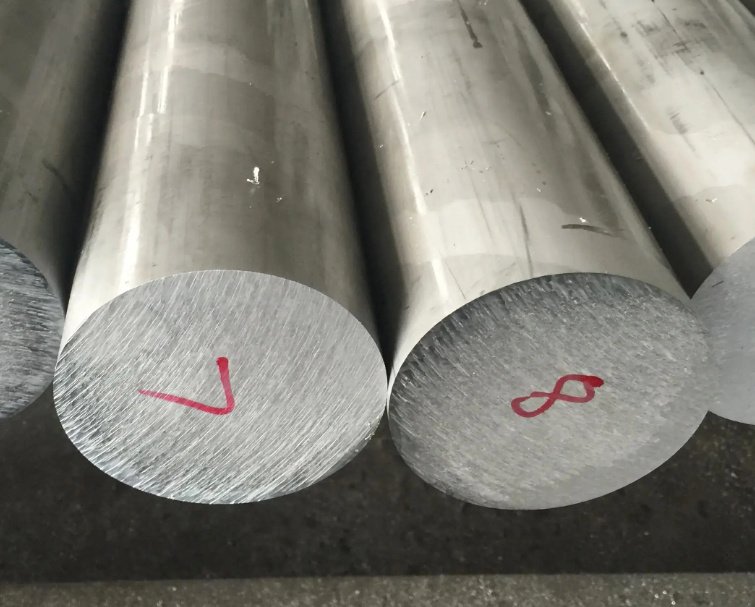
4032 Aluminum is a high-silicon, heat-treatable aluminum alloy designed for applications that require controlled thermal expansion, good wear resistance, stable strength, and reliable machinability after heat treatment. Also written as Al 4032, AA 4032, UNS A94032, or al alloy 4032, this material is widely associated with forged pistons, compressor parts, high-temperature rotating components, precision machined parts, and wear-sensitive aluminum components.
Unlike general-purpose alloys such as 6061, Aluminum 4032 contains approximately 11% to 13.5% silicon. This high silicon level reduces the coefficient of thermal expansion and improves wear behavior, making the alloy especially valuable where dimensional stability under heat is more important than maximum ductility.
What Is 4032 Aluminum?
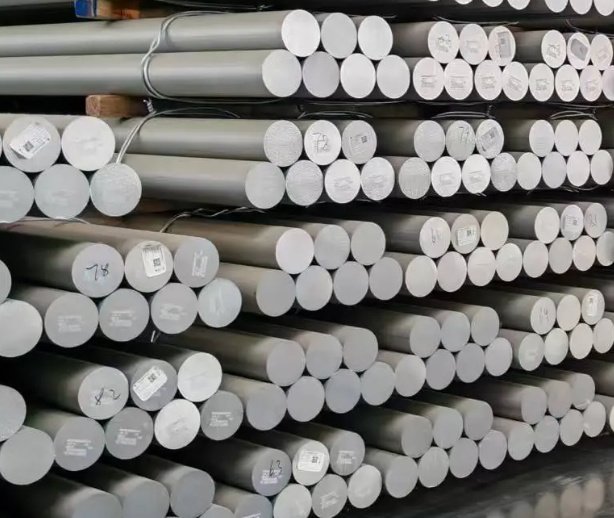
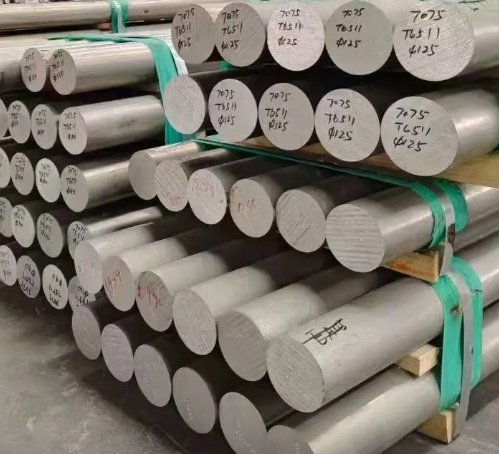
4032 Aluminum is a wrought aluminum-silicon alloy strengthened mainly by magnesium, copper, and nickel additions. It is commonly supplied as forged stock, bar, rod, or machined billet, and is often used in the T6 temper when a balance of strength, hardness, dimensional stability, and thermal performance is needed.
The alloy sits between conventional heat-treatable aluminum alloys and high-silicon casting alloys. It provides better machinability and dimensional consistency than many cast aluminum-silicon materials, while offering lower thermal expansion and better scuffing resistance than many low-silicon wrought alloys.
- Material family: heat-treatable wrought aluminum-silicon alloy
- Common temper: 4032-T6
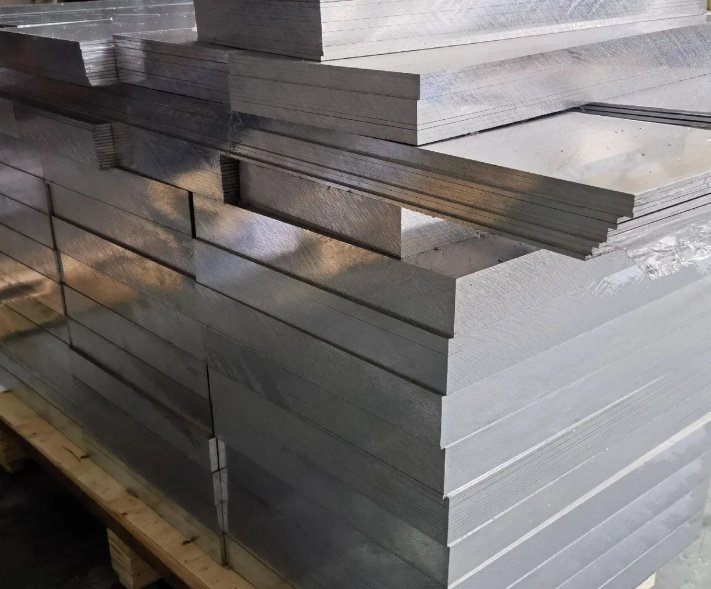
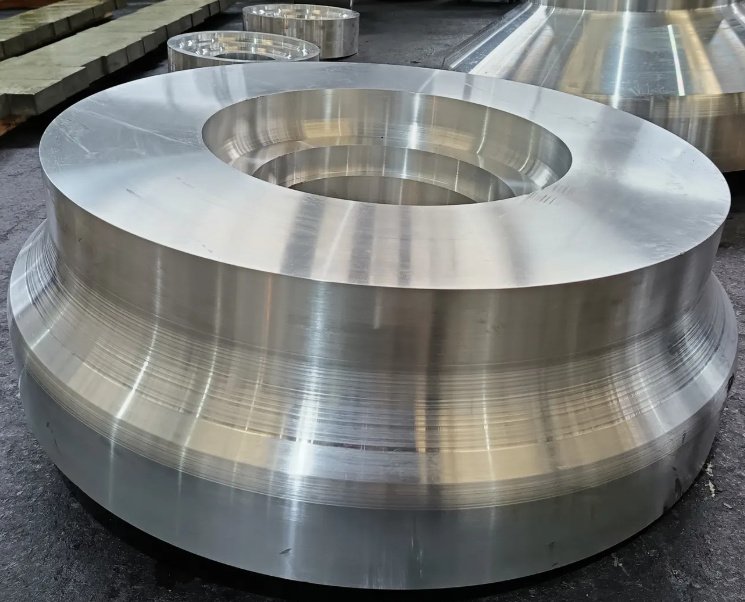
- Typical product forms: forged billet, forged piston blanks, bar, rod, plate, custom machined components
- Primary engineering value: low thermal expansion, wear resistance, good strength-to-weight ratio
- Common standards references: Aluminum Association AA 4032, UNS A94032, ASTM and AMS specifications depending on product form and revision
Chemical Composition of Al Alloy 4032
The defining feature of al alloy 4032 is its elevated silicon content. Silicon improves wear resistance, reduces thermal expansion, and contributes to dimensional stability, but it can also reduce ductility compared with lower-silicon aluminum alloys.
| Element | Typical Range or Limit | Engineering Role |
|---|---|---|
| Aluminum | Balance | Base metal for low density and corrosion resistance |
| Silicon | 11.0% - 13.5% | Reduces thermal expansion and improves wear resistance |
| Magnesium | 0.8% - 1.3% | Supports precipitation hardening and strength |
| Copper | 0.5% - 1.3% | Improves strength and heat-treat response |
| Nickel | 0.5% - 1.3% | Improves elevated-temperature stability |
| Iron | Up to about 1.0% | Usually controlled as an impurity or secondary phase former |
| Zinc | Up to about 0.25% | Residual element limit |
| Manganese | Up to about 0.10% | Residual or minor control element |
| Chromium | Up to about 0.10% | Residual or minor control element |
Composition ranges should always be verified against the governing specification, purchase order, mill certificate, or drawing requirement. For safety-critical parts, the exact standard revision matters because chemistry, temper, inspection level, and mechanical property requirements may differ by product form.
Mechanical and Physical Properties of Aluminum 4032
Mechanical properties vary with temper, section size, forging ratio, heat-treatment practice, and test direction. The following values are representative for 4032-T6 and should be used for preliminary material screening, not as a substitute for certified test data.
| Property | Representative Value | Why It Matters |
|---|---|---|
| Density | About 2.68 g/cm³ | Lower than steel and suitable for lightweight moving parts |
| Ultimate tensile strength | About 350 - 410 MPa in T6 condition | Useful for forged and machined structural parts |
| Yield strength | About 280 - 330 MPa in T6 condition | Important for permanent deformation control |
| Elongation | Typically 5% - 10% | Lower than 6061; relevant for impact and fatigue-sensitive design |
| Brinell hardness | About 110 - 125 HB | Supports wear resistance and stable machining response |
| Elastic modulus | About 75 - 80 GPa | Higher stiffness than many aluminum alloys due to silicon content |
| Thermal conductivity | About 140 - 160 W/m·K | Useful for piston crowns, compressor parts, and heat-loaded components |
| Coefficient of thermal expansion | About 18 - 20 µm/m·K | Lower than 6061 and 7075; key benefit of 4032 Aluminum |
| Melting range | Approximately 530 - 570°C | Important for heat exposure and processing limits |
The lower thermal expansion of Aluminum 4032 is often the decisive property. In piston applications, for example, lower expansion can allow tighter cold clearances than lower-silicon forged alloys, reducing slap noise and improving cold-start dimensional control.
Aluminum 4032 vs 6061, 7075, 2618 and 390 Aluminum
Most searches for 4032 Aluminum are comparison-driven. Engineers and buyers often need to know whether Al 4032 is better than 6061 for wear, whether it is stronger than 2618 for pistons, or whether a cast high-silicon alloy such as 390 is a more economical alternative.
| Comparison | 4032 Aluminum Advantage | Other Alloy Advantage | Best-Fit Decision |
|---|---|---|---|
| 4032 vs 6061 | Lower thermal expansion, better wear resistance, better dimensional stability under heat | 6061 is more available, more formable, easier to weld, and generally more corrosion resistant | Choose 4032 for thermal/wear control; choose 6061 for general structural fabrication |
| 4032 vs 7075 | Better wear behavior and thermal expansion control | 7075 has substantially higher room-temperature strength | Choose 4032 for hot, sliding, or precision-fit parts; choose 7075 for high-strength aerospace-style structures |
| 4032 vs 2618 | Lower expansion, quieter piston operation, better cold-clearance control | 2618 generally offers higher ductility and toughness for severe detonation or racing abuse | Choose 4032 for street/performance stability; choose 2618 for extreme-duty forged pistons |
| 4032 vs 390 aluminum | Wrought or forged processing can provide better consistency and machinability for precision parts | 390 cast alloy has very high silicon and excellent wear resistance at potentially lower casting cost | Choose 4032 for forged precision components; choose 390 for cast wear parts when casting design is acceptable |
A useful engineering summary is simple: 4032 is not selected because it is the strongest aluminum alloy; it is selected because it combines moderate-to-high strength with reduced thermal growth, good wear resistance, and stable performance in heat-loaded mechanical assemblies.
Engineer’s note: piston clearance comparison
In forged piston design, 4032 Aluminum often permits tighter piston-to-wall clearances than 2618 because its silicon-rich matrix expands less when heated. A typical street-performance design may use a smaller cold clearance with 4032, improving cold-start noise and oil control. Actual clearance must still be calculated from bore material, skirt profile, coating, operating temperature, boost pressure, and manufacturer data.
Heat Treatment, Stability and Engineering Limits
Aluminum 4032 is normally strengthened through solution heat treatment, quenching, and artificial aging. The T6 condition is common because it provides a practical balance of hardness, tensile strength, and dimensional stability. However, the alloy is not immune to overaging or strength reduction at sustained elevated temperatures.
- Solution treatment: dissolves strengthening constituents before quenching.
- Quenching: retains solute in supersaturated solid solution but can introduce residual stress.
- Artificial aging: develops precipitation hardening and final T6 properties.
- Thermal exposure: prolonged service temperature can reduce strength depending on time and temperature.
For high-temperature engine or compressor components, designers should evaluate creep, fatigue, stress relaxation, and overaging rather than relying only on room-temperature tensile values. This is especially important for thin sections, ring grooves, pin bosses, sealing lands, and components exposed to cyclic thermal shock.
| Engineering Limit | Practical Implication | Risk Control |
|---|---|---|
| Lower ductility than 6061 | Less forgiving under impact, notch loading, or aggressive press fitting | Use generous radii, avoid sharp transitions, verify fatigue margin |
| Abrasive silicon particles | Tool wear can be higher during machining | Use sharp carbide or PCD tools and stable coolant delivery |
| Reduced weldability | Not normally chosen for welded structures | Prefer mechanical fastening, forging, or machining from solid stock |
| Heat-treatment sensitivity | Properties depend on certified process control | Specify temper, test direction, hardness, tensile testing, and certification |
Machining 4032 Aluminum
Machining is a major reason buyers investigate Al 4032. The alloy can produce accurate, stable parts, but its high silicon content changes tool selection and process planning. Silicon improves wear resistance in service, yet the same hard particles increase abrasive tool wear during cutting.
For precision turning, boring, milling, ring-groove cutting, and piston skirt machining, the most reliable results usually come from rigid workholding, sharp tools, controlled chip evacuation, and consistent coolant or mist lubrication. PCD tooling is often preferred for long production runs because it maintains edge quality and dimensional consistency better than standard carbide when cutting high-silicon aluminum.
Recommended Machining Practices
- Use polished carbide, diamond-coated carbide, or PCD inserts for production machining.
- Maintain positive rake geometry to reduce cutting force and built-up edge.
- Use stable fixturing to prevent distortion on thin-wall or asymmetric parts.
- Apply coolant to control heat, improve surface finish, and reduce tool wear.
- Plan finishing passes after roughing to allow stress redistribution and thermal stabilization.
- Use appropriate honing, lapping, or fine boring where sealing surfaces or close clearances are required.
| Machining Issue | Cause in 4032 Aluminum | Practical Countermeasure |
|---|---|---|
| Rapid tool wear | Hard silicon particles abrade the cutting edge | Use PCD for volume work or high-quality carbide for prototypes |
| Dimensional drift | Heat input, residual stress, or unstable fixturing | Use staged rough/finish machining and thermal control |
| Built-up edge | Inadequate tool polish, speed, or lubrication | Use polished tools, positive rake, and suitable coolant |
| Poor bore finish | Tool vibration or incorrect feed/speed balance | Improve rigidity, reduce runout, and finish with fine boring or honing |
Machining result example for a precision bore
In a controlled production process using PCD boring tools, stable hydraulic fixturing, and flood coolant, 4032-T6 components can commonly hold tight bore tolerances such as ±0.01 mm when the process is validated. The key variable is not only the alloy but also heat input, fixture repeatability, tool wear monitoring, and whether roughing and finishing are separated.
Finishing, Corrosion Behavior and Fabrication Considerations
4032 Aluminum has useful natural corrosion resistance because of its aluminum oxide surface film, but it is not selected primarily for corrosion performance. Compared with 6061, its copper and nickel additions and high silicon structure can make finishing response more application-specific.
Anodizing is possible, but cosmetic uniformity may be less predictable than with alloys optimized for decorative anodizing. For functional surfaces, hard anodizing, conversion coating, controlled surface roughness, or wear coatings may be specified depending on contact stress, oil lubrication, sealing requirements, and operating temperature.
- Welding: generally not the preferred joining method for critical 4032 parts.
- Forming: less formable than 6061 due to high silicon and lower ductility.
- Anodizing: functional anodizing may be useful, but appearance should be tested on sample material.
- Surface coatings: dry-film lubricants, skirt coatings, hard anodizing, or wear coatings may be used in sliding applications.
- Deburring: edges should be controlled carefully because notches can reduce fatigue performance.
For precision assemblies, the finishing specification should include surface roughness, coating thickness, masking areas, post-coating dimensions, and whether final machining occurs before or after coating. A coating thickness of even 10 to 25 µm can be significant in tight-clearance piston, compressor, or bearing-related components.
Common Applications of Aluminum 4032
Aluminum 4032 is most often used where heat, motion, wear, and dimensional precision intersect. Its low density makes it attractive for moving components, while its silicon-rich composition helps control expansion and wear.
- Forged automotive and motorcycle pistons
- Performance engine components requiring controlled thermal expansion
- Compressor pistons and scroll or rotary compressor parts
- Precision machined wear components
- Hydraulic and pneumatic components exposed to sliding contact
- Valve bodies, pump components, and rotating mechanical parts
- Aircraft and motorsport components where certified stock and traceability are required
- High-speed machinery parts where weight reduction and dimensional stability are both important
In many real designs, Aluminum 4032 is chosen only after a tolerance-stack analysis. For example, if a cylindrical aluminum component operates across a 150°C temperature rise, the lower thermal expansion of 4032 compared with 6061 can reduce diameter growth enough to improve sealing stability, reduce scuffing risk, or maintain a more predictable oil film. This is the kind of measurable design benefit that often outweighs raw material cost.
Procurement Notes for Engineers and Buyers
Buying 4032 Aluminum requires more than requesting a generic aluminum billet. Because the alloy is often used in precision or heat-loaded components, purchase specifications should define alloy designation, temper, product form, certification level, ultrasonic inspection if required, grain flow expectations for forgings, and mechanical property requirements.
A clear purchasing description may look like: “Aluminum 4032-T6 forged bar, certified to applicable AMS or ASTM product specification, with mill test report, chemistry, tensile properties, hardness, heat number traceability, and inspection records.” The exact wording should match the drawing, industry, and risk level.
Buyer checklist for 4032 Aluminum stock
- Confirm the exact alloy designation: 4032, AA 4032, UNS A94032, or drawing-specific equivalent.
- Specify temper, commonly T6, and require documented heat treatment.
- Request mill test reports showing chemistry and mechanical properties.
- Confirm product form: forged billet, bar, rod, plate, or near-net forged blank.
- Check minimum order quantity, lead time, and whether the material is standard or custom forged.
- Confirm machining allowance, surface condition, straightness, and dimensional tolerance.
Engineering checklist before substituting another alloy
Before replacing 4032 with 6061, 7075, 2618, or a cast aluminum-silicon alloy, review thermal expansion, ductility, fatigue performance, operating temperature, lubrication, clearance, surface finish, and manufacturing route. Substitution based only on tensile strength can lead to scuffing, excessive cold clearance, coating failure, or dimensional instability.
Quality documentation commonly requested
- Material test certificate or mill test report
- Chemical analysis by heat lot
- Tensile test results and hardness data
- Heat-treatment records for T6 condition
- Traceability to heat number, batch, or forging lot
- Dimensional inspection report for machined or forged blanks
- Non-destructive testing report when specified for critical components
Summary: When to Choose 4032 Aluminum
4032 Aluminum is a specialized engineering alloy for designs that need lightweight performance, reduced thermal expansion, good wear resistance, and stable machined dimensions. It is especially relevant for forged pistons, compressor components, and precision aluminum parts exposed to sliding contact or temperature cycling.
Choose Aluminum 4032 when the design benefits from silicon-enhanced wear performance and lower thermal growth. Consider 6061 when weldability and general fabrication matter more, 7075 when maximum strength is the primary driver, 2618 when toughness under extreme piston loading is more important than cold-clearance control, and 390 aluminum when a cast high-silicon wear part is suitable.
For engineering drawings and purchase orders, the best results come from specifying alloy, temper, product form, inspection requirements, machining allowance, surface finish, and certification. With the right process controls, Al 4032 can deliver a strong combination of dimensional stability, machinability, and heat-loaded wear performance.