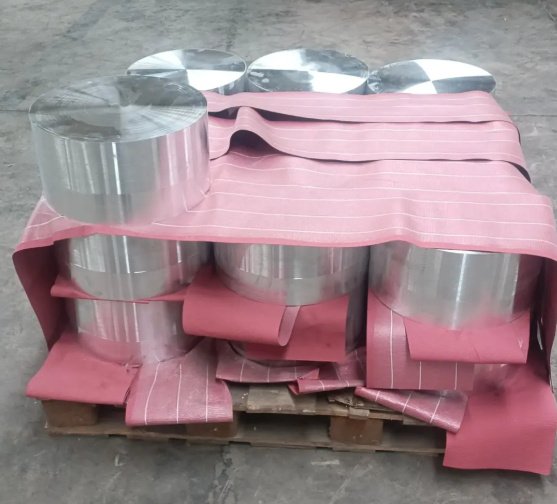
7068 Aluminum is a premium heat-treatable aluminum-zinc-magnesium-copper alloy used where designers need very high strength with substantially lower density than steel or titanium. Also searched as Al 7068, al alloy 7068, and Aluminum 7068, this material is commonly specified for aerospace components, precision defense hardware, high-load sporting equipment, robotics, racing parts, and other applications where strength-to-weight ratio is a primary design driver.
Compared with conventional high-strength aluminum alloys such as 7075-T6 or 7050-T7451, 7068 can deliver higher tensile and yield strength in suitable product forms. However, it is not a universal replacement. Engineers must evaluate availability, section thickness, corrosion behavior, fatigue requirements, machining distortion, surface treatment, certification needs, and cost before selecting it for production.
What Is 7068 Aluminum?
7068 Aluminum is part of the 7xxx series aluminum alloy family. These alloys are strengthened mainly by zinc and magnesium, with copper added to improve strength response. The alloy is precipitation hardenable, meaning its final mechanical properties are achieved through solution heat treatment, quenching, and artificial aging.
In practical engineering terms, 7068 is selected when 7075 is strong but not strong enough, and when the project still needs the weight savings, machinability, and corrosion-management options associated with aluminum.
Common Product Forms
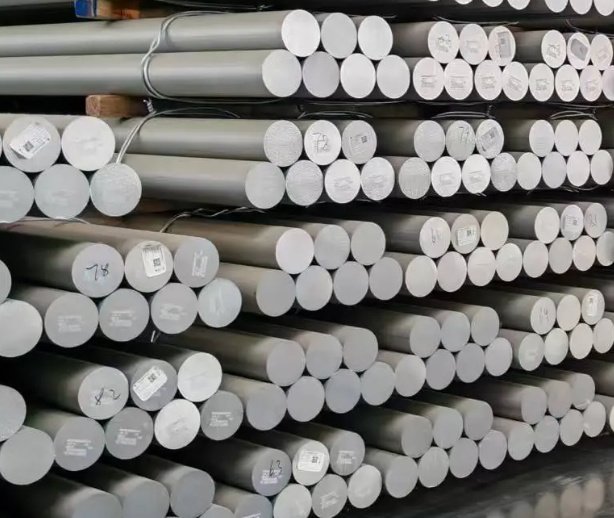
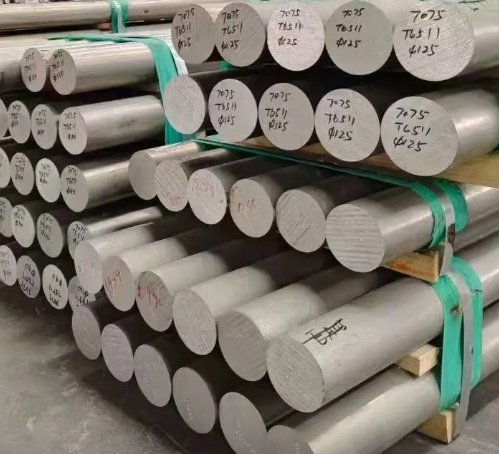
- Round bar and rod for shafts, pins, firearm components, gears, and turned parts
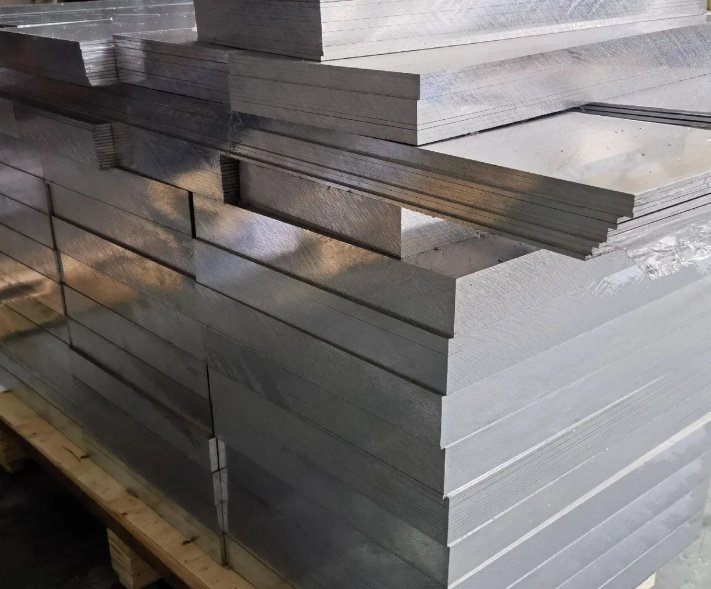
- Plate and billet for machined structural parts, tooling, and housings
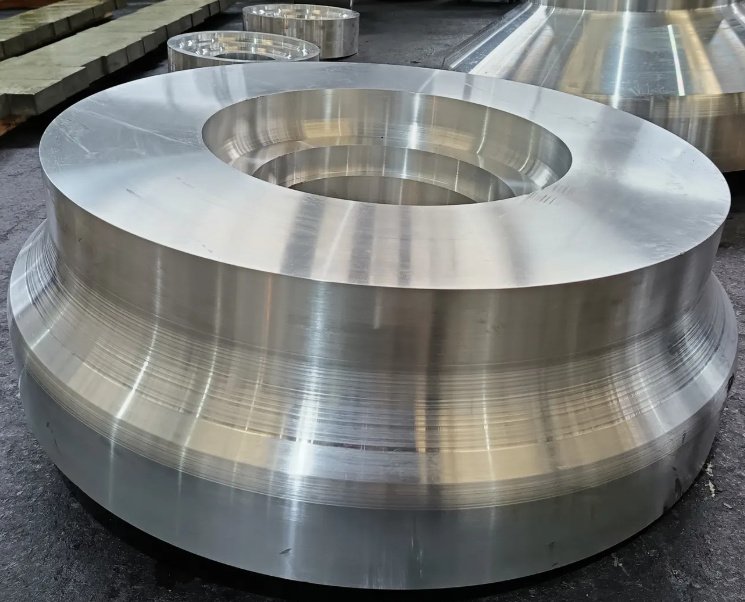
- Forging stock for high-load components where grain flow and mechanical reliability matter
- Custom cut blanks for CNC machining and prototype development
7068 Aluminum Chemical Composition
The exact composition should always be verified against the applicable material standard, mill certificate, or supplier datasheet. A typical composition range for al alloy 7068 is shown below.
| Element | Typical Range or Limit | Engineering Role |
|---|---|---|
| Aluminum | Balance | Base metal; low density and machinability |
| Zinc | About 7.3-8.3% | Primary strengthening element in 7xxx alloys |
| Magnesium | About 2.2-3.0% | Works with zinc for precipitation strengthening |
| Copper | About 1.6-2.4% | Improves strength and hardening response |
| Zirconium | About 0.05-0.15% | Grain structure control and recrystallization resistance |
| Iron | Usually limited to 0.15% max | Impurity control for toughness and quality |
| Silicon | Usually limited to 0.12% max | Impurity control |
| Manganese, Chromium, Titanium | Low controlled limits | Grain and impurity control depending on producer specification |
The high zinc and magnesium content explains the alloy’s strength potential, while zirconium helps support a stable microstructure. The trade-off is that 7068 requires careful processing and is less forgiving than general-purpose aluminum alloys such as 6061.
Typical Mechanical and Physical Properties
Properties vary with product form, heat treatment, thickness, test direction, and supplier. The values below are representative engineering figures for high-strength 7068 tempers and should not replace certified test reports.
| Property | Typical Value | Notes |
|---|---|---|
| Density | About 2.85 g/cm³ | Approximately one-third the density of many steels |
| Ultimate tensile strength | About 680-710 MPa | Depends on temper and section size |
| Yield strength | About 630-680 MPa | Often higher than 7075-T6 in comparable forms |
| Elastic modulus | About 71-72 GPa | Similar to other aluminum alloys; stiffness is not as high as steel or titanium |
| Elongation | About 6-10% | Varies by product form and test direction |
| Hardness | Often around 190-205 HB | Useful for wear and machinability estimates |
| Thermal conductivity | Often around 120-140 W/m·K | Lower than pure aluminum but useful for heat dissipation |
The key design advantage is specific strength: the strength available per unit weight. For weight-sensitive machined components, this can reduce part mass while maintaining static load capacity.
Buyer and engineer note: what data should be requested before purchase?
For production parts, request a material test report showing alloy, temper, product form, heat number, tensile results, hardness if required, dimensional tolerance, country of origin, and applicable specification. For aerospace, defense, medical, or racing safety components, also confirm traceability, ultrasonic inspection availability, stress-relieved condition, and whether the material is approved by the end customer or regulatory authority.
Aluminum 7068 vs 7075, 7050, 2024 and Titanium
Searchers comparing Aluminum 7068 usually want to know whether it is worth the cost premium over 7075 or whether it can replace titanium. The answer depends on the load case and environment.
| Material | Main Advantage | Common Limitation | Best-Fit Use Case |
|---|---|---|---|
| 7068 Aluminum | Very high aluminum strength and low density | Higher cost, limited availability, corrosion controls needed | Maximum-strength lightweight machined parts |
| 7075-T6 Aluminum | Widely available, strong, well understood | Lower strength than 7068 in many comparable forms | Aerospace brackets, fixtures, sporting goods, general high-strength CNC parts |
| 7050 Aluminum | Good toughness and stress corrosion resistance in thick sections | Not usually as high in peak tensile strength as 7068 | Aircraft plate, thick structural parts, fracture-critical components |
| 2024 Aluminum | Good fatigue performance and damage tolerance in aircraft structures | Lower strength and poorer corrosion resistance without cladding or protection | Aircraft skins, structural sheet, legacy aerospace designs |
| Ti-6Al-4V Titanium | Excellent strength, corrosion resistance, temperature capability | Higher density than aluminum, more difficult machining, higher material cost | High-temperature, corrosive, biomedical, and aerospace load-bearing parts |
As a rough design comparison, 7068 can approach or exceed some titanium strength levels while weighing much less. But titanium has a much higher modulus, better temperature capability, and superior corrosion behavior in many environments. Therefore, 7068 is not a direct titanium substitute; it is a strong lightweight aluminum option for cases where aluminum’s limitations are acceptable.
7068 vs 7075: Practical Selection
- Choose 7068 when static strength, weight reduction, and compact part geometry are the main constraints.
- Choose 7075 when availability, cost, legacy qualification, and predictable procurement matter more.
- Choose 7050 when thick-section toughness, stress corrosion resistance, or aerospace plate pedigree is the deciding factor.
- Choose titanium when high temperature, corrosion resistance, or stiffness are more important than minimum density.
Machining Guidance for Al 7068
Al 7068 machines well compared with many steels and titanium alloys, but it should be treated as a high-strength aerospace-grade aluminum rather than a general workshop alloy. Its high strength and internal stress potential mean that setup rigidity, tool sharpness, stock allowance, and sequencing have a measurable impact on final tolerance.
CNC Machining Recommendations
- Use sharp carbide end mills, drills, and turning inserts designed for aluminum.
- Use high spindle speed and suitable chip load to avoid rubbing and heat buildup.
- Apply flood coolant, mist, or effective air blast to evacuate chips and control temperature.
- Use climb milling where machine rigidity allows.
- Rough both sides of plate-like parts before finishing to reduce distortion.
- Leave balanced finishing stock and allow parts to relax between roughing and finishing if tolerances are tight.
- Avoid excessive tool pressure on thin walls, deep pockets, and long unsupported features.
For thin-wall aerospace or robotics parts, a common production strategy is rough machining, stress relief or stabilization where permitted, semi-finishing, then final finishing after dimensional movement has stabilized. This approach can reduce scrap when flatness, bore alignment, or sealing surfaces are critical.
Engineering problem: why did a 7068 pocketed plate move after machining?
A 20 mm thick high-strength aluminum plate machined into a 3 mm wall housing may release residual stress unevenly. If one side is heavily pocketed before the opposite side is balanced, the part can bow or twist after unclamping. A practical correction is to rough both faces symmetrically, maintain uniform stock, use stress-relieved material when available, re-clamp on stable datums, and finish critical surfaces in the final operation. In precision CNC work, this can be the difference between a part holding +/-0.03 mm and a part that fails flatness after inspection.
Heat Treatment, Welding and Surface Finishing
7068 is normally purchased in a specified heat-treated temper rather than heat treated casually after machining. Final properties depend on controlled solution treatment, quenching, and aging. Unauthorized thermal exposure can reduce strength or change dimensional stability.
Welding
Fusion welding is generally not recommended for al alloy 7068 when high mechanical properties are required. Like many high-strength 7xxx aluminum alloys, welded areas can lose strength and may become more susceptible to cracking or corrosion problems. Mechanical fastening, interference fits, threaded inserts, bonding, or redesigning the component as a machined monolithic part is often preferred.
Surface Finishing
- Anodizing may be used for wear and corrosion protection, but color response can differ from 6061.
- Hard anodizing can improve surface hardness but may affect fatigue performance if not specified correctly.
- Chemical conversion coating is often used before painting or for electrical continuity requirements.
- Shot peening may improve fatigue life in selected applications when properly controlled.
- Protective coatings are recommended in marine, salt spray, or galvanic corrosion environments.
When Aluminum 7068 is assembled with stainless steel, carbon fiber, magnesium, or titanium, galvanic corrosion should be considered. Isolation washers, sealants, conversion coatings, anodizing, or controlled drainage can reduce risk.
Applications of Aluminum 7068
Because of its high yield strength and favorable weight ratio, 7068 is used in components that are highly loaded but still need to remain light and machinable.
- Aerospace brackets, links, fittings, and actuator components
- Defense and firearm components requiring high strength and dimensional accuracy
- Racing suspension parts, drivetrain components, and lightweight structural hardware
- High-end bicycle, climbing, archery, and sporting equipment components
- Robotics arms, compact load-bearing frames, and motion-control hardware
- Precision fixtures, shafts, pins, and lightweight tooling where 6061 or 7075 is insufficient
The strongest business case appears when a part is constrained by weight, envelope size, and static strength at the same time. If the design can simply be made larger or slightly heavier, 7075 or 6061 may be more economical.
Design Considerations and Engineering Limits
Although 7068 is one of the strongest commercially available aluminum alloys, its strength should not be the only selection criterion. Good engineering practice requires checking stiffness, fatigue, fracture toughness, corrosion, notch sensitivity, temperature exposure, and manufacturing route.
Key Design Checks
- Static strength: Compare yield strength with the maximum service load and safety factor.
- Stiffness: Aluminum modulus is about one-third that of steel, so deflection may control the design before strength does.
- Fatigue: Avoid sharp internal corners, poor surface finish, machining marks, and tensile residual stress.
- Corrosion: Use surface protection in humid, marine, chloride, or galvanic environments.
- Temperature: Avoid prolonged elevated-temperature exposure unless strength retention has been validated.
- Availability: Confirm bar, plate, or billet size early; 7068 is not stocked as broadly as 6061 or 7075.
The most common mistake is selecting 7068 only because its datasheet strength is high. The better approach is to determine whether strength, stiffness, fatigue life and corrosion protection are all acceptable in the real assembly.
Procurement perspective: when is 7068 worth the premium?
7068 is usually worth evaluating when a smaller or lighter part can replace a larger 7075 component, when reduced mass improves system performance, or when redesigning around titanium would create excessive machining cost. Buyers should compare total part cost, not just raw material price. If 7068 reduces machining time, assembly weight, or component count, the higher billet cost may be justified.
Summary: When to Specify 7068 Aluminum
Specify 7068 Aluminum when the project needs one of the highest strength levels available in aluminum, the component is primarily machined or forged, and the engineering team can manage corrosion protection, qualification, and sourcing. It is especially attractive for compact lightweight parts where 7075 is marginal and titanium is too costly, heavy, or difficult to machine.
For buyers and engineers, the safest specification route is to define the alloy, temper, product form, dimensional tolerance, inspection requirements, and certification package at the quotation stage. For critical parts, always validate performance with supplier-certified data, prototype testing, and application-specific design review.