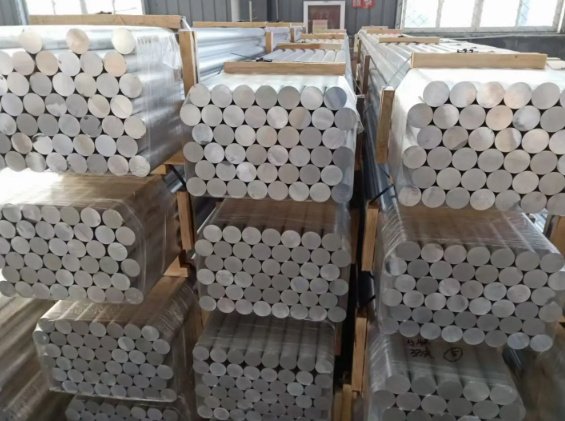
6101 Aluminum is a heat-treatable aluminum-magnesium-silicon alloy developed for electrical applications that require a practical balance of conductivity, mechanical strength, formability and corrosion resistance. In engineering specifications, it may also be written as Al 6101, al alloy 6101 or Aluminum 6101.
Compared with general structural aluminum grades, 6101 is selected because it can deliver relatively high electrical conductivity while maintaining better strength than commercially pure electrical aluminum such as 1350. It is widely used for aluminum busbars, switchgear components, electrical connectors, power distribution hardware, conductor accessories and extruded profiles for energy systems.
What Is 6101 Aluminum?
6101 belongs to the 6xxx aluminum alloy family, where magnesium and silicon combine to form Mg2Si strengthening phases during heat treatment. This precipitation-hardening mechanism allows producers to tune the alloy for conductivity, strength and forming response through controlled solution heat treatment and artificial aging.
The defining advantage of Al 6101 is not maximum strength; it is the combination of electrical performance and usable mechanical properties. For many busbar and conductor designs, that balance can reduce weight, simplify fabrication and improve corrosion performance compared with copper or higher-strength but lower-conductivity aluminum alloys.
Typical Chemical Composition of al alloy 6101
Composition limits vary slightly by product form and specification, but the following ranges are commonly associated with Aluminum Association 6101 and related wrought aluminum standards.
| Element | Typical Range or Maximum, wt.% | Engineering Role |
|---|---|---|
| Aluminum | Balance | Base metal, low density, corrosion resistance and conductivity |
| Magnesium | 0.35 - 0.80 | Combines with silicon for precipitation hardening |
| Silicon | 0.30 - 0.70 | Forms Mg2Si and improves heat-treat response |
| Iron | 0.50 max | Controlled impurity; excessive Fe can reduce conductivity and ductility |
| Copper | 0.10 max | Usually limited to protect conductivity and corrosion resistance |
| Manganese | 0.03 max | Kept low for electrical conductivity |
| Chromium | 0.03 max | Kept low to avoid conductivity loss |
| Zinc | 0.10 max | Controlled impurity |
| Boron | May be specified in small amounts | Can support grain refining and electrical alloy control |
For purchasing or certification, the controlling document should be the applicable standard, purchase specification and mill test certificate, not only a general composition table.
Key Mechanical, Electrical and Physical Properties
Actual properties depend on temper, cross-section, extrusion ratio, aging practice and test direction. The values below are practical reference ranges for preliminary engineering review.
| Property | Typical Value or Range | Design Relevance |
|---|---|---|
| Density | About 2.70 g/cm3 | Roughly one-third the density of copper |
| Electrical conductivity | About 52 - 57% IACS, depending on temper | Important for busbar resistance, heat rise and voltage drop |
| Electrical resistivity | About 0.030 - 0.033 µΩ·m | Used for resistance calculations |
| Thermal conductivity | Typically around 200 - 220 W/m·K | Helps dissipate Joule heat in power components |
| Ultimate tensile strength | Approximately 150 - 220 MPa, depending on temper | Affects clamping, handling and profile strength |
| Yield strength | Approximately 80 - 190 MPa, depending on temper | Important for bolted joints, brackets and formed parts |
| Elastic modulus | About 69 GPa | Used for deflection and clamping calculations |
| Coefficient of thermal expansion | About 23 x 10-6/K | Critical for bolted electrical joints and mixed-metal assemblies |
The phrase Aluminum 6101 conductivity usually indicates a buyer is comparing electrical performance rather than only mechanical strength. For that reason, conductivity in %IACS should be specified together with temper and dimensional tolerance.
Common Tempers: T6, T61, T63, T64 and T65
6101 is commonly ordered in heat-treated tempers. In simplified terms, higher aging intensity can increase strength, while conductivity and ductility may shift depending on the precipitation state.
| Temper | Typical Selection Logic | Common Use |
|---|---|---|
| T6 | Solution heat treated and artificially aged for a high-strength condition | Profiles, connectors and hardware needing better strength |
| T61 | Often used where electrical conductivity is emphasized with controlled strength | Electrical bus conductors and extrusions |
| T63 | Frequently selected for a conductivity-strength compromise | Busbar profiles, switchgear and distribution equipment |
| T64/T65 | May be specified where forming, conductivity or special performance targets are required | Customer-specific conductor or connector designs |
For critical electrical equipment, do not specify only “6101-T6” without electrical requirements. A more useful order line may include alloy, temper, product form, dimensional tolerance, required %IACS, surface condition and inspection document.
Engineer and buyer note: what to confirm before ordering 6101
- Confirm the required conductivity in %IACS at a specified temperature, commonly 20°C.
- Define temper clearly, such as 6101-T61 or 6101-T63, instead of using a generic “heat treated” description.
- Request the applicable standard, such as ASTM, EN, IEC or customer drawing requirements.
- Specify whether the part will be extruded, drawn, rolled, machined, bent, plated or anodized.
- For busbars, define hole pattern, flatness, burr limits, surface roughness and joint-contact requirements.
- For mixed aluminum-copper assemblies, require a plan for galvanic corrosion control and joint compound compatibility.
6101 Aluminum vs 6061, 1350, 6201 and Copper
The best material depends on whether the design is limited by current capacity, mechanical load, envelope size, temperature rise, corrosion risk or cost. The table below summarizes common selection trade-offs.
| Material | Conductivity | Strength | Weight | Best Fit |
|---|---|---|---|---|
| 6101 Aluminum | Typically about 52 - 57% IACS | Moderate, heat-treatable | Low density, about 2.70 g/cm3 | Electrical busbars, conductors, connectors and extruded profiles |
| 6061 Aluminum | Often around 40 - 43% IACS | Higher structural strength than 6101 in many tempers | Low density | Structural parts where conductivity is secondary |
| 1350 Aluminum | Typically about 61% IACS | Lower strength | Low density | High-conductivity wire, strip and pure electrical conductor applications |
| 6201 Aluminum | Usually lower than 1350 and comparable to conductive 6xxx grades | Higher conductor strength | Low density | Overhead conductors and strength-critical electrical applications |
| Copper | 100% IACS reference | Good | High density, about 8.96 g/cm3 | Compact high-conductivity components where weight and price are less limiting |
In simple terms, al alloy 6101 is usually chosen over 6061 when electrical conductivity matters, and it is chosen over 1350 when the design needs more mechanical strength or a heat-treatable profile. Copper remains more conductive per unit area, but 6101 can be much lighter for the same resistance.
Engineering Example: Replacing a Copper Busbar with 6101 Aluminum
Consider a 1 meter busbar segment designed for a resistance of 0.1 mΩ at 20°C. Using copper at 100% IACS, the required cross-sectional area is approximately 172 mm2. Using 6101 aluminum at 57% IACS, the required area is approximately 302 mm2.
| Material | Conductivity Assumption | Area for 0.1 mΩ at 1 m | Approximate Mass per Meter | Result |
|---|---|---|---|---|
| Copper | 100% IACS | 172 mm2 | 1.54 kg/m | Smaller cross-section but heavier |
| 6101 Aluminum | 57% IACS | 302 mm2 | 0.82 kg/m | About 47% lighter at equal resistance |
This calculation shows why Aluminum 6101 is attractive for power distribution equipment: even when the aluminum section must be larger to match copper resistance, the finished conductor can still be significantly lighter. The trade-off is that the design needs enough space for the larger section and must address aluminum joint behavior, oxide film and thermal expansion.
Processing, Fabrication and Machining Guidelines
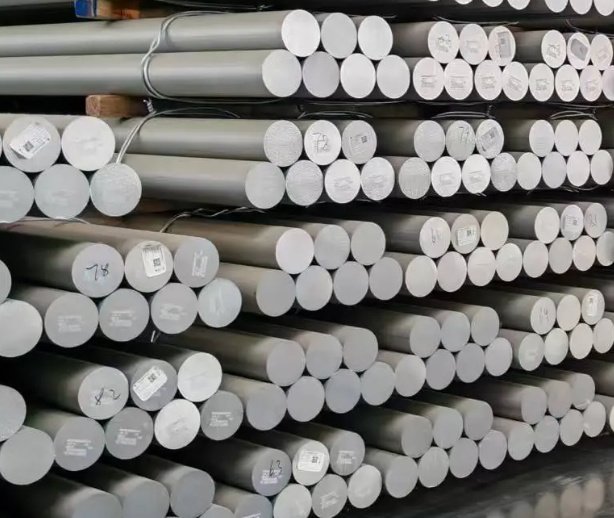
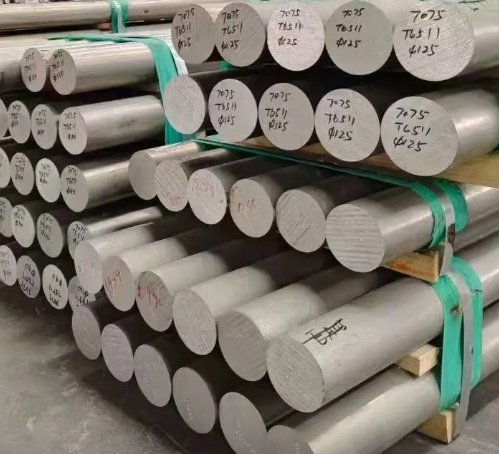
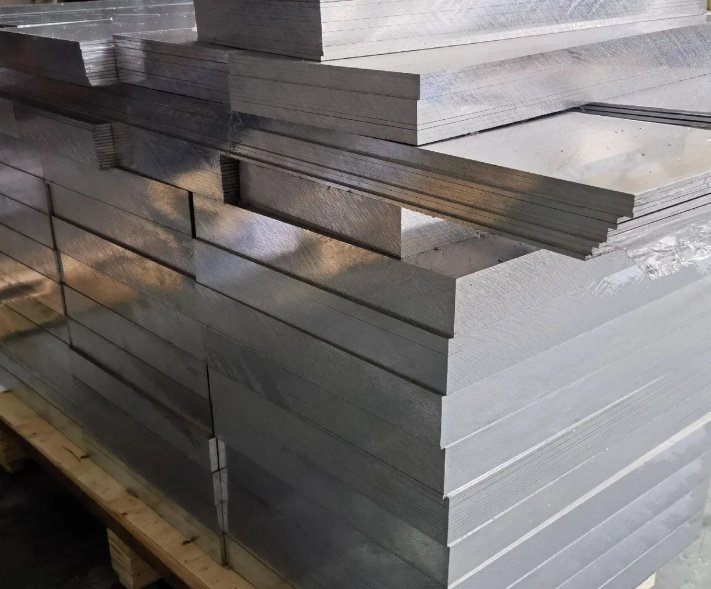
6101 aluminum can be produced as extrusions, rod, bar, tube, profiles, busbar stock and drawn electrical products. It is generally processed through casting, homogenization, hot extrusion or rolling, solution heat treatment, quenching, aging and final straightening or finishing.
Extrusion and Profile Manufacturing
6101 extrudes well compared with many high-strength alloys, making it useful for custom electrical profiles with mounting features, cooling fins, slots or compact busbar geometries. For conductive extrusions, process control is important because quench rate and aging condition affect both strength and conductivity.
Cutting, Drilling and CNC Machining
Machining response is generally acceptable, especially in aged tempers. However, compared with 6061-T6, 6101 may be specified with conductivity as the primary target, so machining parameters should avoid unnecessary heat, built-up edge and burr formation. Sharp carbide tools, suitable chip evacuation and controlled coolant application help maintain dimensional quality.
Bending and Forming
Formability depends strongly on temper and bend radius. If a busbar must be tightly bent after heat treatment, the design should confirm minimum bend radius through trial bending. For severe forming, it may be better to form in a softer condition and then apply the required heat treatment if the product route allows it.
Welding, Brazing and Joining
6101 can be welded by common aluminum welding methods, but welding locally changes the heat-treated microstructure and can reduce strength in the heat-affected zone. Electrical joints are often bolted, clamped, plated or mechanically fastened rather than relying only on welds in the main current path.
Joint design is critical because aluminum naturally forms a thin oxide film. For low-resistance electrical contact, engineers often specify surface cleaning, controlled contact pressure, Belleville washers, tin plating, silver plating or compatible oxide-inhibiting joint compounds.
Manufacturing note: common causes of busbar quality issues
- High contact resistance: often caused by oxide film, insufficient contact pressure, poor flatness or contaminated surfaces.
- Unexpected temperature rise: may result from undersized cross-section, poor ventilation, coating effects or joint resistance rather than bulk alloy resistance.
- Cracking during bending: commonly linked to unsuitable temper, too-small bend radius or bending across an unfavorable grain direction.
- Dimensional drift after machining: can occur when residual stress in extruded stock is released during heavy material removal.
Corrosion Resistance, Surface Treatment and Contact Design
Like other aluminum alloys, 6101 forms a protective oxide layer in air. This gives good general corrosion resistance in many indoor and mildly outdoor environments. In electrical contact areas, however, the oxide layer is not automatically beneficial because it can increase contact resistance.
Surface treatments may include mill finish, brushing, chemical cleaning, anodizing, tin plating, nickel plating or silver plating. For conductive joints, the selected finish must be evaluated for electrical resistance, corrosion behavior, torque retention and long-term thermal cycling.
When 6101 aluminum is connected to copper, galvanic corrosion control becomes important, especially in humid or polluted environments. Practical countermeasures include bimetallic transition plates, compatible plating systems, sealants, joint compounds and preventing electrolyte accumulation.
Applications of Aluminum 6101
- Electrical busbars for switchgear, panelboards and distribution cabinets
- Extruded conductors for power distribution systems
- Transformer and substation connector components
- Battery energy storage system busbar profiles
- Renewable energy power collection hardware
- Conductor supports, terminal parts and electrical mounting profiles
- Heat-dissipating current-carrying aluminum sections
- Lightweight replacement designs for copper conductors where space permits
The alloy is especially useful when a component must carry current and also provide structural support, mounting geometry or corrosion resistance. That is the design space where Al 6101 provides more value than purely structural aluminum.
Relevant Standards and Specification References
6101 aluminum products may be supplied under different regional or product-specific standards. Commonly referenced documents include ASTM specifications for aluminum conductors, extruded bars, rods, profiles and electrical conductor materials, as well as EN and IEC-related requirements for electrical equipment.
| Specification Item | Why It Matters |
|---|---|
| Alloy and temper | Defines chemistry and heat-treated property condition |
| Electrical conductivity | Directly affects voltage drop, heat rise and current-carrying performance |
| Mechanical properties | Controls strength, clamping performance and handling durability |
| Dimensional tolerance | Important for busbar stacking, enclosure clearance and assembly repeatability |
| Surface condition | Affects contact resistance, plating quality and corrosion performance |
| Inspection certificate | Provides traceability for chemistry, temper and property compliance |
Procurement perspective: how to avoid mismatched material supply
A common purchasing mistake is ordering “6101 aluminum bar” without specifying temper and conductivity. Two lots can both be 6101 but perform differently in a current-carrying assembly if aging practice, conductivity or surface condition differs. For repeatable electrical performance, buyers should align the drawing, purchase order and mill certificate around alloy, temper, %IACS, size tolerance and surface finish.
When Should You Choose 6101 Aluminum?
Choose 6101 when the application requires a conductive aluminum alloy with better strength and profile capability than high-purity electrical aluminum. It is a strong candidate for busbars, extruded conductors and electrical hardware where conductivity, weight, corrosion resistance and fabrication efficiency must be balanced.
Choose 6061 instead if the part is mainly structural and conductivity is not a key requirement. Choose 1350 if maximum aluminum conductivity is more important than strength. Choose copper if the available space is very limited and the highest conductivity per unit area is required. For many modern electrical systems, 6101 aluminum offers a practical middle ground between conductivity, strength, weight and manufacturability.