
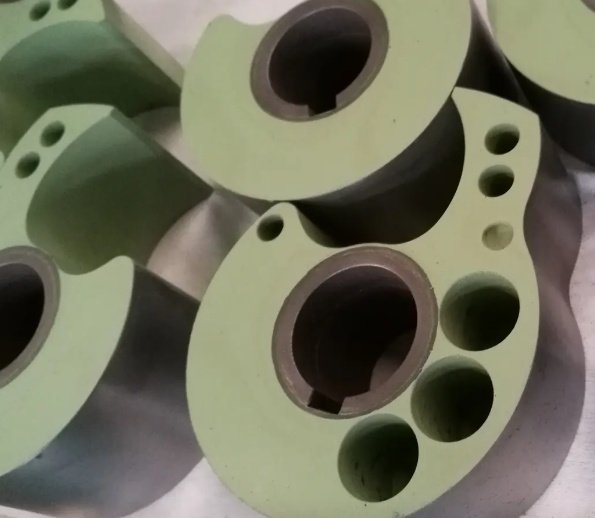
Austempered ductile iron, commonly abbreviated as ADI, is a heat-treated form of ductile cast iron engineered for high strength, excellent fatigue resistance, good wear performance and useful toughness. It is widely specified for gears, brackets, suspension parts, agricultural components, rail hardware, mining parts and other cast components where designers want performance comparable to some steels while retaining the casting, damping and cost advantages of ductile iron.
ADI is not simply “stronger cast iron.” Its value comes from combining nodular graphite ductile iron with a controlled austempering heat treatment that produces an ausferritic matrix. This microstructure gives ADI a distinctive balance of tensile strength, yield strength, elongation, impact resistance, wear behavior and machinability strategy.
What Is Austempered Ductile Iron?
Austempered ductile iron is ductile iron that has been austenitized and then rapidly quenched to an intermediate temperature where it is held until the desired ausferritic structure forms. The base casting contains spheroidal graphite nodules, typically produced by magnesium treatment, and the austempering cycle transforms the metallic matrix into a mixture of acicular ferrite and high-carbon stabilized austenite.
The resulting ausferrite is different from conventional pearlite, ferrite or martensite. It provides high strength without the same brittleness associated with as-quenched martensitic structures. In practical engineering terms, ADI can deliver high load capacity, improved durability and reduced part mass when the casting design, chemistry and heat treatment are properly controlled.
ADI Microstructure and Austempering Heat Treatment
ADI performance depends heavily on heat treatment control. The typical process includes three major stages: austenitizing, quenching to the austempering temperature and isothermal holding. The aim is to avoid pearlite formation during cooling and avoid excessive martensite after treatment.
Austenitizing
The ductile iron casting is heated into the austenite region, often in the approximate range of 850°C to 950°C depending on alloy content, section size and specification. During this stage, carbon dissolves into austenite and the matrix is prepared for the later austempering transformation.
Austempering
The casting is rapidly transferred to a salt bath or controlled furnace at an intermediate temperature, commonly around 230°C to 400°C. Lower austempering temperatures tend to produce higher strength and hardness, while higher temperatures generally improve ductility and toughness.
Final Structure
The target structure is ausferrite: acicular ferrite plus carbon-enriched retained austenite. Properly processed ADI should not contain excessive pearlite, carbide networks or untempered martensite, because these phases can reduce ductility, fatigue strength and impact performance.
Key Mechanical Properties of ADI
ADI is valued because it offers a high strength-to-weight ratio compared with conventional ductile iron and can compete with forged or cast steels in many applications. Exact values depend on grade, casting quality, heat treatment and section thickness, but ADI typically offers:
- High tensile strength, commonly from about 850 MPa to above 1,600 MPa in standardized grades.
- Useful yield strength for load-bearing components.
- Good fatigue resistance due to the graphite nodule shape and ausferritic matrix.
- Excellent wear resistance, especially in sliding, rolling and abrasive contact conditions.
- Good damping capacity compared with many steels, helping reduce vibration and noise.
- Lower density than steel, enabling weight reduction in selected designs.
- Good castability for complex shapes, ribs, bosses and near-net-shape geometry.
Compared with pearlitic ductile iron, ADI usually provides much higher strength and improved fatigue performance. Compared with steel, ADI may offer better damping and casting economy, though steel can remain preferable for some welded structures, extremely high impact requirements or applications needing very high through-section hardenability.
Common ADI Grades and Standards
ADI grades are commonly specified using standards such as ASTM A897/A897M, ISO 17804 and EN 1564. These standards classify ADI by minimum tensile strength, yield strength, elongation and sometimes hardness or impact properties.
Lower-strength ADI grades generally provide better elongation, toughness and machinability after treatment. Higher-strength grades provide greater hardness, wear resistance and load capacity, but they can be more demanding to machine and may be less tolerant of stress concentrations.
| ADI Grade Direction | Typical Engineering Emphasis | Common Uses |
|---|---|---|
| Lower strength, higher ductility | Toughness, impact resistance, fatigue durability | Suspension arms, brackets, structural castings |
| Medium strength | Balanced strength, ductility, wear and machinability | Gears, hubs, housings, agricultural parts |
| High strength, high hardness | Wear resistance, load capacity, compact design | Sprockets, wear plates, rollers, heavy-duty drivetrain parts |
When specifying ADI, engineers should avoid selecting a grade based only on tensile strength. Section size, required elongation, notch sensitivity, impact conditions, surface finish, machining plan and quality inspection requirements all influence the correct grade.
ADI vs Ductile Iron, Steel and Other Cast Materials
ADI often competes with conventional ductile iron, cast steel, forged steel, carburized steel and welded fabrications. Its best fit is usually a component that benefits from casting freedom, high strength, moderate-to-high wear resistance and reduced machining or assembly complexity.
- Compared with ferritic ductile iron: ADI is much stronger and more wear resistant, but less ductile.
- Compared with pearlitic ductile iron: ADI offers higher strength and fatigue capability with better toughness at similar or higher hardness levels.
- Compared with cast steel: ADI can reduce weight and improve damping while offering excellent castability, though weldability is more limited.
- Compared with forged steel: ADI can reduce manufacturing steps for complex shapes, but forged steel may be preferred for very high impact or highly safety-critical applications.
- Compared with gray iron: ADI is far stronger and tougher, while gray iron remains superior for very low-cost, high-damping, non-ductile applications.
Buyer and engineering perspective: when ADI is a strong candidate
ADI is often worth evaluating when a machined steel part is heavy, expensive to fabricate or difficult to consolidate. It is also attractive when a conventional ductile iron casting meets shape requirements but lacks strength, wear resistance or fatigue life.
From a purchasing perspective, ADI can improve total cost of ownership when it reduces part weight, machining time, assembly count or field failures. However, buyers should confirm that the foundry and heat treater have experience with ADI process control, metallurgical testing and dimensional planning.
CNC Machining of Austempered Ductile Iron
CNC machining strategy is critical for ADI because hardness, retained austenite stability and graphite nodules influence tool wear, surface finish and dimensional consistency. In many cases, the most economical route is to machine most features before austempering and finish critical dimensions afterward.
Pre-heat-treatment machining is easier because the base ductile iron is softer than final ADI. However, the austempering cycle can cause dimensional change, so engineers should plan machining allowance for post-treatment finishing on precision bores, gear teeth, bearing seats, sealing surfaces and tight-tolerance datums.
Machining Before Austempering
Rough machining before heat treatment can reduce tool wear and cycle time. It is suitable for removing large stock volumes, forming non-critical features and preparing datums. Sharp internal corners should be avoided because ADI parts can be sensitive to stress concentration after hardening.
Machining After Austempering
Finish machining after austempering may be necessary for tight tolerance, surface finish or geometric accuracy. Depending on grade hardness, carbide, coated carbide, ceramic or CBN tooling may be considered. Rigid workholding, stable cutting parameters and controlled coolant use help maintain consistency.
CNC Machining Guidelines
- Confirm final hardness range before selecting cutting tools and speeds.
- Use rigid fixtures to prevent chatter, especially on thin-walled castings.
- Avoid aggressive interrupted cuts on high-hardness ADI unless tooling is selected for impact loading.
- Use radii and smooth transitions to reduce local stress concentration.
- Plan datum structures so heat treatment distortion can be measured and corrected.
- Specify surface finish requirements only where functionally necessary to control cost.
CNC procurement note: cost drivers for machined ADI components
Major cost drivers include ADI grade hardness, amount of post-austemper machining, tolerance class, casting complexity, inspection requirements and annual volume. Parts requiring extensive finishing after heat treatment may need premium tooling and slower cycle times.
For precision ADI components, buyers should provide 2D drawings, 3D models, material standard, heat treatment grade, hardness range, critical-to-quality dimensions and expected inspection reports. This reduces quotation uncertainty and helps avoid underestimating machining allowance.
Design Considerations for ADI Castings
Good ADI performance starts with castability and metallurgical quality. The base ductile iron must have adequate nodularity, controlled chemistry, low carbide tendency and suitable section uniformity. Poor base metal cannot be fully corrected by austempering.
- Section thickness: Large or uneven sections may require alloy additions to ensure proper transformation through the part.
- Nodularity: High graphite nodule quality supports ductility and fatigue performance.
- Carbides: Excess carbides reduce machinability and toughness and should be controlled.
- Fillets and radii: Smooth transitions improve fatigue life and reduce crack initiation risk.
- Heat treatment distortion: Critical dimensions should account for growth, shrinkage or shape change.
- Surface integrity: Shot blasting, machining marks and residual stresses can influence fatigue performance.
ADI also benefits from design optimization. Because its strength is higher than conventional ductile iron, wall thickness can sometimes be reduced. Weight reduction should be validated through finite element analysis, fatigue testing or application-specific qualification, especially for safety-related parts.
Typical Applications of Austempered Ductile Iron
ADI is used across industries where the part must resist cyclic loading, wear, impact or high contact stress while remaining cost-effective to cast. Typical applications include:
- Automotive suspension brackets, control arms, knuckles and drivetrain components.
- Gears, sprockets, timing components and transmission parts.
- Agricultural tillage tools, brackets, hubs, arms and wear components.
- Mining and construction wear parts, rollers, links and structural castings.
- Railway hardware, brake components and track-related parts.
- Industrial machinery housings, levers, cams and high-strength brackets.
Applications with high abrasive wear may use harder ADI grades, while applications requiring impact toughness or deformation tolerance may use lower-strength, higher-ductility grades. The application environment, lubrication, temperature, corrosion exposure and loading mode should be considered before final material selection.
Engineering note: where ADI may not be the best choice
ADI may not be ideal for components requiring extensive welding, very high-temperature service, extreme impact without adequate ductility, or very large sections that cannot be transformed uniformly. In these cases, cast steel, forged steel, alloy ductile iron or another material may be more appropriate.
Quality Control, Testing and Specification Tips
Reliable ADI production requires control at the foundry, heat treater and machining stages. A robust specification should define the material grade, standard, heat treatment condition, hardness range, mechanical test requirements and inspection acceptance criteria.
Common quality checks include tensile testing, hardness testing, metallographic examination, nodularity evaluation, microstructure verification, dimensional inspection and non-destructive testing when required. For fatigue-sensitive parts, surface finish, defect limits and fillet geometry should be clearly defined.
- Specify the applicable standard, such as ASTM A897/A897M, ISO 17804 or EN 1564.
- Define whether test bars are separately cast, attached or taken from representative locations.
- Clarify required hardness range and whether it applies before or after machining.
- Identify critical dimensions that must be finished after austempering.
- Set acceptance limits for porosity, inclusions, carbides and nodularity if the application is critical.
- Consider prototype validation before approving production tooling for high-volume ADI parts.
Summary: Why Engineers Choose ADI
Austempered ductile iron combines the design freedom of cast iron with a heat-treated ausferritic matrix that delivers high strength, wear resistance, fatigue performance and useful toughness. It can replace conventional ductile iron, cast steel or some forged steel parts when the application is properly matched to the material.
The best ADI results come from early coordination among design engineering, casting engineering, heat treatment and CNC machining teams. Correct grade selection, controlled austempering, adequate machining allowance and clear inspection criteria are essential for achieving repeatable performance in production components.