
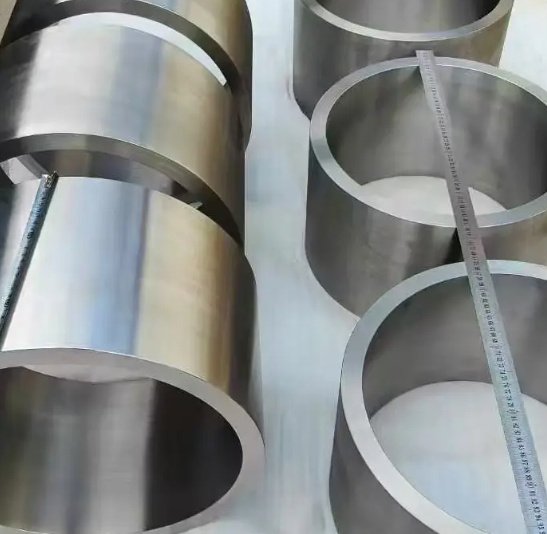
Haynes metal alloys are a family of high-performance nickel-based and cobalt-based alloys designed for severe heat, oxidation, corrosion, wear and thermal cycling. In engineering searches, “Haynes” usually refers to proprietary alloys developed by Haynes International, including well-known grades such as HAYNES 230, HAYNES 188, HAYNES 25, HAYNES 214 and HAYNES 282.
These materials are widely used when stainless steel, common nickel alloys or low-alloy steels cannot provide enough creep strength, hot corrosion resistance or dimensional stability. Typical operating environments include gas turbines, aerospace engines, chemical processing equipment, industrial furnaces, heat-treat fixtures, combustion hardware and high-temperature fasteners.
Haynes alloys are selected when the cost of failure is higher than the cost of the material. Their value comes from maintaining mechanical integrity and corrosion resistance at temperatures where ordinary alloys rapidly lose strength or form unstable oxide scales.
What Is Haynes Metal?
Haynes metal is not a single material. It is a group of engineered superalloys primarily based on nickel, cobalt, chromium, molybdenum, tungsten, iron, aluminum and other strengthening elements. Depending on the grade, a Haynes alloy may be optimized for oxidation resistance, creep rupture strength, carburization resistance, sulfidation resistance, aqueous corrosion resistance or fabricability.
Many Haynes grades are categorized as nickel superalloys or cobalt superalloys. Nickel-based Haynes alloys often provide excellent high-temperature strength and oxidation resistance, while cobalt-based grades can deliver outstanding hot strength, galling resistance and stability under thermal fatigue.
Common product forms include sheet, plate, bar, billet, wire, welding filler metal, forged parts, seamless and welded tube, pipe, fittings and precision CNC machined components. Availability depends strongly on grade, size, mill form, heat treatment condition and certification requirements.
Common Haynes Alloy Grades and Typical Uses
HAYNES 230 Alloy
HAYNES 230 is a nickel-chromium-tungsten-molybdenum alloy known for high-temperature strength, oxidation resistance and long-term thermal stability. It is commonly used in combustor liners, transition ducts, heat shields, furnace hardware, thermocouple sheaths and gas turbine components.
HAYNES 188 Alloy
HAYNES 188 is a cobalt-nickel-chromium-tungsten alloy with excellent oxidation resistance and good strength at elevated temperature. It is often selected for aerospace combustor parts, afterburner components, flame holders and hot-section sheet fabrications.
HAYNES 25 Alloy / L-605
HAYNES 25, also known as L-605, is a cobalt-based alloy with high strength, good oxidation resistance and resistance to wear and galling. It is used in turbine parts, bearings, valve components, springs, medical-related components and high-temperature fasteners where cobalt alloy performance is preferred.
HAYNES 214 Alloy
HAYNES 214 is a nickel-chromium-aluminum-iron alloy recognized for exceptional oxidation resistance. It forms a protective alumina scale that performs well in clean oxidizing environments, making it useful for industrial furnace components, heat-treat baskets, radiant tubes and oxidation-critical hardware.
HAYNES 282 Alloy
HAYNES 282 is a precipitation-strengthened nickel superalloy developed for excellent creep strength, thermal stability and fabricability. It is frequently considered for gas turbine, aerospace and power generation components that require high strength at elevated temperatures.
HAYNES HR-120 and HAYNES 556
HAYNES HR-120 and HAYNES 556 are often evaluated for industrial heating, petrochemical and process equipment applications. HR-120 is known for resistance to carburization and sulfidation, while 556 offers resistance to oxidation, carburization and chlorine-bearing environments in certain service conditions.
Engineer’s note: grade selection should start with the actual service environment
Temperature alone is not enough to choose a Haynes alloy. Engineers should define peak temperature, continuous operating temperature, thermal cycling frequency, atmosphere chemistry, mechanical load, expected life, weld requirements, code requirements and post-fabrication inspection methods. A material that performs well in dry oxidation may not be the best option for carburizing, sulfidizing, chloride-containing or molten-salt environments.
Key Properties That Make Haynes Alloys Valuable
The primary advantage of Haynes alloys is their ability to combine high-temperature strength with environmental resistance. In severe service, a material must resist both mechanical degradation and chemical attack. Haynes alloys are engineered to control these mechanisms through carefully balanced chemistry and processing.
Oxidation resistance is one of the most important features. Chromium and aluminum help form protective oxide scales that slow further metal loss. Some grades form chromia scales, while grades such as HAYNES 214 rely heavily on alumina-scale protection.
Creep strength matters when a component is exposed to sustained stress at high temperature. Turbine parts, furnace fixtures and hot-load-bearing supports can deform slowly over time even below their short-term tensile strength. Nickel superalloys such as HAYNES 282 are designed to improve creep rupture performance.
Thermal stability is critical for long operating life. Certain alloys maintain a stable microstructure during prolonged exposure, reducing embrittlement, phase instability or loss of ductility. This is especially important for components that must be welded, repaired or inspected after service.
Other relevant properties include fatigue strength, thermal fatigue resistance, hot hardness, resistance to carburization, resistance to sulfidation, chloride stress corrosion resistance in applicable conditions, and compatibility with joining processes.
Haynes vs Inconel, Hastelloy and Stainless Steel
Haynes alloys are often compared with Inconel, Hastelloy and stainless steels because all may be considered for corrosion-resistant or high-temperature parts. The correct choice depends on whether the dominant failure mode is heat, corrosion, creep, oxidation, wear or a combination of these.
Compared with many stainless steels, Haynes alloys generally offer much better high-temperature strength and oxidation resistance. Stainless steel may be more economical and easier to machine, but grades such as 304, 316, 310 or 330 stainless can lose strength or scale aggressively in conditions where Haynes alloys remain serviceable.
Compared with Inconel alloys, Haynes grades may provide advantages in specific hot-section or oxidation environments. For example, HAYNES 230 is frequently considered alongside INCONEL 625, INCONEL 617 and INCONEL 718 depending on strength, temperature and corrosion requirements. HAYNES 282 is often evaluated where precipitation-strengthened nickel alloy performance is needed.
Compared with Hastelloy alloys, the distinction is often service temperature and corrosion chemistry. Many Hastelloy grades are highly valued for chemical corrosion resistance in acids and reducing environments, while Haynes high-temperature alloys are often selected for hot gas, combustion and furnace environments. However, naming overlap exists because some products are corrosion-oriented and others are heat-resistant.
There is no universal “best” superalloy. The best material is the one whose chemistry, product form, heat treatment and certification match the actual operating conditions and manufacturing route.
CNC Machining Haynes Alloys
CNC machining Haynes alloys requires more planning than machining carbon steel, aluminum or standard stainless steel. These alloys tend to have high strength, poor thermal conductivity, work-hardening behavior and abrasive alloying elements. Tool wear, notch wear, built-up edge, chatter and heat concentration are common challenges.
Machining Characteristics
Nickel-based and cobalt-based Haynes alloys resist cutting because they maintain strength at high temperature. Heat stays near the cutting edge instead of dissipating quickly through the chip or workpiece. This can shorten tool life if speeds, feeds, coolant strategy and tool geometry are not controlled.
Work hardening is another major issue. If the tool rubs instead of cuts, the surface can harden and make subsequent passes more difficult. This is especially relevant for turning, drilling, tapping, boring and thin-wall milling.
Tooling and Process Recommendations
For many Haynes machining operations, coated carbide tools are the starting point. Rigid machines, stable fixturing, sharp cutting edges and positive rake geometries help reduce cutting forces. Ceramic tools may be used in some high-speed turning operations, but they require suitable setup rigidity and process control.
Avoid dwelling and light rubbing cuts when machining Haynes alloys. Maintain a consistent chip load, use appropriate feed per tooth, and ensure the cutting edge stays under the work-hardened layer. Flood coolant or high-pressure coolant can help with chip evacuation and thermal control, although some operations may benefit from carefully controlled dry or air-blast strategies depending on tooling and grade.
For milling, trochoidal toolpaths, climb milling, short axial engagement and constant cutter engagement can improve tool life. For drilling, use rigid holders, peck strategies only when appropriate, through-tool coolant where possible and drills designed for nickel alloys. For tapping, thread milling is often safer for high-value parts because it reduces the risk of broken taps.
Surface Integrity and Inspection
Surface integrity is important for parts exposed to fatigue, high heat or corrosive media. Machining damage, tensile residual stress, microcracking or smeared material can reduce service life. Critical components may require controlled roughness, deburring, non-destructive testing, passivation where applicable, dimensional inspection and documentation of machining parameters.
Buyer’s note: why Haynes CNC parts cost more
Haynes CNC machined components typically cost more because raw material prices are high, machining rates are slower, tool wear is greater and scrap risk is significant. Buyers should provide drawings, tolerances, material grade, heat condition, inspection requirements, surface finish, lot traceability and required certifications early in the quoting process. Tight tolerances on thin-wall Haynes parts should be reviewed for distortion risk after machining, welding or heat treatment.
Heat Treatment, Welding and Fabrication
Heat treatment practices vary by Haynes grade. Some alloys are supplied in a solution-annealed condition, while precipitation-strengthened grades such as HAYNES 282 require controlled aging to develop final strength. Incorrect heat treatment can reduce ductility, alter mechanical properties or compromise corrosion resistance.
Welding is possible for many Haynes alloys, but procedures must be qualified for the specific grade, thickness, joint design and service environment. Gas tungsten arc welding, gas metal arc welding, resistance welding, laser welding and electron beam welding may be used depending on the application. Matching or compatible filler metals are selected to manage cracking risk, chemistry and high-temperature performance.
Fabrication of sheet and plate products may involve forming, rolling, spinning, stamping or hot forming. Because these alloys are stronger than common stainless steels, they often require higher forming forces, larger bend radii and intermediate annealing for severe deformation.
Welding and heat treatment should be treated as part of the material specification, not as afterthoughts. For high-temperature components, the final microstructure and surface condition are often as important as the nominal alloy grade.
Applications of Haynes Metal Alloys
Haynes alloys are used in industries where high heat, aggressive chemistry and mechanical stress combine. Their applications are often safety-critical, performance-critical or uptime-critical.
- Aerospace and defense: combustor liners, transition ducts, afterburner parts, turbine seals, flame holders, exhaust components and fasteners.
- Gas turbines and power generation: hot-gas-path hardware, recuperators, combustor components, support rings and thermal shields.
- Industrial furnaces: trays, baskets, muffles, radiant tubes, retorts, heat shields, burners and furnace fixtures.
- Chemical and petrochemical processing: reactor internals, reformer components, heat exchangers, process tubing and high-temperature corrosion-resistant hardware.
- Automotive and motorsport: turbocharger parts, exhaust valves, hot exhaust hardware and prototype high-temperature components.
- Medical and precision engineering: selected cobalt alloy components where wear resistance, strength and biocompatibility considerations apply under proper specifications.
Procurement and Specification Tips
When purchasing Haynes material or finished parts, the specification should be more detailed than “Haynes alloy.” Buyers should identify the exact grade, UNS number if applicable, product form, dimensions, tolerance, heat condition, certification standard and any required testing.
Common specification references may include AMS, ASTM, ASME, AWS, ISO, EN, customer-controlled specifications and mill test certificate requirements. For pressure equipment, aerospace or nuclear-adjacent work, code compliance and approved supplier status may be mandatory.
Traceability is essential for high-value Haynes components. Material test reports should confirm heat number, chemical composition, mechanical properties, heat treatment condition and applicable specification compliance. For CNC machined parts, dimensional inspection reports, hardness data, surface roughness records and non-destructive testing may also be required.
Procurement checklist for Haynes alloy parts
- Confirm exact Haynes grade and acceptable substitutes before quoting.
- Specify bar, plate, sheet, tube, forging or near-net-shape blank.
- Define solution annealed, aged, cold-worked or other required condition.
- Attach drawings with tolerances, GD&T, surface finish and inspection points.
- State required certificates such as MTR, EN 10204 3.1, AMS compliance or customer approval.
- Clarify whether welding, heat treatment, passivation, pickling, coating or NDT is required.
- Review lead time for uncommon sizes or aerospace-certified material.
Quality Documentation and Testing
For professional use, Haynes alloys should be supported by documented quality evidence. A mill test report normally lists chemical composition and mechanical properties. Depending on the part and industry, additional testing may include hardness testing, tensile testing, creep rupture testing, grain size verification, positive material identification, ultrasonic testing, liquid penetrant inspection, radiography or metallographic examination.
For corrosion or high-temperature applications, engineers may also request oxidation testing, weld procedure qualification records, heat treatment charts, coating records or furnace calibration documentation. In regulated industries, documentation can be as important as the part itself because it proves that the material supplied matches the design basis.
How to Choose the Right Haynes Alloy
The best way to choose a Haynes alloy is to work backward from the failure modes that must be prevented. If oxidation is the main concern, an alumina-forming or chromia-forming alloy may be considered. If creep strength is critical, a precipitation-strengthened nickel superalloy may be appropriate. If galling or hot wear is expected, a cobalt-based alloy may deserve evaluation.
Engineers should compare candidate materials using service temperature, stress level, atmosphere, product form, fabrication method, machining difficulty, weldability, availability and total life-cycle cost. For buyers, the lowest raw material price may not produce the lowest installed cost if it increases machining time, causes welding problems or shortens component life.
Haynes metal alloys occupy a specialized but important position in modern manufacturing. When properly specified, machined, welded and inspected, they provide a reliable solution for high-temperature and corrosion-resistant components operating beyond the practical limits of conventional materials.