
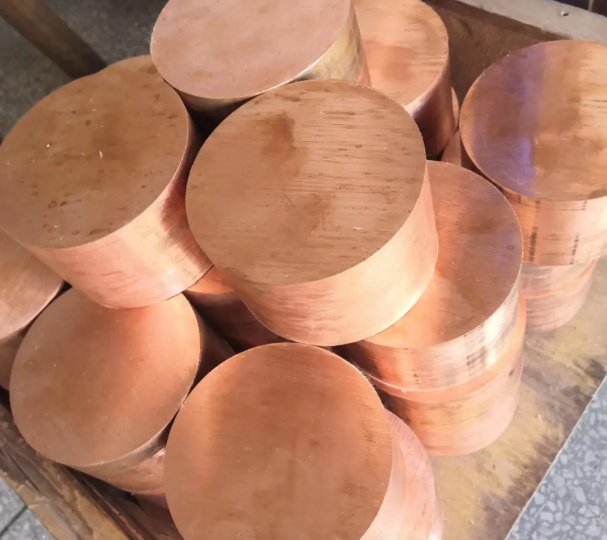
C145, more commonly specified as UNS C14500 tellurium copper, is a free-machining copper alloy designed for components that require both high electrical conductivity and efficient precision machining. It is widely used for CNC-turned electrical pins, switchgear parts, connector bodies, welding tips, fasteners, torch tips, and conductive hardware where pure copper is too difficult or too costly to machine at scale.
The key advantage of C14500 is its controlled tellurium addition. Tellurium improves chip breaking and tool life while preserving most of copper’s conductivity. For engineers, buyers, and CNC machine shops, C145 copper often provides a practical balance between conductive performance, dimensional repeatability, surface finish, and part cost.
What Is C145 Copper?
C145 copper is a copper-tellurium alloy identified by UNS C14500. It is often called tellurium copper, free-cutting copper, free-machining copper, or CuTeP in some international references. Unlike electrolytic tough pitch copper such as C11000, C14500 contains a small amount of tellurium and phosphorus to enhance machinability.
Typical chemistry for C14500 includes copper plus silver as the balance, tellurium at approximately 0.40–0.70%, and phosphorus in a small controlled range, commonly around 0.004–0.012%. Exact values should be verified against the applicable material standard and mill certificate.
In practice, C145 is selected when a design needs copper-like conductivity but the manufacturing route involves drilling, turning, milling, threading, grooving, or high-volume automatic machining.
C14500 Tellurium Copper Key Properties
C14500 keeps much of the electrical and thermal performance associated with copper while improving machinability substantially. Representative values are listed below for general engineering reference; actual values depend on temper, product form, diameter or thickness, and supplier certification.
- UNS designation: C14500
- Common names: C145 copper, tellurium copper, free-machining copper, CuTeP
- Density: approximately 8.94 g/cm³
- Electrical conductivity: commonly around 90% IACS or higher, depending on temper and processing
- Thermal conductivity: typically in the high range for copper alloys, often cited around 330–360 W/m·K
- Machinability rating: commonly around 85 when free-cutting brass is rated at 100
- Corrosion resistance: good in many atmospheric, freshwater, and industrial environments where copper alloys are suitable
- Magnetism: non-magnetic
- Workability: good for machining; forming capability is more limited than very ductile pure copper grades
The performance profile makes C14500 especially valuable when machining efficiency is a primary cost driver but the part still requires low electrical resistance or effective heat transfer.
C145 vs C110, C101 and Other Copper Grades
C14500 is often compared with C11000 electrolytic tough pitch copper and C10100 oxygen-free electronic copper. The best choice depends on whether conductivity, purity, formability, welding behavior, or machining productivity is the top priority.
C11000 offers excellent conductivity and broad availability, but it is gummy during machining and can produce long, stringy chips. C10100 provides very high purity and is preferred in vacuum, electronic, or oxygen-sensitive applications. C14500, by contrast, is selected when the part must be machined cleanly and economically while retaining high conductivity.
For many turned conductive components, C14500 is easier to machine than C11000 and may reduce cycle time, tool wear, chip-control problems, and secondary deburring. However, if the design requires maximum electrical conductivity, deep drawing, severe bending, or ultra-high-purity copper, C10100 or C11000 may be more appropriate.
Engineering note: when C14500 is the practical choice
Choose C14500 when the part geometry includes small holes, threads, cross-drilling, tight grooves, sharp shoulders, or high-volume screw-machine operations. It is especially useful for conductive components where machining cost and dimensional consistency matter as much as raw conductivity.
CNC Machining C145 Copper
C14500 is one of the preferred copper alloys for CNC machining because it forms shorter chips than pure copper and generally permits better control over surface finish and tolerances. It is used successfully in CNC turning, Swiss machining, CNC milling, drilling, tapping, reaming, and automatic screw machining.
For CNC turning, sharp carbide tools, polished cutting edges, positive rake geometry, and stable workholding are recommended. Coolant can help manage heat, flush chips, and preserve surface quality, although exact cutting conditions depend on tool geometry, machine rigidity, bar diameter, and tolerance requirements.
For CNC milling, the alloy’s improved chip breaking reduces the risk of chip welding compared with pure copper. High-speed tools with sharp edges and suitable flute geometry are commonly used. Avoid excessive tool pressure because copper alloys can still smear if tools are dull or feeds and speeds are poorly matched.
For drilling and tapping, C14500 performs better than many high-conductivity copper grades. Proper chip evacuation is still important, particularly in blind holes and small-diameter holes. Thread quality is usually good when using sharp taps, appropriate lubrication, and controlled feed.
- Use sharp, polished tooling to reduce smearing and built-up edge.
- Maintain adequate feed to create a clean chip rather than rubbing the surface.
- Apply coolant or lubricant for deep holes, tapping, tight tolerance bores, and fine surface finishes.
- Control burr formation at thread exits, drilled holes, and thin edges.
- Specify realistic tolerances based on part size, feature depth, and post-machining handling.
Because C14500 machines efficiently, it is often chosen for production runs where scrap reduction, spindle uptime, and repeatability directly affect the total cost per component.
CNC buyer perspective: questions to ask before ordering C14500 parts
Ask the supplier whether the quote assumes C14500 bar, rod, plate, or custom stock; whether the material certificate will show UNS C14500 chemistry; whether conductivity testing is required; whether burr-free edges or cosmetic surfaces are critical; and whether the part will need plating, soldering, heat treatment, or assembly after machining.
Applications of C14500 Tellurium Copper
C14500 is used where a component must carry current, transfer heat, and still be machinable into precise shapes. It is common in electrical, power distribution, industrial equipment, automotive, aerospace support hardware, welding, and fluid-control applications.
- Electrical connectors: pins, sockets, terminals, contacts, and connector bodies
- Switchgear and power components: conductive posts, busbar hardware, adapters, and threaded current-carrying parts
- Welding equipment: welding tips, nozzles, electrode holders, and resistance-welding components
- CNC turned parts: bushings, nuts, fittings, spacers, shafts, inserts, and precision fasteners
- Thermal components: heat-transfer parts, torch tips, cooling blocks, and conductive sleeves
- Industrial hardware: valve components, instrumentation parts, and specialty machined copper fittings
Designers often specify C14500 when the same part would be too expensive or unreliable to produce from C110 copper due to chip control, burr formation, or tool wear.
Standards, Product Forms and Temper Options
C14500 is available in multiple product forms, including round bar, rod, wire, plate, strip, and sometimes custom extruded or drawn shapes. Common procurement references may include ASTM specifications for free-cutting copper rod, bar, wire, and shapes, along with supplier-specific mill certifications.
Typical product conditions include annealed, half-hard, hard, and other drawn or cold-worked tempers. Temper affects strength, hardness, ductility, straightness, machinability, and dimensional stability. For CNC work, bar straightness, diameter tolerance, surface condition, and internal quality can be as important as nominal chemistry.
When preparing an RFQ, specify UNS C14500, required temper, product form, dimensions, tolerance, certification requirements, and applicable standard. This reduces substitution risk and helps suppliers quote comparable material.
Procurement note: how to reduce substitution and quality risk
Do not specify only “C145” if the supply chain may confuse it with an internal company grade or a non-US designation. Use “UNS C14500 tellurium copper” on drawings, purchase orders, inspection plans, and material certificates. If conductivity is mission-critical, add a minimum IACS requirement and define the test method.
Design Considerations for C14500 Parts
C14500 is highly useful, but it should be designed with copper’s mechanical behavior in mind. It is softer than many steels and aluminum bronzes, so threaded features, press fits, bearing surfaces, and load-bearing shoulders should be reviewed for deformation, galling, and wear.
If the component will be plated, confirm surface preparation and compatibility with the intended finish. C14500 can be plated with materials such as nickel, tin, silver, or gold depending on electrical, corrosion, solderability, or wear requirements. Plating thickness may affect tight tolerances, especially on small pins and threaded features.
For soldering and brazing, process validation is recommended because alloying elements and surface condition can influence wetting and joint consistency. For welding, C14500’s high thermal conductivity requires appropriate heat input and fixturing, and not all welding processes are suitable for every design.
In thermal or electrical assemblies, designers should also account for contact resistance, surface roughness, joint pressure, oxide formation, and mating-material compatibility. The alloy itself is conductive, but system-level performance depends on the complete joint design.
Advantages and Limitations of C145 Copper
The main advantage of C14500 is its combination of high conductivity and high machinability. This combination can lower total manufacturing cost for precision parts that would otherwise be difficult to make from high-purity copper.
- Advantages: excellent machinability for a copper alloy, high electrical conductivity, good thermal conductivity, good corrosion resistance, non-magnetic behavior, and suitability for precision CNC components.
- Limitations: lower ductility than some pure copper grades, not the highest-conductivity copper option, limited suitability for severe forming, and mechanical strength that may be insufficient for heavily loaded structural parts.
For many electrical hardware applications, the cost advantage comes from manufacturing efficiency, not simply from raw material price. Shorter chips, longer tool life, fewer machining interruptions, and more stable tolerances can make C14500 a stronger commercial choice than lower-machinability copper grades.
How to Specify C14500 for Reliable Manufacturing
A clear C14500 specification should connect material requirements with manufacturing and inspection needs. This is especially important for CNC-machined copper parts, where small differences in stock quality, temper, or certification can affect cycle time and final part performance.
A practical drawing or purchase specification may include:
- Material: UNS C14500 tellurium copper
- Product form: bar, rod, plate, strip, or wire
- Temper or hardness requirement
- Applicable ASTM, EN, or customer material standard
- Minimum electrical conductivity if required
- Dimensional tolerance, straightness, and surface finish requirements
- Plating, passivation, cleaning, or packaging requirements
- Mill test report, certificate of conformity, or full traceability requirement
For critical conductive parts, include both material certification and part-level inspection requirements. If the component interfaces with another conductive surface, define flatness, surface roughness, plating thickness, and torque or contact-force assumptions where relevant.
Conclusion: Why C14500 Remains a Preferred Machinable Copper Alloy
C14500 tellurium copper is a high-value engineering material for precision components that must be conductive, thermally efficient, and economical to machine. Its tellurium-modified chemistry provides a significant machinability improvement over many pure copper grades while retaining high electrical and thermal performance.
For CNC-machined connectors, conductive fasteners, welding tips, electrical hardware, and heat-transfer parts, C145 copper offers a proven balance of performance and production efficiency. The best results come from specifying UNS C14500 clearly, selecting the right temper and product form, and aligning material certification with the functional requirements of the finished part.