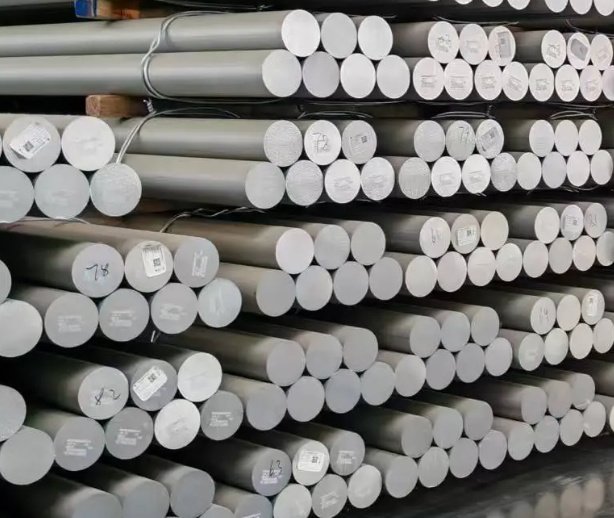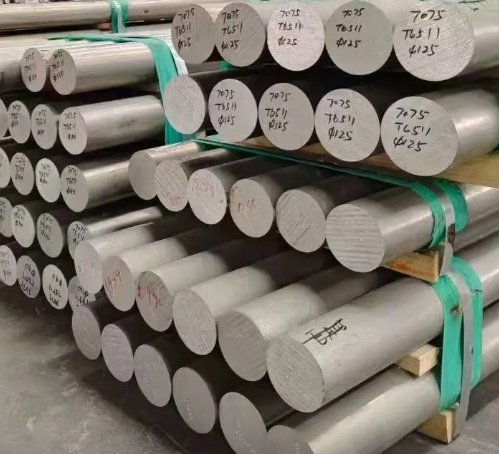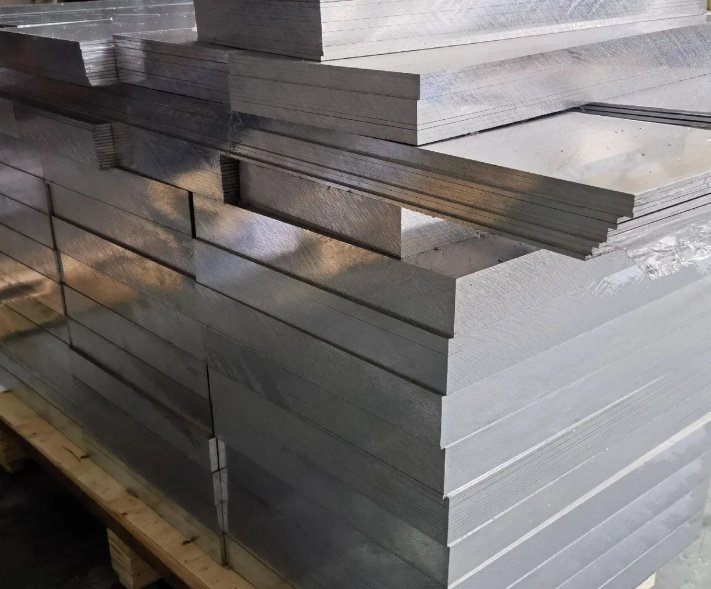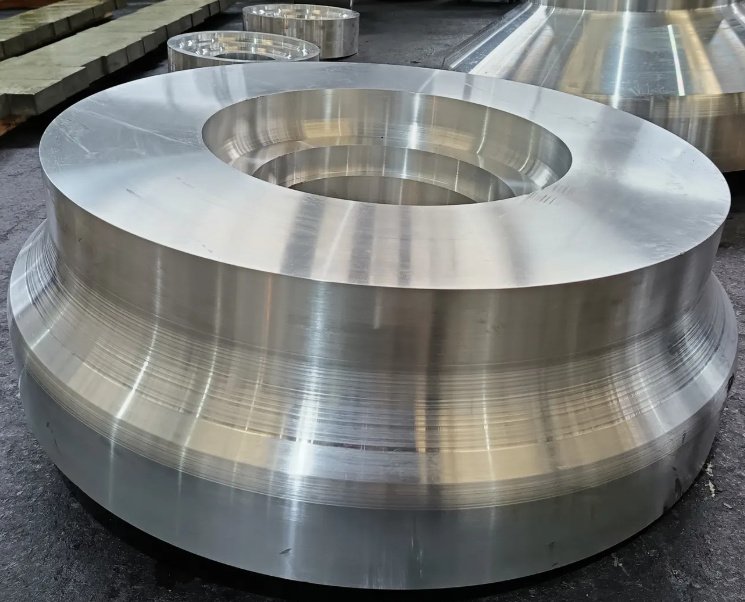
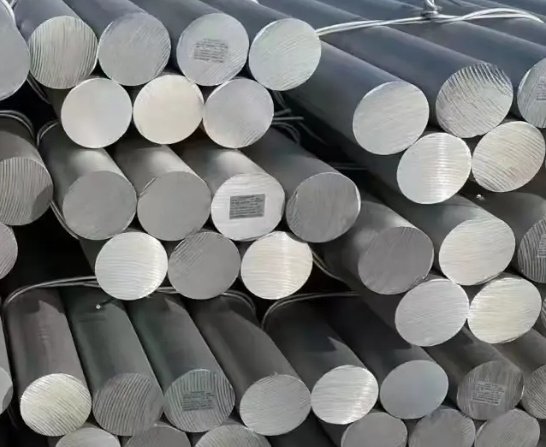
Aluminum 7010 is a high-strength 7xxx-series aluminum alloy developed for demanding aerospace, defense and high-performance structural applications. It is valued for its combination of tensile strength, fracture toughness, stress-corrosion resistance and fatigue performance, especially in thick plate, forged components and machined aircraft structures.
In engineering specifications, the material may appear as high-strength aerospace aluminum, Aluminum 7010, al alloy 7010, Al 7010, AA7010 or EN AW-7010. Although these terms are often used interchangeably in purchasing documents, engineers should always confirm the exact standard, temper, product form and inspection requirements before approving the alloy for production.
What Is Aluminum 7010?
Aluminum 7010 is an aluminum-zinc-magnesium-copper alloy. Like 7050 and 7075, it belongs to the precipitation-hardening 7xxx family, where zinc and magnesium provide high strength and copper improves hardenability and mechanical performance. Zirconium is commonly added to refine grain structure and improve resistance to recrystallization.
The alloy is commonly supplied as plate, sheet, forgings, extrusions and machined blocks. In aerospace use, Al 7010 is frequently selected for damage-tolerant structures such as wing ribs, bulkheads, fuselage frames, landing gear support parts and heavily loaded machined assemblies.
Typical Chemical Composition of Al Alloy 7010
The exact chemistry depends on the governing standard and mill certification. The following ranges are representative for 7010 aluminum alloy and should be verified against the applicable specification, such as EN 573, EN 485, AMS, ASTM or customer-controlled aerospace material standards.
| Element | Typical Range by Weight | Engineering Function |
|---|---|---|
| Aluminum | Balance | Base metal, low density and corrosion behavior |
| Zinc | 5.7% - 6.7% | Main strengthening element in 7xxx alloys |
| Magnesium | 2.1% - 2.6% | Forms strengthening precipitates with zinc |
| Copper | 1.5% - 2.0% | Improves strength and hardenability |
| Zirconium | 0.10% - 0.16% | Controls grain structure and recrystallization |
| Iron + Silicon | Controlled low levels | Impurity control for toughness and fatigue performance |
Mechanical Properties and Tempers
Aluminum 7010 is normally solution heat treated, quenched and artificially aged. Common tempers include T6, T74, T7451 and T7651, depending on the balance required between maximum strength, fracture toughness and stress-corrosion cracking resistance.
| Property | Typical 7010-T7451 Plate Range | Why It Matters |
|---|---|---|
| Density | About 2.82 g/cm³ | Useful for aircraft weight reduction versus steel or titanium |
| Ultimate tensile strength | Approximately 480 - 560 MPa | Supports high-load structural design |
| Yield strength | Approximately 410 - 500 MPa | Important for static load and deflection control |
| Elastic modulus | About 71 - 72 GPa | Similar to most wrought aluminum alloys |
| Elongation | Typically 6% - 12% | Indicates ductility and forming tolerance |
| Fracture toughness | Often superior to peak-strength 7075 in thick sections | Critical for crack growth and fail-safe aircraft design |
Values above are typical engineering ranges, not guaranteed minimums. Final acceptance should be based on the mill test certificate, product thickness, grain direction, ultrasonic inspection class and the project specification.
Why temper selection changes 7010 aluminum performance
A T6 temper usually targets higher strength, while T74 or T7451 sacrifices some peak tensile strength to improve stress-corrosion cracking resistance and fracture toughness. For thick aerospace plate, T7451 is widely used because it also includes stress relief by stretching, reducing distortion during machining.
Aluminum 7010 vs 7075, 7050, 2024 and 6061
Searchers comparing Aluminum 7010 are often deciding whether it is worth specifying over more familiar alloys such as 7075-T6, 7050-T7451, 2024-T351 or 6061-T6. The answer depends on thickness, loading, corrosion environment, inspection requirements and machining cost.
| Alloy | Strength Level | Toughness | Corrosion / SCC Resistance | Machinability | Best-Fit Applications |
|---|---|---|---|---|---|
| Aluminum 7010 | Very high | High in thick sections | Good in overaged tempers | Good with stress-relieved plate | Aerospace plate, forged structural parts, machined frames |
| 7075 | Very high | Moderate to good | Lower in T6; better in T73 | Excellent | Aircraft fittings, tooling, high-strength components |
| 7050 | Very high | High | Good | Good | Thick aerospace plate and forgings |
| 2024 | High | Good fatigue resistance | Generally requires protection | Good | Aircraft skins, fuselage structures, riveted assemblies |
| 6061 | Medium | Good | Excellent | Good | General engineering, frames, fixtures, marine hardware |
Compared with 7075, al alloy 7010 is often favored where thick-section toughness and stress-corrosion behavior are more important than simply reaching the highest tensile strength. Compared with 6061, it offers much higher strength but requires tighter control of heat treatment, corrosion protection and supply documentation.
Common Applications of Al 7010
Al 7010 is used where designers need a strong, lightweight alloy with reliable behavior in critical structures. Typical applications include:
- Aircraft wing ribs, spars, bulkheads and stringer-related parts
- Fuselage frames, pressure bulkhead components and seat track structures
- Landing gear support structures and heavily loaded brackets
- Defense vehicle components requiring low weight and high stiffness-to-weight ratio
- Large CNC-machined monolithic parts cut from stress-relieved plate
- High-strength tooling, test fixtures and precision aerospace jigs
In many aerospace programs, the alloy is selected not only for static strength but also for crack growth resistance, predictable machining response and compatibility with nondestructive testing.
Machining Aluminum 7010: Practical Engineering Notes
Aluminum 7010 machines well, but high-value aerospace parts can still suffer from distortion, chatter, residual stress release, poor chip evacuation and dimensional drift after roughing. For expensive plate or forged blanks, the machining strategy often determines cost more than the raw material price.
Recommended machining approach
- Use stress-relieved tempers such as T7451 or T7651 for large CNC-machined parts.
- Apply balanced stock removal from both sides to reduce warping.
- Use sharp carbide tools with polished flutes for efficient chip evacuation.
- Separate roughing, semi-finishing and finishing operations to allow stress relaxation.
- Use high-flow coolant or minimum quantity lubrication depending on the machine and geometry.
- Plan intermediate inspection after rough machining for thin-wall or pocketed parts.
| Machining Issue | Typical Cause | Practical Mitigation |
|---|---|---|
| Part distortion after roughing | Residual stress in thick plate or asymmetric stock removal | Use T7451 plate, flip parts during roughing and leave uniform finish allowance |
| Chatter in deep pockets | Low wall stiffness and excessive tool overhang | Use high-efficiency milling, shorter tools and staged wall finishing |
| Built-up edge | Incorrect tool coating, low cutting speed or poor lubrication | Use aluminum-specific carbide tools and optimize feed per tooth |
| Dimensional movement after aging or coating | Thermal exposure and stress redistribution | Confirm thermal limits before anodizing, painting or assembly |
Example engineering result from a thick-plate machining workflow
In a typical aerospace bracket machined from 80 mm 7010-T7451 plate, switching from one-sided roughing to balanced two-sided roughing can reduce final flatness deviation from more than 0.60 mm to approximately 0.20 mm on a 600 mm part length. Actual results depend on plate quality, fixture rigidity, stock allowance and machining sequence, but this illustrates why process planning is essential for Al 7010.
Corrosion Resistance, Surface Treatment and Joining
As a high-strength 7xxx alloy, Aluminum 7010 has better corrosion performance than many peak-aged aluminum-zinc alloys when supplied in overaged tempers such as T7451. However, it is not as naturally corrosion resistant as 5xxx or 6xxx alloys. Protective finishing is usually required in aerospace and marine-adjacent environments.
Surface treatment options
- Chromic acid anodizing or sulfuric acid anodizing where permitted by specification
- Hard anodizing for wear resistance, with fatigue-performance review
- Conversion coating for electrical continuity or paint preparation
- Primer and paint systems for external or corrosive service
- Shot peening where fatigue improvement is specified
Welding is generally not the preferred joining method for Al 7010 because high-strength 7xxx alloys can lose strength in the heat-affected zone and may be susceptible to cracking. Mechanical fastening, bonding, interference fitting and precision bolting are more common in aerospace structures.
Procurement and Quality Checklist for Buyers
Buyers comparing Aluminum 7010 suppliers should look beyond headline price per kilogram. For aerospace and precision machining work, the critical purchasing variables are certification, inspection level, thickness tolerance, temper control and availability of traceable documentation.
- Confirm the alloy designation: Aluminum 7010, al alloy 7010, Al 7010 or EN AW-7010.
- Specify product form: plate, sheet, forging, extrusion or cut-to-size block.
- Define temper: T6, T74, T7451, T7651 or project-specific condition.
- Request mill test certificate with chemical composition and mechanical properties.
- Check ultrasonic inspection requirements for thick plate.
- Confirm grain direction and mechanical test orientation: L, LT or ST.
- Review maximum thickness capability and minimum order quantity.
- Verify packaging, surface protection and identification marking.
For regulated applications, certificate traceability is as important as the alloy itself. A low-cost plate without acceptable documentation may be unsuitable for aerospace, defense or certified structural use even if the chemistry appears correct.
Buyer note: when 7010 may not be the best choice
If the part is lightly loaded, exposed to severe corrosion without advanced protection, or requires welding, 6061, 6082, 5083 or another aluminum alloy may be more economical. If the design requires very high strength in a common commercial grade with broad availability, 7075 may be easier to source. For thick aerospace plate, however, Aluminum 7010 and 7050 often provide a stronger balance of toughness and stress-corrosion resistance.
Standards, Data Verification and Engineering Caution
Published values for Al 7010 vary because mechanical properties depend on heat treatment, thickness, product form, test direction and governing standard. Engineers should treat online property tables as screening data only. Final design allowables should be taken from approved aerospace databases, project specifications, mill certificates or validated internal material qualification programs.
Typical reference frameworks include EN aluminum alloy standards, AMS aerospace material specifications, ASTM test methods, NADCAP-controlled processing requirements and customer-specific aircraft material standards. When the component is safety-critical, design teams should verify fracture toughness, fatigue crack growth, stress-corrosion testing and nondestructive inspection requirements before production release.
Conclusion: When to Specify Aluminum 7010
Aluminum 7010 is a premium high-strength alloy for structural applications where weight reduction, thick-section performance and damage tolerance matter. Its advantages over general-purpose alloys include much higher strength, strong aerospace pedigree and good machinability in stress-relieved tempers. Its limitations are higher cost, stricter procurement control and the need for proper corrosion protection.
For engineers and buyers, the best use case for al alloy 7010 is a high-value structural part where lower density and excellent machinability must be combined with high strength, fracture toughness and traceable aerospace-quality supply. When correctly specified, machined and protected, Al 7010 remains one of the most capable aluminum alloys for advanced structural manufacturing.