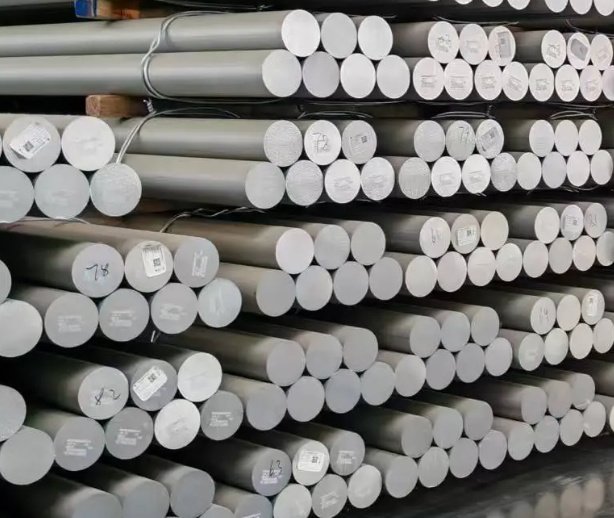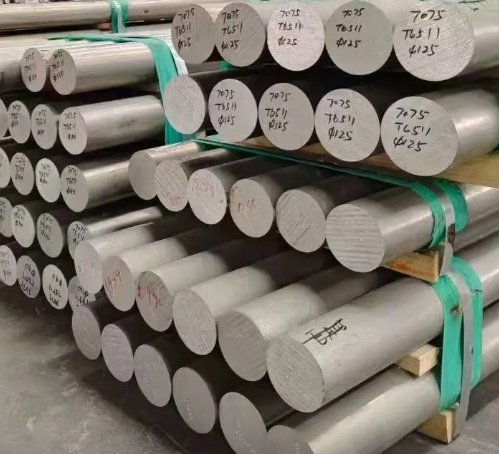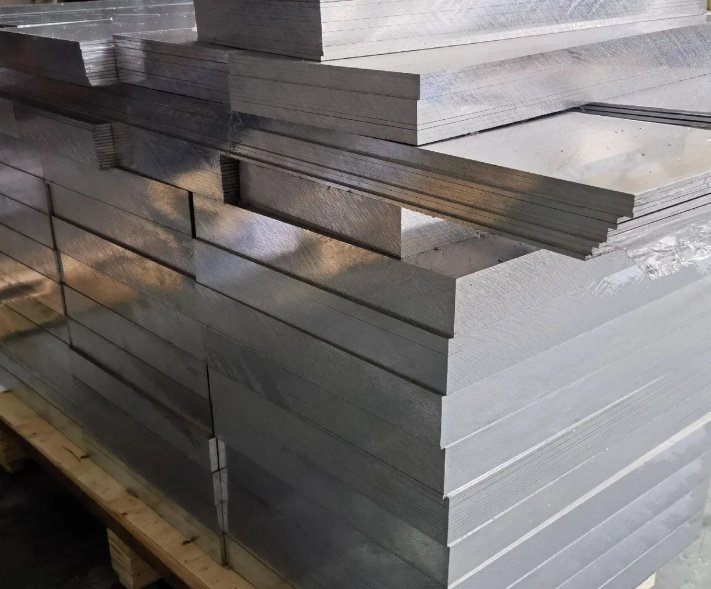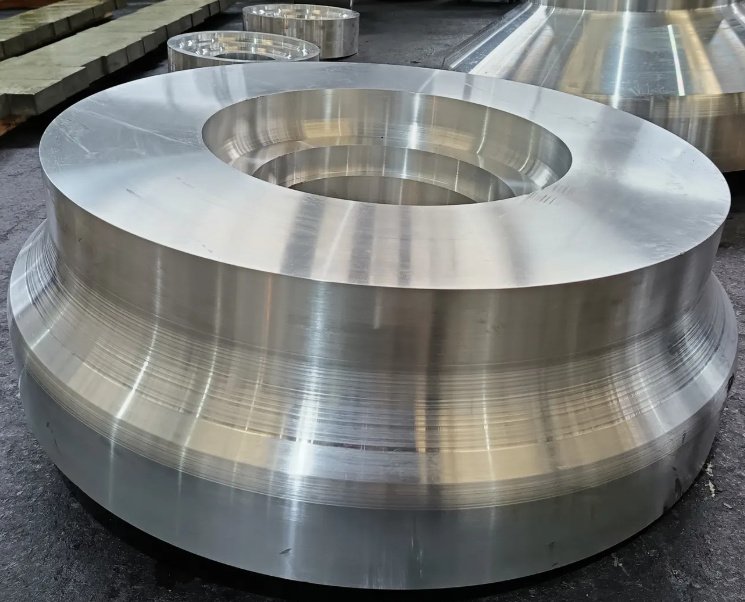
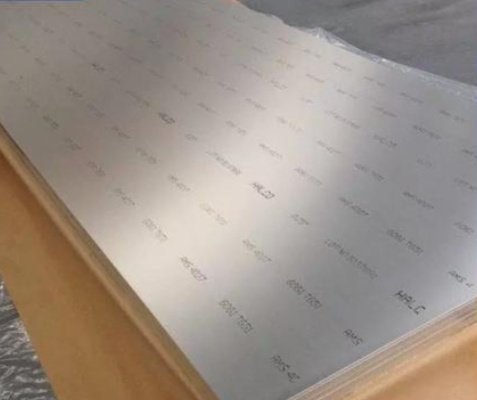
Aluminum 7020 is a heat-treatable Al-Zn-Mg alloy widely used where designers need higher strength than common 6xxx alloys while still requiring good weldability. In European designation, it is often referenced as EN AW-7020 or AlZn4.5Mg1. The alloy is frequently specified for welded structures, rail vehicles, military bridges, transport frames, pressure-related fabrications, bicycle components, high-strength profiles and precision-machined parts.
For engineers, buyers and manufacturing teams, the key value of al alloy 7020 is its practical balance: medium-to-high strength, relatively good resistance to stress corrosion compared with many high-zinc 7xxx alloys, acceptable machinability and better fusion-welding suitability than 7075. This article explains where Al 7020 fits, how it compares with competing aluminum grades, and what to check before purchasing plate, bar, tube or extrusion.
What Is 7020 Aluminum?
7020 aluminum belongs to the 7xxx aluminum alloy family, where zinc and magnesium are the primary strengthening elements. Unlike 7075, which contains higher zinc and copper, 7020 is generally considered a weldable 7xxx aluminum alloy because its lower copper content reduces hot-cracking sensitivity and improves corrosion behavior in welded structures.
The alloy is normally supplied in tempers such as T6, T651, T6511, T652 or solution-treated and aged conditions depending on product form and standard. Plate and extrusion are common, while forgings and specialty shapes may be available from qualified mills.
| Category | 7020 Aluminum Characteristics |
|---|---|
| Alloy family | 7xxx, Al-Zn-Mg, heat-treatable |
| Typical designation | EN AW-7020, AlZn4.5Mg1 |
| Main advantage | Higher strength than many 6xxx alloys with better weldability than 7075 |
| Common product forms | Plate, sheet, extrusion, bar, tube, machined profiles |
| Typical users | Rail, transportation, defense, structural fabrication, machinery and sports equipment |
Chemical Composition of Aluminum 7020
The exact composition limits depend on the governing standard and mill specification. A typical published range for 7020 aluminum includes zinc around 4.0–5.0%, magnesium around 1.0–1.4%, plus controlled manganese, chromium and sometimes zirconium for grain control and toughness.
| Element | Typical Range or Limit, wt.% | Engineering Function |
|---|---|---|
| Aluminum | Balance | Base metal, low density and corrosion resistance |
| Zinc | 4.0–5.0 | Main precipitation-strengthening element |
| Magnesium | 1.0–1.4 | Forms MgZn2 strengthening precipitates |
| Manganese | 0.05–0.50 | Improves grain structure and toughness |
| Chromium | 0.10–0.35 | Controls recrystallization and improves stress-corrosion resistance |
| Copper | Usually low, often max. 0.20 | Kept low to support weldability and corrosion resistance |
| Iron and Silicon | Controlled impurities | Affect ductility, finish and toughness |
For critical projects, do not rely only on generic composition tables. Request the mill test certificate and confirm the alloy is compliant with the required EN, ASTM, ISO, DIN or customer-specific material specification.
Mechanical Properties and Design Data
Mechanical properties vary with thickness, temper, product form, quench rate, aging practice and testing direction. In plate or extrusion supplied in T6-type conditions, 7020 aluminum commonly delivers a tensile strength range of approximately 350–420 MPa and yield strength around 280–360 MPa. These values are representative, not a substitute for certified data.
| Property | Typical Value | Design Note |
|---|---|---|
| Density | About 2.78 g/cm³ | Nearly one-third the density of steel |
| Elastic modulus | About 70 GPa | Similar to most aluminum alloys |
| Ultimate tensile strength, T6-type | Approx. 350–420 MPa | Depends strongly on thickness and product form |
| 0.2% proof/yield strength, T6-type | Approx. 280–360 MPa | Check longitudinal and transverse values |
| Elongation | Approx. 8–14% | Lower in thicker sections or unfavorable directions |
| Thermal conductivity | Typically lower than pure aluminum, higher than steel | Useful for transport and machinery structures |
A realistic engineering comparison is strength-to-weight. If a welded frame previously made from S355 steel is redesigned using 7020 aluminum, the density reduction can be substantial. However, because aluminum has about one-third the elastic modulus of steel, stiffness-driven components may need deeper sections, ribs or optimized geometry to achieve equivalent deflection performance.
7020 Aluminum vs 6061, 6082, 7075 and 5083
Alloy selection should be based on strength, weldability, corrosion environment, forming requirements, machinability, availability and total fabrication cost. The following comparison shows why Aluminum 7020 is often chosen for welded high-strength structures but not always for general-purpose work.
| Alloy | Strength Level | Weldability | Corrosion Resistance | Best-Fit Applications |
|---|---|---|---|---|
| 7020 | Higher than 6061/6082, lower than peak 7075 | Good for a 7xxx alloy | Good when correctly processed and protected | Welded transport frames, rail structures, defense structures, high-strength profiles |
| 6061 | Moderate | Good | Good | General machining, fixtures, frames, commercial components |
| 6082 | Moderate to medium-high | Good | Good | Structural profiles, bridges, platforms, machinery |
| 7075 | Very high | Poor for conventional fusion welding | Moderate; SCC-sensitive in some tempers | Aerospace, highly loaded machined parts, non-welded components |
| 5083 | Medium, non-heat-treatable | Excellent | Excellent in marine environments | Marine plate, tanks, cryogenic and corrosion-critical structures |
If the part is welded and must exceed the strength level of 6082-T6, al alloy 7020 is often a practical upgrade. If the part is non-welded and maximum static strength is the only priority, 7075-T6 or 7050 may be more attractive. If marine corrosion resistance is more important than strength, 5083 may be safer and easier to qualify.
Quick alloy selection note for engineers
Choose 7020 when a structure must be welded, lightweight and stronger than typical 6xxx aluminum frames. Choose 6061 or 6082 when cost, availability and general fabrication are more important. Choose 7075 when the part is mainly CNC-machined and not fusion-welded. Choose 5083 when marine corrosion resistance and weldability dominate the design.
Welding Behavior and Heat-Affected Zone Performance
One of the main reasons to specify 7020 aluminum is its weldability relative to other 7xxx alloys. MIG and TIG welding can be used with suitable filler metals, joint design and heat input control. Common filler selections may include 5356 or other approved Al-Mg fillers, but the final filler choice should be confirmed against strength, corrosion, anodizing color and project code requirements.
The weld heat-affected zone loses some strength after welding because precipitates are dissolved or coarsened. A useful engineering feature of Al 7020 is that it can recover a portion of HAZ strength through natural aging at room temperature, and additional recovery may be obtained by controlled artificial aging where allowed by the design standard.
In real welded structures, a common practical assumption is that the HAZ will not retain full parent-metal T6 strength immediately after welding. Depending on thickness, procedure, filler and post-weld aging, the welded joint region may recover to roughly 70–85% of parent strength over time. Critical designs should use qualified welding procedure specifications, actual tensile tests, bend tests and hardness mapping instead of catalog assumptions.
Machining, Forming and Surface Treatment
7020 aluminum machines well compared with many softer aluminum alloys, especially in T6-type tempers. For CNC milling, drilling and turning, sharp carbide tools, stable workholding and high-speed cutting strategies help achieve clean chips and controlled dimensional accuracy. Because 7xxx alloys can retain residual stress after quenching, stress-relieved tempers such as T651 or T6511 are preferred for high-precision machining.
- Machining tip: use rigid clamping and avoid removing heavy material from only one side of thick plate when flatness is critical.
- For deep pockets, rough symmetrically, allow stress relaxation if possible, then finish-machine datum surfaces.
- Use proper coolant or mist lubrication to reduce built-up edge and improve surface finish.
- For tapped holes, verify thread engagement because aluminum has lower bearing strength than steel.
- For close tolerances, specify plate flatness, ultrasonic quality and stress-relieved temper at the purchase stage.
Forming performance is more limited in high-strength tempers. If bending or forming is required, designers should evaluate bend radius, grain direction and temper. Forming in a softer condition followed by heat treatment may be possible, but this requires process control and dimensional allowance for distortion.
Surface treatment options include anodizing, hard anodizing, conversion coating, painting and powder coating. For outdoor or transportation use, a suitable coating system improves durability, especially around welds, cut edges and bolted joints where galvanic corrosion can develop.
Practical processing checklist
- Confirm whether the part is strength-driven, stiffness-driven or fatigue-driven.
- Specify temper and stress relief condition before CNC machining.
- Qualify welding procedure and include post-weld aging requirements if applicable.
- Control distortion by balancing weld sequence and machining allowance.
- Protect the finished part against galvanic contact with carbon steel, copper or stainless fasteners.
Real Engineering Problems Solved by 7020 Aluminum
In transportation equipment, weight reduction is often measurable in fuel consumption, payload or acceleration performance. Replacing a welded steel subframe with a 7020 aluminum extrusion-and-plate structure can reduce component mass by 35–50% when geometry is redesigned for stiffness rather than copied directly from steel.
For example, a rail interior support frame originally made from welded mild steel may weigh 42 kg. A redesigned 7020 aluminum version using larger hollow sections and optimized gussets may weigh about 23–27 kg while maintaining comparable service stiffness. The result is not simply a material swap; it comes from using aluminum-friendly section geometry and controlling the HAZ in welded joints.
Another common issue is post-machining distortion in long plates. A buyer may order standard T6 plate for a 1,200 mm machined beam and discover bowing after 60% material removal. Specifying stress-relieved 7020-T651 plate, using symmetric roughing and leaving a 24-hour stabilization interval before finishing can significantly reduce scrap risk and rework time.
Procurement Guide for Buyers and Project Engineers
Purchasing 7020 aluminum is not only about price per kilogram. The most expensive problems usually come from wrong temper, inconsistent mechanical properties, poor flatness, missing traceability or unavailable welding qualification data. Buyers should define the engineering requirement before requesting quotations.
| Purchase Item | Recommended Requirement | Why It Matters |
|---|---|---|
| Alloy and standard | EN AW-7020 or equivalent standard designation | Prevents substitution with similar but non-approved alloys |
| Temper | T6, T651, T6511 or project-specific condition | Controls strength, machinability and distortion behavior |
| Product form | Plate, sheet, bar, tube, extrusion or custom profile | Property limits differ by form and thickness |
| Mechanical testing | Tensile values, elongation and test direction | Required for structural verification |
| Quality documentation | Mill test certificate, heat number, traceability | Essential for audits and safety-critical parts |
| Dimensional requirements | Thickness tolerance, flatness, straightness and cut allowance | Reduces machining scrap and assembly mismatch |
| Additional inspection | Ultrasonic testing for thick plate where needed | Helps detect internal discontinuities |
For fabricated assemblies, ask whether the supplier can support cutting, CNC machining, welding, heat treatment, surface finishing and inspection under one quality system. This reduces handoff risk and makes it easier to control tolerance stack-up from raw material to finished component.
When 7020 Aluminum Is the Right Choice
7020 aluminum is a strong candidate when the application needs a welded aluminum structure with higher strength than 6061 or 6082 and better weldability than 7075. It is especially useful for transportation structures, defense equipment, high-strength profiles and machined parts where weight reduction and structural efficiency justify a more specialized alloy.
It may not be the best choice when the project requires very low material cost, extreme formability, maximum marine corrosion resistance or aerospace-grade non-welded strength. In those cases, 6061, 6082, 5083, 7075 or 7050 may be better options depending on the design intent.
The best results come from treating Aluminum 7020 as an engineered material rather than a commodity metal. Confirm the temper, certify the properties, design around weld HAZ behavior, plan machining for residual stress, and protect the final assembly against corrosion. With those controls in place, al alloy 7020 can deliver a reliable combination of strength, weldability and lightweight performance.