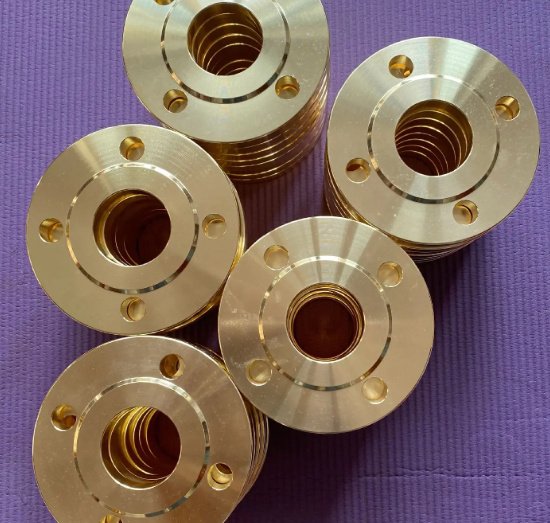
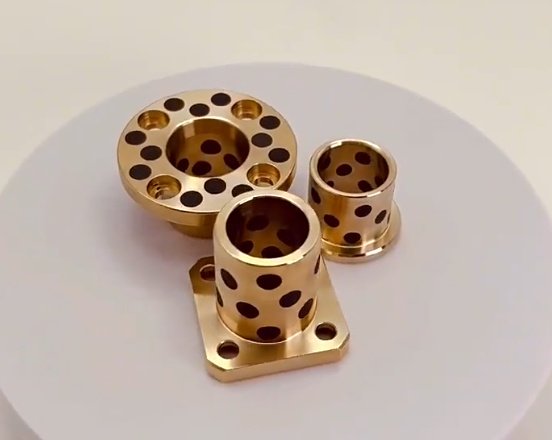
A brass bushing is a cylindrical plain bearing used to support a rotating, sliding or oscillating shaft while reducing friction, protecting the housing bore and improving service life. In industrial purchasing, the term Brass Bushings is often used broadly for copper-alloy sleeve bearings, including true brass, bearing bronze, aluminum bronze, manganese bronze and graphite-plugged bronze parts.
For engineers and buyers, the most important question is not only “What is the price of a brass bushing?” but whether the bushing material, wall thickness, running clearance, lubrication method and machining tolerance match the real operating condition. A correctly specified bushing can reduce shaft scoring, noise, seizure risk and maintenance downtime in pumps, valves, hinges, agricultural machinery, lifting equipment, marine hardware, electric motors and construction machinery.
What Is a Brass Bushing?
A brass bushing is a plain bearing made from a copper-zinc alloy or, in many commercial contexts, from a copper-based bearing alloy. Unlike rolling bearings, a bushing has no balls or rollers. It provides a sacrificial, replaceable bearing surface between a shaft and a housing.
Brass and bronze bushings are valued because copper alloys offer good machinability, thermal conductivity, corrosion resistance and anti-galling behavior against steel shafts. They are especially useful where compact design, high shock load resistance or simple maintenance is more important than ultra-low rolling friction.
Common related terms include sleeve bearing, plain bearing, journal bearing, flanged bushing, thrust bushing, spacer bushing, bearing sleeve, oil groove bushing, graphite plugged bushing and self-lubricating bushing.
Brass Bushings vs. Bronze Bushings: Important Material Difference
Many buyers search for “brass bushing” when they actually need a bronze bushing. The distinction matters because true brass and bearing bronze behave differently under load, speed and lubrication.
| Material Family | Typical Alloy Examples | Main Strength | Typical Limitation | Common Use |
|---|---|---|---|---|
| Free-cutting brass | C36000, CZ121 | Excellent machinability, tight dimensional control, good appearance | Lower bearing load capacity than bearing bronze | Light-duty spacers, guide sleeves, instrument components |
| Leaded tin bronze | C93200 / SAE 660 | Good conformability, embeddability and anti-seizure performance | Not ideal for very high shock load without design verification | Pumps, gearboxes, agricultural machinery, general bearing sleeves |
| Aluminum bronze | C95400, C95500 | High strength, wear resistance, marine corrosion resistance | More difficult to machine than free-cutting brass | Heavy equipment, marine hardware, hydraulic applications |
| Manganese bronze | C86300 | Very high strength and shock load capability | Requires proper lubrication and shaft compatibility | Large pins, construction machinery, mining equipment |
| Graphite-plugged bronze | C86300 or C95400 with graphite plugs | Works under boundary lubrication or intermittent maintenance | Higher part cost and requires correct graphite pattern | Mold plates, gates, conveyors, low-speed heavy-load pivots |
If the application involves continuous rotation, high bearing pressure or poor lubrication, a bearing bronze grade is usually safer than ordinary brass. If the part is mainly a precision spacer, light guide sleeve or decorative mechanical component, free-cutting brass may be sufficient.
Common Types of Brass Bushings
The bushing form should match the load direction, assembly method and maintenance plan. Standard cylindrical sleeves are common, but many industrial designs require flanges, grooves, lubrication holes or custom shoulders.
- Straight sleeve bushings: simple cylindrical bearings used for radial loads in housings, brackets, linkages and rotating shafts.
- Flanged brass bushings: include an integral flange to handle light axial thrust and prevent axial movement during operation.
- Oil-groove bushings: machined with spiral, figure-eight or straight grooves to distribute grease or oil across the bearing surface.
- Graphite plugged bushings: contain solid lubricant inserts for low-speed, high-load or hard-to-maintain locations.
- Split bushings: easier to install in some assemblies and can compensate for minor housing deformation.
- Thrust bushings and washers: designed to resist axial load rather than radial shaft support only.
- Custom machined bushings: produced to drawing with non-standard ID, OD, length, flange, chamfer, hole pattern or tolerance.
Performance Comparison: Brass Bushing, Plastic Bushing, Steel Bushing and Rolling Bearing
No bearing type is best for every application. The correct choice depends on load, speed, contamination, lubrication access, temperature, noise target and total cost of ownership.
| Option | Load Capacity | Friction | Contamination Resistance | Maintenance | Best-Fit Scenario |
|---|---|---|---|---|---|
| Brass or bronze bushing | Medium to very high, depending on alloy | Low to moderate with proper lubrication | Good; can embed small particles in softer alloys | Often requires grease or oil unless graphite plugged | Shock load, compact space, replaceable wear surface |
| Engineering plastic bushing | Low to medium | Often low, sometimes dry-running | Good in water or chemical environments | Low maintenance | Light equipment, noise reduction, corrosion-sensitive assemblies |
| Hardened steel bushing | High | Requires excellent lubrication | Poor if abrasive particles enter the interface | Lubrication critical | High hardness mating parts, severe mechanical wear |
| Rolling bearing | High at controlled alignment | Very low | Sensitive to dirt and shock | Requires sealing and correct mounting | High-speed rotation with precise alignment |
In slow pivoting machinery, bushings often outperform ball bearings because they tolerate shock, misalignment and edge loading better. In high-speed motors, rolling bearings usually provide lower friction and heat generation.
Engineering Selection Factors
A reliable bushing specification should define more than nominal dimensions. At minimum, review bearing pressure, sliding speed, PV value, shaft hardness, surface finish, lubrication, temperature and fit.
Load and Bearing Pressure
Bearing pressure is commonly estimated as radial load divided by projected bearing area. For a sleeve bushing, projected area is shaft diameter multiplied by bushing length. A longer bushing reduces pressure, but excessive length can increase sensitivity to misalignment.
Speed and PV Value
PV is the product of bearing pressure and sliding velocity. It is a practical screening value for heat and wear risk. A bushing with acceptable static load may still fail if speed is high enough to generate excessive heat at the sliding interface.
Shaft Hardness and Surface Finish
For many bronze bushings running against steel, a hardened and ground shaft improves wear life. Typical engineering targets may include a shaft surface finish around Ra 0.2 to 0.8 micrometer for lubricated operation, depending on alloy, load and lubrication regime.
Running Clearance
Clearance must allow oil film formation, thermal expansion and alignment variation. Too little clearance can cause seizure after heat expansion; too much clearance can cause vibration, impact wear and poor shaft positioning.
Example: why clearance changes after press fitting
When a bushing is pressed into a housing, its inside diameter often shrinks. The exact reduction depends on interference, wall thickness, housing stiffness and alloy. In production, engineers frequently finish-ream or hone the ID after installation when tight final clearance is required.
Machining and Manufacturing Considerations
Brass and bronze bushings can be produced by CNC turning, screw machining, milling, drilling, broaching, reaming, honing and grinding. The best process depends on quantity, alloy, tolerance and geometry.
Free-cutting brass such as C36000 is one of the easiest copper alloys to machine and is suitable for high-volume turned components. Bearing bronzes such as C93200 machine well but require correct tooling and chip control. Aluminum bronze and manganese bronze are stronger and more abrasive, so tool wear, cutting speed and coolant strategy become more important.
Key machined features include ID and OD concentricity, flange face squareness, chamfer size, lubrication groove depth, cross-hole deburring and final surface finish. For precision bearing applications, post-installation sizing can be more important than loose-part inspection because press fit changes the working bore.
| Feature | Why It Matters | Common Control Method |
|---|---|---|
| ID tolerance | Controls running clearance and oil film thickness | Reaming, boring, honing, air gauging |
| OD tolerance | Controls housing press fit and retention | CNC turning, centerless grinding, plug/ring gauges |
| Concentricity | Reduces uneven wall loading and edge wear | Single-setup machining, datum control, CMM inspection |
| Oil grooves | Distribute lubricant and reduce dry contact zones | CNC grooving, form tools, deburring inspection |
| Chamfers | Improve assembly and prevent shaving during pressing | Controlled turning operation and visual inspection |
Typical Applications and Real Engineering Problems
Brass and bronze bushings are used where shafts, pins or journals need a durable bearing surface without the complexity of rolling elements. Typical applications include hydraulic cylinder pivots, loader arms, valve stems, pump shafts, conveyor rollers, marine hinges, gate mechanisms, agricultural equipment, packaging machinery and die mold components.
In field service, failures are often caused by specification or installation problems rather than by the copper alloy itself. Common issues include insufficient lubrication, abrasive contamination, shaft roughness, poor alignment, undersized clearance, excessive press fit and wrong alloy selection.
| Observed Problem | Likely Cause | Engineering Correction | Measurable Result to Track |
|---|---|---|---|
| Bushing seized after short operation | Clearance closed after press fit or thermal expansion | Increase installed clearance; ream after assembly | Operating temperature, torque rise, ID after installation |
| Rapid one-sided wear | Misalignment or housing bore not square | Improve bore alignment; shorten bushing or use spherical bearing design | Wear pattern, shaft runout, contact area |
| Scored shaft | Hard particles or poor lubrication | Add seals, grease grooves, better lubricant or softer conformable alloy | Shaft Ra, particle contamination, grease interval |
| Noise and vibration | Excessive clearance or impact loading | Optimize clearance, increase bearing length, improve pin hardness | Radial play, vibration level, service hours |
Example engineering outcome
In a slow-moving pivot exposed to dust, replacing a light brass sleeve with a properly grooved C93200 bronze bushing and adding a scheduled grease interval can reduce adhesive wear and shaft scoring. In many maintenance reviews, the measurable improvement is not only longer bushing life but also lower pin replacement frequency and reduced unplanned downtime.
Standards, Grades and Specification References
Material and dimensional standards help reduce purchasing ambiguity. Depending on region and application, copper-alloy bushings may reference ASTM, SAE, ISO, EN or customer-specific standards.
- ASTM B16: free-cutting brass rod, bar and shapes, often associated with C36000 machining stock.
- ASTM B505/B505M: continuous cast copper alloy castings, commonly relevant for bronze bearing stock.
- SAE J461 and SAE J462: wrought and cast copper alloy references used in North American engineering documentation.
- ISO 286: system of limits and fits, useful for defining shaft and housing tolerances.
- ANSI B4.1: preferred limits and fits for cylindrical parts in inch-based designs.
A drawing or RFQ should identify alloy, heat condition where applicable, dimensions, tolerances, finish, inspection method, lubrication features, quantity, packaging and any regulatory requirement such as RoHS, REACH or lead-content restrictions.
Buyer and Procurement Checklist
Buyers often receive different prices for apparently identical bushings because suppliers may quote different alloys, manufacturing routes and inspection levels. A clear specification prevents low-cost substitutions that increase field failure risk.
- Confirm whether the requirement is true brass, bearing bronze or another copper alloy.
- Define ID, OD, length, flange diameter, flange thickness and chamfers with tolerances.
- State whether dimensions are required before or after press installation.
- Specify lubrication holes, grooves, graphite plugs or dry-running requirements.
- Provide load, speed, temperature, duty cycle and shaft material when available.
- Ask for material certification if traceability is required.
- Confirm inspection method for critical dimensions such as ID, OD and concentricity.
- Review packaging protection because copper alloys can be dented during transport.
What information improves quote accuracy?
A complete drawing, annual volume, target alloy, tolerance class, surface finish, application environment and installed-fit requirement allow suppliers to choose the correct process. For example, a high-volume simple sleeve may suit automatic turning, while a heavy graphite-plugged bushing may require cast bronze stock, CNC machining, drilling, plug insertion and finish sizing.
How to Specify a Brass Bushing Correctly
A professional bushing specification connects the part drawing to the working condition. The following format is commonly useful:
- Part type: straight sleeve, flanged sleeve, thrust washer, split bushing or graphite plugged bushing.
- Material: C36000 brass, C93200 bearing bronze, C95400 aluminum bronze, C86300 manganese bronze or approved equivalent.
- Dimensions: inside diameter, outside diameter, length, flange dimensions and groove details.
- Fit: housing bore tolerance, shaft tolerance and target installed running clearance.
- Lubrication: grease, oil, dry, solid lubricant or maintenance interval.
- Inspection: dimensional report, material certificate, hardness test, surface finish report or sample approval.
For critical applications, prototype testing is recommended because real wear life depends on load variation, alignment, vibration, lubrication quality, contamination and temperature. A bushing that performs well in a clean test rig may need seals, grooves or a different alloy in dirty outdoor equipment.
Key Takeaway
A brass bushing is a simple component, but its performance depends on precise material and fit decisions. For light-duty precision parts, true brass can be economical and easy to machine. For higher load bearing service, bronze alloys such as C93200, C95400 or C86300 are often more reliable. The best results come from matching alloy, geometry, lubrication and installed clearance to the actual operating environment.
When evaluating Brass Bushings, compare not only unit price but also machining quality, alloy traceability, tolerance control, lubrication design and expected maintenance cost. This engineering-based approach helps prevent premature wear, shaft damage and production downtime.