
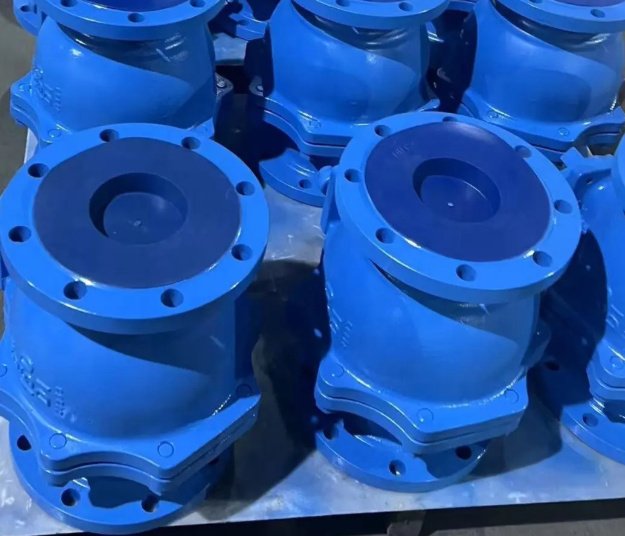
A536 cast iron, more accurately known as ASTM A536 ductile iron, is a spheroidal graphite cast iron specified primarily by mechanical properties rather than by a fixed chemical composition. It is widely used for cast components that require a practical balance of strength, toughness, wear resistance, vibration damping, machinability and cost efficiency.
For engineers, buyers and CNC machining teams, ASTM A536 is one of the most important ductile iron specifications because it covers commonly used grades such as 60-40-18, 65-45-12, 80-55-06, 100-70-03 and 120-90-02. These grades are found in housings, brackets, hydraulic parts, pump bodies, valve components, gears, pulleys, levers, suspension parts and other cast-to-shape industrial components.
What Is A536 Cast Iron?
A536 cast iron is ductile iron produced to the ASTM A536 standard, formally titled “Standard Specification for Ductile Iron Castings.” Unlike gray cast iron, where graphite exists mainly as flakes, ductile iron contains graphite in nodular or spheroidal form. This graphite shape reduces stress concentration and gives the material substantially better tensile strength, elongation and impact resistance than typical gray iron.
The term “A536 cast iron” is commonly used in purchasing and engineering documents, but the technically precise description is ASTM A536 ductile iron casting. It is also called nodular cast iron, spheroidal graphite iron, SG iron or ductile cast iron.
ASTM A536 is a mechanical-property specification. This means the grade designation reflects minimum tensile strength, minimum yield strength and minimum elongation, not a universal chemical recipe. Foundries adjust carbon, silicon, manganese, magnesium, copper, nickel and other elements to achieve the required microstructure and performance.
ASTM A536 Grade Designations and Mechanical Properties
ASTM A536 grades are usually written in the format tensile strength-yield strength-elongation. For example, 65-45-12 indicates a minimum tensile strength of 65 ksi, a minimum yield strength of 45 ksi and a minimum elongation of 12%.
| ASTM A536 Grade | Minimum Tensile Strength | Minimum Yield Strength | Minimum Elongation | Typical Matrix / Character |
|---|---|---|---|---|
| 60-40-18 | 60 ksi / 414 MPa | 40 ksi / 276 MPa | 18% | Mostly ferritic, high ductility |
| 65-45-12 | 65 ksi / 448 MPa | 45 ksi / 310 MPa | 12% | Ferritic-pearlitic, good general-purpose grade |
| 80-55-06 | 80 ksi / 552 MPa | 55 ksi / 379 MPa | 6% | Pearlitic-ferritic, higher strength |
| 100-70-03 | 100 ksi / 689 MPa | 70 ksi / 483 MPa | 3% | Pearlitic, high strength with lower ductility |
| 120-90-02 | 120 ksi / 827 MPa | 90 ksi / 621 MPa | 2% | High-strength pearlitic or heat-treated structure |
These values are commonly referenced for ASTM A536 grades, but the latest official ASTM standard and the purchase specification should always be used for contractual requirements. Casting section size, heat treatment, sampling location and test bar method can affect reported properties.
Common A536 Ductile Iron Grades Explained
ASTM A536 60-40-18
Grade 60-40-18 is selected when ductility, toughness and impact resistance are more important than maximum strength. Its ferritic matrix provides good machinability and dimensional stability. It is often used for components subject to moderate loads, shock and vibration.
ASTM A536 65-45-12
Grade 65-45-12 is one of the most common general-purpose ductile iron grades. It offers a balanced combination of tensile strength, yield strength and elongation. Many buyers choose it for housings, brackets, hydraulic blocks, clamps and machinery parts where reliable castability and CNC machinability are required.
ASTM A536 80-55-06
Grade 80-55-06 provides higher strength than ferritic grades while retaining moderate ductility. It is suitable for more highly loaded components, including gears, levers, pulleys, support arms, bearing housings and structural machine elements.
ASTM A536 100-70-03 and 120-90-02
Grades 100-70-03 and 120-90-02 are used when higher tensile and yield strength are required. They typically have a pearlitic or heat-treated matrix and lower elongation. These grades can be appropriate for wear-loaded or high-stress components, but designers should consider notch sensitivity, fatigue loading, machinability and heat treatment control.
Buyer and engineer note: choosing the right A536 grade
For procurement teams, the safest grade is not always the strongest grade. If a part requires machining, sealing surfaces, threads, fatigue resistance or impact tolerance, grade 65-45-12 or 80-55-06 may outperform a higher-strength grade in total manufacturing reliability. Engineers should specify the grade, test method, critical dimensions, machining allowance, surface finish, heat treatment and inspection criteria before requesting quotations.
Chemical Composition and Microstructure
ASTM A536 does not define one fixed chemical composition for every casting. Instead, chemistry is controlled by the foundry to produce the required graphite nodularity, matrix structure and mechanical properties. Typical ductile iron chemistry includes carbon, silicon, manganese, sulfur, phosphorus and magnesium, with optional alloying additions such as copper, nickel or molybdenum depending on the required grade.
Magnesium treatment is essential because it changes graphite from flake form to nodular form. A high nodularity level improves ductility and fatigue performance. The matrix surrounding the graphite nodules may be ferritic, pearlitic or a mixture of both. Ferrite increases ductility and machinability, while pearlite increases strength and wear resistance.
Important metallurgical control points include graphite nodule count, nodularity percentage, carbide content, ferrite/pearlite ratio, porosity, shrinkage, inclusions and segregation. For critical castings, microstructure verification can be as important as tensile testing.
Key Material Properties of A536 Cast Iron
A536 ductile iron is valued because it combines cast iron manufacturing economy with mechanical behavior closer to some steels. Its properties depend strongly on grade, section thickness and heat treatment, but several characteristics are common across the material family.
- High strength-to-cost ratio: Ductile iron castings can replace fabricated steel or forged components in many applications.
- Good ductility: Ferritic grades provide meaningful elongation and resistance to brittle fracture.
- Excellent castability: Complex near-net-shape parts can be produced with lower material waste.
- Vibration damping: Better damping than many steels, useful for machine bases, housings and rotating equipment components.
- Wear resistance: Pearlitic grades offer improved wear performance for sliding or rolling contact conditions.
- Machinability: Many A536 grades machine well when the microstructure is controlled and carbide formation is avoided.
- Pressure tightness potential: With proper foundry practice and inspection, ductile iron can be used for hydraulic and fluid-handling components.
The most important performance tradeoff is strength versus elongation. As tensile strength increases from 60-40-18 to 120-90-02, elongation generally decreases. Designers should evaluate actual service conditions rather than selecting a grade only by tensile strength.
A536 Cast Iron vs Gray Iron, Steel and ADI
A536 ductile iron is often compared with gray cast iron, cast steel, carbon steel and austempered ductile iron. Each material has advantages depending on load, cost, machinability and production volume.
A536 Ductile Iron vs Gray Cast Iron
Gray iron has graphite flakes, which provide excellent damping and machinability but reduce tensile strength and ductility. A536 ductile iron has spheroidal graphite, giving it much better elongation, impact resistance and fatigue performance. If the part is mainly a vibration-damping base or low-stress housing, gray iron may be sufficient. If the part carries structural or impact loads, ductile iron is usually preferred.
A536 Ductile Iron vs Cast Steel
Cast steel can provide high strength, weldability and toughness, but it is often more expensive to cast and machine. A536 ductile iron offers excellent castability, dimensional repeatability and lower production cost for many medium- to high-volume components. However, cast steel may be better for welded assemblies, very high impact loads or applications requiring specific steel heat treatment responses.
A536 Ductile Iron vs Austempered Ductile Iron
Austempered ductile iron, commonly known as ADI, is heat treated to produce an ausferritic matrix with very high strength and wear resistance. ADI can outperform conventional A536 grades in demanding applications, but it requires controlled austempering and may cost more. Standard ASTM A536 grades remain attractive where conventional ductile iron properties are adequate.
CNC Machining A536 Ductile Iron
CNC machining is a major downstream process for A536 cast iron parts. Common operations include face milling, turning, boring, drilling, tapping, reaming, thread milling, grooving and surface grinding. The final machining behavior depends on grade, hardness, pearlite percentage, carbide presence, casting skin, inclusions and machining allowance.
In general, ferritic grades such as 60-40-18 are easier to machine than high-strength pearlitic grades. Grade 65-45-12 usually offers a practical balance of strength and machinability. Grades 100-70-03 and 120-90-02 may require more conservative cutting parameters, rigid workholding and optimized tooling.
For CNC production, the most important risk is not only hardness but microstructural inconsistency. Free carbides, hard spots, chilled edges, sand inclusions and uneven pearlite distribution can shorten tool life and create dimensional variation. A good casting supplier should control inoculation, cooling rate, shakeout practice and heat treatment when needed.
CNC Tooling and Process Recommendations
- Use carbide inserts with suitable coatings for dry or semi-dry machining of cast iron.
- Remove casting skin with a stable first pass to reduce abrasive wear and protect finishing tools.
- Use rigid fixturing because cast surfaces may be irregular before datum machining.
- Control graphite dust and fine chips with proper extraction and machine maintenance.
- Specify machining stock based on casting tolerance, distortion risk and critical datum strategy.
- For threaded holes, confirm whether tapping, thread milling or inserts are best for the load and production volume.
Compared with many steels, ductile iron often machines with lower cutting forces and naturally broken chips. However, the graphite and abrasive particles can accelerate tool wear, especially during high-speed milling or when machining as-cast surfaces.
CNC buyer note: what to confirm before quoting machined A536 parts
Before placing an order, confirm the ASTM A536 grade, casting process, heat treatment condition, hardness range, machining allowance, datum scheme, critical tolerances, surface roughness, inspection method and annual volume. If the part has sealing faces, bearing bores, hydraulic ports or tight geometric tolerances, request a manufacturability review before tooling is released.
Heat Treatment and Hardness Control
A536 ductile iron can be supplied as-cast or heat treated depending on the grade and application. Heat treatment may be used to improve ductility, relieve stress, increase strength or normalize microstructure. Common treatments include annealing, normalizing, stress relieving, quenching and tempering, and austempering for special applications outside conventional grade expectations.
Hardness is not the primary grade designation in ASTM A536, but it is highly relevant for machining, wear resistance and quality control. A buyer may specify a Brinell hardness range when consistent machinability or functional wear performance is required. However, hardness limits should not conflict with tensile, yield and elongation requirements.
Stress relieving may be useful for complex castings that will undergo heavy CNC machining. It can reduce movement after rough machining and improve dimensional stability for housings, bases, frames and precision-machined components.
Applications of ASTM A536 Cast Iron
A536 ductile iron is used across automotive, agricultural, construction, hydraulic, energy, railway, pump, valve and general machinery industries. Its ability to form complex shapes with reliable mechanical properties makes it suitable for both safety-related and cost-sensitive parts.
- Gear housings, motor housings and transmission cases
- Hydraulic manifolds, cylinder components and valve bodies
- Pump casings, impellers, flanges and pipe fittings
- Brackets, levers, arms, links and support structures
- Pulleys, sheaves, hubs, flywheels and rotating components
- Automotive suspension, steering and drivetrain parts
- Agricultural equipment components and construction machinery parts
- Machine tool bases, fixtures and vibration-damping structures
When specifying A536 cast iron for pressure-containing parts, designers should also consider pressure rating standards, leak testing, casting soundness, wall thickness, porosity acceptance criteria and any industry-specific code requirements.
Quality Inspection and Certification Requirements
Reliable A536 castings require more than meeting a grade name on a drawing. Quality assurance should connect the material standard, foundry process, heat treatment, machining plan and final inspection requirements. For critical parts, the purchase order should clearly state the required certification and inspection records.
Common quality controls include tensile testing, yield strength verification, elongation measurement, hardness testing, metallographic examination, dimensional inspection, magnetic particle testing, ultrasonic testing, pressure testing and chemical analysis. The required level depends on the function and risk level of the component.
A material test report should identify the casting grade, heat or lot number, mechanical test results, applicable standard revision and any agreed supplementary requirements. Traceability is especially important for safety-critical, pressure-containing or regulated components.
Procurement checklist for ASTM A536 castings
- Specify the exact ASTM A536 grade, such as 65-45-12 or 80-55-06.
- Define whether the casting is supplied as-cast, annealed, normalized or stress relieved.
- State required mechanical tests, hardness range and microstructure requirements.
- Provide 2D drawings, 3D models, machining datums and tolerance standards.
- Clarify surface finish, coating, painting, plating or corrosion protection requirements.
- Request PPAP, first article inspection or sample approval when production risk is high.
- Confirm packaging requirements to protect machined surfaces and threaded features.
Design Considerations for A536 Cast Iron Parts
Good performance begins with casting-aware design. Ductile iron can achieve complex geometry, but poor transitions, isolated heavy sections and sharp internal corners can create shrinkage, hot spots, residual stress and machining distortion.
Designers should use generous fillets, uniform wall thickness where possible, proper rib design and realistic machining stock. Critical surfaces should be located where the foundry and machine shop can establish stable datums. For heavily loaded parts, finite element analysis should use grade-specific tensile, yield and elongation data rather than generic “cast iron” assumptions.
Fatigue strength is influenced by surface finish, fillet radius, casting defects, graphite nodularity, residual stress and section size. For cyclic loading, designers should avoid sharp notches and specify appropriate inspection of high-stress regions.
How to Specify A536 Cast Iron Correctly
A clear specification reduces cost, delays and disputes. The drawing or purchase order should not simply say “cast iron” if ductile iron properties are required. A better description includes the ASTM standard, grade, heat treatment condition, inspection requirements and any machining-related conditions.
Example specification: “Material: ASTM A536 Grade 65-45-12 ductile iron, stress relieved after rough machining, hardness 170–230 HBW, machined surfaces per drawing, material test report required.”
For high-volume or critical components, the specification may also include nodularity, nodule count, ferrite/pearlite ratio, non-destructive testing, pressure testing, coating requirements and part-specific acceptance criteria.
The best grade choice depends on operating load, ductility requirement, impact exposure, wear condition, machining complexity, dimensional tolerance, cost target and supplier capability. In many industrial applications, A536 65-45-12 is a strong starting point for balanced performance, while 80-55-06 is often selected when higher strength is required without moving into very low elongation grades.
References and Standards
- ASTM International, ASTM A536/A536M, Standard Specification for Ductile Iron Castings.
- ASM Handbook, Volume 1: Properties and Selection: Irons, Steels, and High-Performance Alloys.
- ISO 1083, Spheroidal Graphite Cast Irons — Classification.
- SAE J434, Automotive Ductile Iron Castings.
A536 cast iron remains one of the most practical engineering materials for cast and CNC-machined components. When the correct grade, microstructure, heat treatment and inspection plan are specified, ASTM A536 ductile iron can deliver dependable strength, machinability and cost performance across a wide range of industrial applications.