
Aluminum Machining Services
CNC MILLING · CNC TURNING · PROTOTYPES · PRODUCTION
Get machined aluminum components with tight tolerances, clean finishes, fast feedback, and practical engineering support from prototype validation to repeat production.
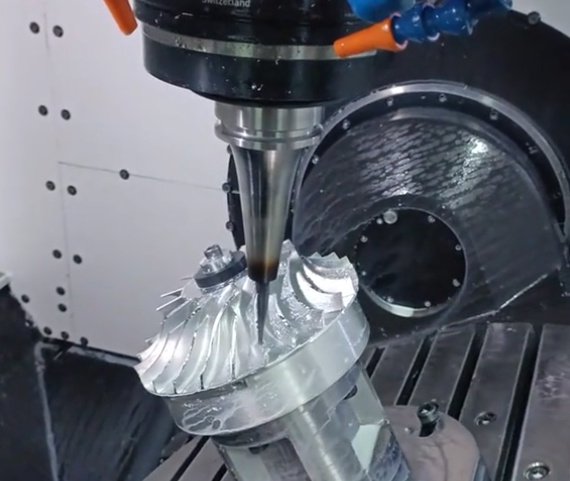
Aluminum Machining Capabilities
Details
Aluminum is widely used because it offers an excellent strength-to-weight ratio, good thermal conductivity, corrosion resistance, and machinability. Our machining process is designed to protect dimensional accuracy while delivering clean edges, stable threads, and consistent cosmetic results. Our Aluminum CNC machining capabilities represent the core of our manufacturing operations. Equipped with multi-axis CNC mills, lathes, and turn-mill centers, we machine complex geometries from a comprehensive range of metals including aluminum, stainless steel, titanium, brass, copper, and exotic alloys.
CNC Aluminum Milling
3-axis and multi-axis milling for plates, enclosures, frames, covers, manifolds, brackets, and complex prismatic components.
- Pockets, slots, bosses, ribs, contours, chamfers
- Precision hole patterns and threaded features
- Fixture planning for repeatable batch production
CNC Aluminum Turning
Turned aluminum components for shafts, spacers, bushings, standoffs, caps, adapters, sleeves, and cylindrical housings.
- OD and ID turning
- Grooving, threading, boring, facing
- Concentric and coaxial feature control
Secondary Operations
Additional machining and post-processing steps help deliver ready-to-assemble parts.
- Drilling, tapping, reaming, countersinking
- Deburring, edge breaking, part cleaning
- Laser marking, engraving, inserts, assembly support
Drilling, Tapping & Boring
- CNC drilling for holes of all sizes and depths.
- Threading and tapping for assemblies.
- High repeatability for precision alignment.
Multi-Axis Machining
- 4-axis and 5-axis machining for intricate parts.
- Reduced setups and improved accuracy.
- Ideal for aerospace, automotive, and medical components.
CNC Prototyping
- Rapid CNC prototyping to test designs quickly.
- Small batch to full-scale production runs.
- Flexible workflow to meet tight deadlines.
Common Aluminum Grades We Machine
Aluminum 6061
Application: General-purpose machined parts, brackets, plates, fixtures, housings Features: Excellent machinability, good strength, widely available, suitable for anodizingAluminum 7075
Application: High-strength structural parts, aerospace-style components, performance hardware Features: Very high strength; more expensive than 6061; anodizing color may varyAluminum 2024
Application: Fatigue-resistant components and mechanical structures Features: Good strength and fatigue resistance; corrosion protection often requiredAluminum 5052
Application: Corrosion-resistant parts, covers, panels, marine or outdoor applications Features: Good corrosion resistance and formability; not as strong as 6061 or 7075Aluminum 6063
Application: Extruded profiles, architectural parts, frames, railings, decorative components Features: Great extrusion performance, smooth surface finish, easy anodizing, moderate strengthAluminum 3003
Application: Sheet metal parts, containers, heat exchangers, ventilation components, general stamping parts Features: Excellent formability, good corrosion resistance, easy welding, non-heat treatableAluminum 5083
Application: Marine grade parts, shipbuilding components, pressure vessels, offshore and heavy corrosion environment structures Features: Outstanding corrosion resistance, high weldability, good toughness, ideal for marine & industrial harsh environmentsMIC-6 Cast Aluminum Plate
Application: Tooling plates, precision bases, inspection fixtures Features: Excellent flatness and dimensional stability for plate-based applications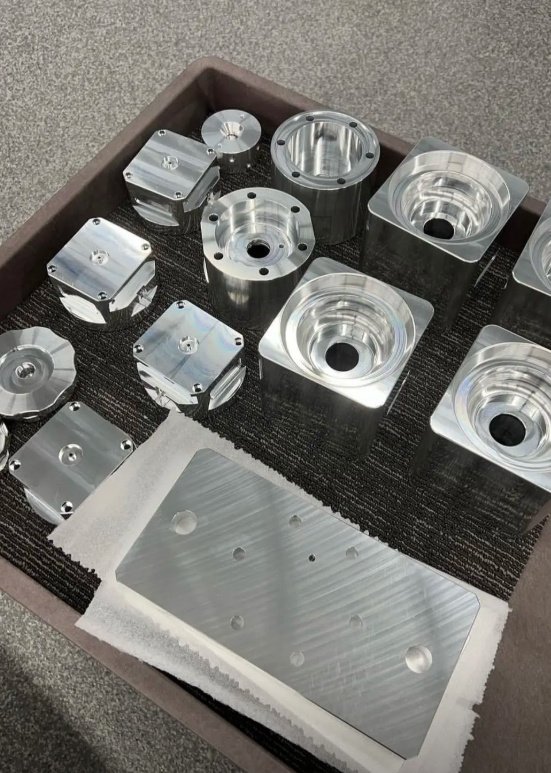
Tolerances, Surface Finish, and Design Considerations
Tolerances should match the function of the part. Overly tight tolerances can increase cycle time, inspection cost, scrap risk, and lead time. We help identify which dimensions are truly critical and which can be opened for better manufacturability.
1
Typical Machining Tolerance
General CNC aluminum tolerances are commonly held around ±0.005 in / ±0.13 mm, with tighter tolerances available depending on geometry, material, setup, and inspection method.
2
Critical Features
3
Thin Walls and Distortion
Surface Finishing Options for Aluminum Parts
Finishing affects appearance, corrosion resistance, wear resistance, electrical insulation, and dimensional size. We review finish requirements early because anodizing and coating thickness can change the final fit of threaded holes, bores, and mating surfaces.
Anodizing
Electrolytic oxide layer for aluminum. Offers corrosion resistance, wear resistance and color options. Widely used for precision and decorative parts.Hard Anodizing
Thick industrial anodization. High hardness, abrasion resistance and insulation for heavy-duty mechanical components.Powder Coating
Electrostatic dry powder cured at high temperature. Rich colors, strong impact resistance and excellent outdoor durability.Sand Blasting / Shot Blasting
Abrasive media blasting for uniform matte texture. Removes tool marks and improves coating adhesion.Brushed Finish
Mechanical linear grain texture. Hides minor scratches, delivers premium metallic decorative appearance.Mirror Polishing
High-gloss surface treatment. Smooth mirror effect for aesthetic and high-end decorative aluminum parts.Chemical Conversion Coating
Thin protective chemical film. Good corrosion resistance, maintains conductivity and serves as painting primer.Electroless Nickel Plating
Uniform nickel layer on complex shapes. High hardness, wear resistance and anti-corrosion performance.Liquid Spray Painting
Custom color liquid coating. Flexible color matching, suitable for low-batch and special-color requirements.Laser Marking & Engraving
Permanent laser surface etching. For logo, part number, QR code and specification identification.Anti-Fingerprint Coating
Transparent protective coating. Resists fingerprints, oil stains and keeps surface easy to clean.PTFE / Teflon Coating
Low-friction non-stick coating. Heat resistant, chemical resistant and ideal for sliding mechanical parts.Chrome Plating
Bright decorative hard chrome finish. Ultra-hard, wear-resistant for premium hardware and trim parts.What You Can Source
- Custom CNC aluminum housings, brackets, plates, fixtures, adapters, covers, heat sinks, and structural parts
- 1-piece prototypes, bridge production, and batch manufacturing
- Machined features including pockets, slots, threads, bores, counterbores, chamfers, radii, and engraved markings
- Finishing options such as anodizing, hardcoat anodizing, bead blasting, brushing, polishing, powder coating, and passivation-compatible cleaning
- Inspection reports, material certificates, and manufacturing feedback for critical parts
Aluminum Machining Services Feature
Fast DFM Feedback
We review wall thickness, tool access, corner radii, thread depth, tolerance stack-up, and finishing risks before machining begins.
Tight-Tolerance Machining
Precision machining for functional aluminum components where fit, flatness, hole location, and surface finish matter.
Prototype to Production
Support for one-off prototypes, pilot builds, low-volume production, and repeat orders with controlled documentation.
Finishing Coordination
Machining and finishing are planned together to reduce cosmetic defects, masking issues, dimensional shifts, and color mismatch.
Quality Control and Documentation
Reliable aluminum machining is not only about cutting metal. It also requires stable workholding, controlled inspection, revision management, and clear communication between engineering, purchasing, and manufacturing teams.
Inspection Methods
Calipers, micrometers, height gauges; Thread gauges and pin gauges; CMM inspection for complex or critical geometry; Surface roughness checks when specified
Available Reports
Dimensional inspection report; First article inspection support; Material certificate on request; Finish certificate where applicable
Revision Control
We recommend sending both 3D CAD files and 2D drawings. Drawings should identify tolerances, threads, surface finish, material grade, finish requirements, and revision level.
For Engineers, Buyers, and Procurement Teams
A successful aluminum machining project depends on more than unit price. Engineering teams need manufacturable parts, buyers need predictable delivery, and procurement teams need suppliers who can control quality, paperwork, and repeat orders.
Engineer View
We help review tolerances, datum strategy, wall thickness, hole depth, finish callouts, and assembly requirements. The goal is to reduce machining risk without changing the function of your design.
Buyer View
Clear RFQ feedback, realistic lead times, stable pricing for repeat orders, and transparent communication help buyers compare suppliers accurately and avoid hidden costs.
Procurement View
We support part traceability, packaging requirements, inspection documentation, purchase order alignment, and controlled changes for production purchasing workflows.
Industries and Applications
Our aluminum machining services support products where weight reduction, corrosion resistance, thermal management, clean aesthetics, and reliable assembly are important.
- Robotics and automation components
- Electronics enclosures and heat sinks
- Medical device prototypes and fixtures
- Aerospace-style lightweight structures
- Automotive and motorsport parts
- Industrial machinery and tooling plates
- Consumer product metal components
- Optical, test, and laboratory equipment
How the Aluminum Machining Process Works
1. Send Files
Upload STEP, IGES, X_T, SLDPRT, or other 3D CAD files. Include 2D drawings when tolerances, threads, finishes, or critical notes are required.
2. Technical Review
We evaluate material, geometry, tooling access, tolerance risk, finishing, and cost drivers before confirming price and lead time.
3. Machining
Parts are programmed, fixtured, machined, deburred, and prepared for inspection or finishing according to your requirements.
4. Inspection and Delivery
Finished parts are inspected, cleaned, packed, and shipped with the agreed documentation and labeling.
FAQ About Aluminum Machining Services
What files do you need for a quote?
Please send a 3D CAD file and, when available, a 2D drawing. The drawing should include material, finish, tolerances, threads, critical dimensions, quantity, and any inspection requirements.
Can you machine a single prototype?
Yes. We support one-off prototypes, engineering samples, pilot runs, and production batches. Prototype feedback can also be used to improve cost and manufacturability before scaling.
Which aluminum grade is best for CNC machining?
6061 is the most common choice for balanced cost, availability, machinability, and performance. 7075 is used when higher strength is needed. MIC-6 is ideal for stable tooling plates and precision bases.
Can anodizing affect dimensions?
Yes. Anodizing adds and penetrates the surface. Hardcoat anodizing can create more noticeable dimensional change. Critical bores, threads, and mating surfaces should be reviewed before finishing.
How can I reduce the cost of aluminum machined parts?
Use standard material sizes, avoid unnecessary tight tolerances, increase internal corner radii, reduce deep pockets, simplify cosmetic requirements, and combine similar parts into one batch when possible.
Aluminum Types List for Machining
| Alloy Series | Grade List |
|---|---|
| 1xxx Series (Pure Aluminum) | 1050, 1060, 1100, 1145, 1199, 1350 |
| 2xxx Series (Al-Cu) | 2011, 2014, 2017, 2024, 2025, 2117, 2124, 2218, 2219, 2036, 2048, 2618, 2099 |
| 3xxx Series (Al-Mn) | 3003, 3004, 3005, 3105, 3203, 3303 |
| 4xxx Series (Al-Si) | 4032, 4043, 4045, 4047, 4145, 4343, 4643 |
| 5xxx Series (Al-Mg) | 5005, 5052, 5056, 5083, 5086, 5154, 5182, 5252, 5254, 5356, 5454, 5456, 5457, 5554, 5556, 5652, 5654, 5657, 5754 |
| 6xxx Series (Al-Mg-Si) | 6005, 6005A, 6009, 6010, 6011, 6013, 6016, 6022, 6053, 6060, 6061, 6063, 6066, 6070, 6082, 6101, 6105, 6111, 6113, 6151, 6201, 6205, 6262, 6351, 6463 |
| 7xxx Series (Al-Zn) | 7005, 7008, 7010, 7016, 7017, 7020, 7022, 7039, 7049, 7050, 7055, 7068, 7075, 7079, 7085, 7090, 7091, 7093, 7149, 7175, 7178, 7249, 7349, 7449, 7475 |
| 8xxx Series (Other) | 8001, 8006, 8011, 8014, 8021, 8079, 8111, 8112, 8176, 8177, 8280 |
| Cast Aluminum Alloys | A201, A206, A214, A332, A336, A356, A357, A360, A380, A383, A384, A390, A413, A443, A444, B319, B390, B535, C355, F357, 712, 713, 771 |
| Aluminum-Lithium Alloys | 2090, 2091, 2094, 2095, 2097, 2099, 2195, 2196, 2197, 2198, 2297, 2397, 8090, 8091, 8093 |