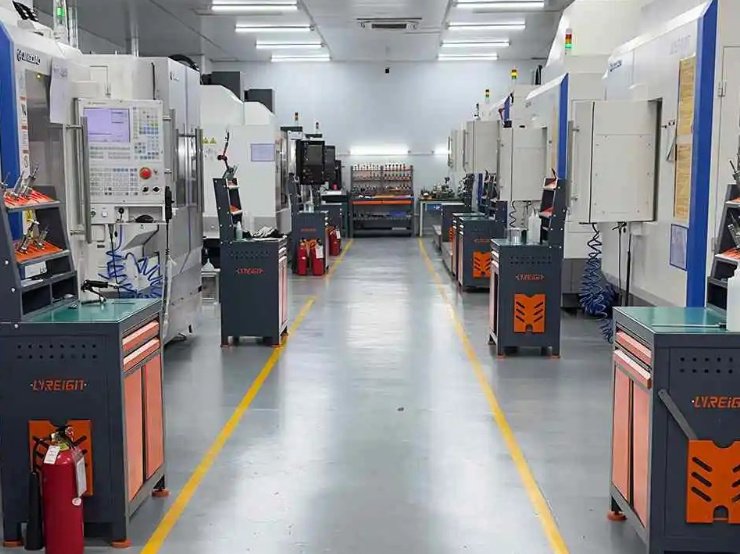
China has become one of the most active global sourcing regions for CNC milling, CNC turning, Swiss machining, grinding, EDM, surface finishing, and precision assembly. For engineers and procurement teams, the real challenge is not simply finding a supplier; it is identifying a machining partner that can repeatedly meet drawing requirements, material specifications, inspection standards, delivery targets, and total cost expectations.
This guide explains how to assess China metal machining sourcing from an engineering and purchasing perspective. It covers machine capability, tolerances, materials, quality control, common risks, cost drivers, and practical supplier qualification steps for industrial, automotive, aerospace, electronics, robotics, energy, and medical device components.
What China Metal Machining Typically Includes
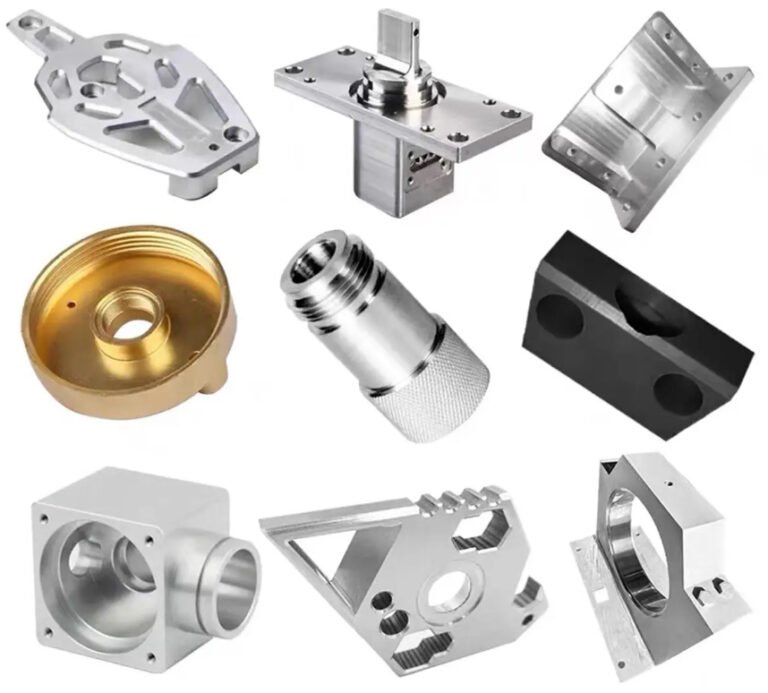
Metal machining in China covers a broad range of subtractive manufacturing processes used to produce parts from aluminum, stainless steel, carbon steel, alloy steel, brass, copper, titanium, magnesium, and nickel-based alloys. Depending on the part geometry and production volume, a supplier may combine multiple processes in one manufacturing route.
| Process | Typical Application | Common Precision Range |
|---|---|---|
| CNC milling | Prismatic parts, housings, brackets, molds, fixtures | ±0.01 mm to ±0.05 mm depending on geometry |
| CNC turning | Shafts, bushings, pins, threaded parts, rotary components | ±0.005 mm to ±0.03 mm for controlled features |
| Swiss machining | Small precision pins, connectors, medical and electronic parts | ±0.005 mm to ±0.02 mm on suitable features |
| Grinding | High-precision surfaces, roundness, flatness, bearing fits | ±0.002 mm to ±0.01 mm with controlled process |
| EDM and wire cutting | Hard metals, sharp internal corners, tool steel components | ±0.005 mm to ±0.02 mm depending on thickness |
When comparing metal machining companies, buyers should avoid evaluating only the quoted unit price. Machine brand, spindle condition, tool management, fixture design, operator skill, inspection equipment, and process control often have a greater effect on real production performance than the hourly machining rate alone.
Why Buyers Source Metal Machining from China
China’s machining supply chain is dense and vertically connected. A qualified metal machining shop in China can often access raw materials, heat treatment, anodizing, plating, passivation, laser marking, sheet metal fabrication, die casting, forging, and assembly services within a regional manufacturing cluster. This supply chain density can reduce coordination time and support both prototype and volume production programs.
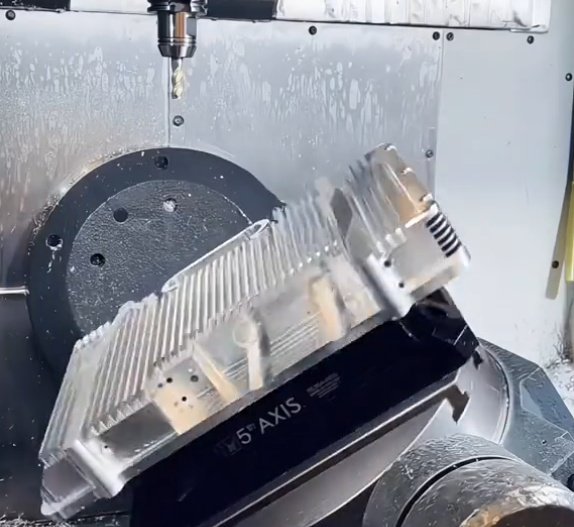
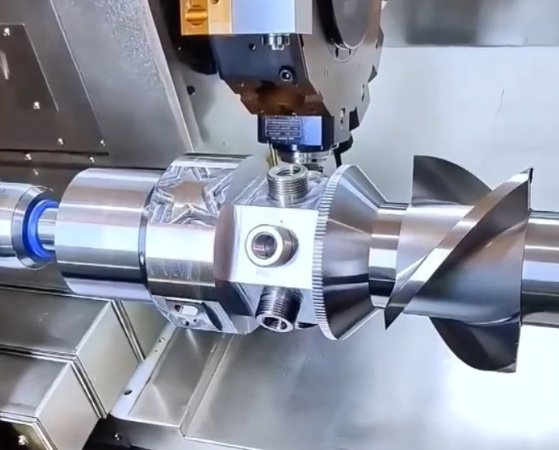
- Capacity flexibility: Many suppliers operate 3-axis, 4-axis, 5-axis, turning-milling, Swiss-type, and grinding equipment in parallel.
- Material availability: Common grades such as 6061-T6, 7075-T6, 304, 316L, 17-4PH, 4140, 1045, H13, brass C360, and red copper are widely available.
- Secondary process access: Heat treatment, hard anodizing, electroless nickel plating, black oxide, zinc plating, passivation, polishing, and bead blasting are commonly integrated.
- Cost structure: Labor, tooling support, fixture manufacturing, and supplier competition can create cost advantages, especially for repeat production.
- Engineering support: Experienced suppliers may provide DFM feedback on tolerance relaxation, tool access, burr control, material substitution, and fixture strategy.
Core Supplier Qualification Criteria
A reliable machining supplier should be evaluated by objective manufacturing evidence, not sales claims. Procurement teams can request machine lists, inspection capability lists, sample reports, customer industry references, production flow charts, and nonconformance handling records.
Certification is useful, but certification alone is not sufficient. ISO 9001/IATF 16949 systems should be supported by practical execution: incoming material inspection, process routing, tool life control, operator self-inspection, final inspection, document traceability, and corrective action discipline.
| Evaluation Area | What to Check | Buyer Risk if Ignored |
|---|---|---|
| Machine capability | Axis count, spindle accuracy, work envelope, repeatability, machine maintenance logs | Dimensional drift, poor surface finish, unstable tolerances |
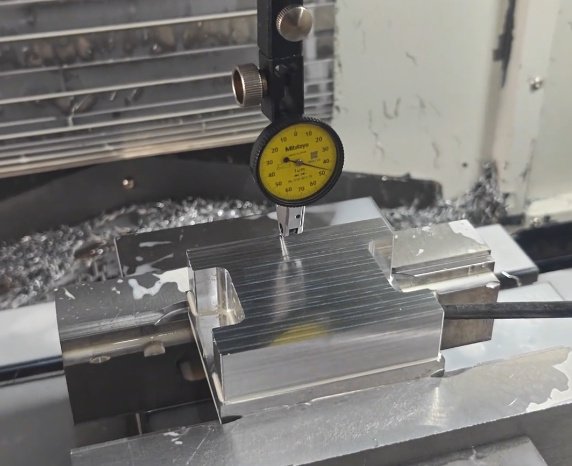
| Inspection system | CMM, height gauge, roughness tester, micrometers, pin gauges, thread gauges, calibration records | Undetected defects and shipment rejection |
| Material traceability | Mill certificates, PMI testing when required, heat numbers, incoming inspection | Wrong alloy, heat treatment failure, compliance issues |
| Process control | Control plan, inspection frequency, tool replacement plan, fixture validation | Good samples but inconsistent production lots |
| Communication | Drawing review, English engineering communication, response time, change control | Misinterpreted requirements and schedule delays |
Supplier due diligence checklist for procurement teams
- Request a full machine list with model, axis configuration, travel size, and maximum spindle speed.
- Ask for photos or videos of similar parts, but verify that they were produced in-house.
- Review at least one sample inspection report with actual measured values, not only “OK” marks.
- Confirm whether plating, heat treatment, anodizing, or passivation is outsourced and how subcontractors are controlled.
- Check whether the supplier can separate prototype, pilot run, and mass production workflows.
- Confirm export packaging methods for machined surfaces, cosmetic finishes, and precision threads.
Tolerances, GD&T, and Realistic Precision Expectations
Precision machining is not only about the smallest achievable tolerance. It is about maintaining tolerance economically and repeatedly under real production conditions. A tolerance of ±0.005 mm may be possible for a specific ground diameter, while the same tolerance may be unrealistic for a long, thin, anodized aluminum profile with multiple setups.
Engineers should apply GD&T carefully to define functional requirements such as flatness, perpendicularity, concentricity, profile, position, runout, and datum structure. Clear datum references reduce interpretation risk between the design team and the supplier.
- General CNC milling tolerance: ±0.02 mm to ±0.10 mm depending on size, material, setup count, and feature access.
- Precision turning tolerance: ±0.005 mm to ±0.03 mm for controlled diameters under stable cutting conditions.
- Surface roughness: Ra 0.8 to Ra 3.2 μm is common; Ra 0.4 μm or better may require optimized tooling, polishing, grinding, or lapping.
- Flatness control: Thin plates can warp after machining, heat treatment, or anodizing; stress relief and symmetric stock removal may be required.
- Thread quality: Critical internal and external threads should be checked with calibrated go/no-go gauges.
A professional supplier will challenge over-tight tolerances that do not affect function. For example, changing a non-critical pocket depth tolerance from ±0.01 mm to ±0.05 mm can reduce cycle time, tool wear, inspection time, and scrap risk without affecting assembly performance.
Materials Commonly Used in China Metal Machining
Material selection affects machinability, tolerance stability, finishing quality, strength, corrosion resistance, and cost. China-based machining suppliers commonly work with both international and Chinese equivalent material grades, but buyers should define the required standard clearly, such as ASTM, AISI, SAE, EN, JIS, GB/T, or customer-specific specifications.
| Material | Machining Notes | Typical Use |
|---|---|---|
| Aluminum 6061-T6 | Excellent machinability, stable, cost-effective, good anodizing response | Frames, brackets, housings, automation parts |
| Aluminum 7075-T6 | Higher strength than 6061, tighter control needed for stress and finish | Aerospace fixtures, high-strength structural parts |
| Stainless steel 304 | Corrosion resistant, work hardening risk, tool strategy important | Food equipment, general stainless components |
| Stainless steel 316L | Better corrosion resistance, more difficult to machine than 304 | Marine, chemical, medical, fluid systems |
| 4140 alloy steel | Good strength and toughness, often heat treated | Shafts, gears, tooling, mechanical parts |
| Brass C360 | Very machinable, excellent for turned parts and fittings | Connectors, valve parts, inserts, fasteners |
| Titanium Grade 5 | Low thermal conductivity, requires rigid setup and controlled cutting | Medical, aerospace, lightweight high-strength parts |
Material documentation buyers should request
- Material certificate showing grade, chemical composition, mechanical properties, and heat number.
- Heat treatment certificate when hardness, tensile strength, or aging condition is specified.
- RoHS, REACH, DFARS, or other compliance documents when required by the end market.
- Positive material identification records for high-risk alloys or regulated applications.
Quality Control and Inspection Reports
Quality control for machined metal parts should be based on measurable evidence. For prototype orders, a dimensional inspection report may be enough. For production orders, buyers may need a control plan, first article inspection, in-process inspection records, final inspection reports, COC, material certificate, surface treatment certificate, and packaging inspection evidence.
A robust first article inspection report should include drawing balloon numbers, nominal dimensions, tolerance limits, actual measured values, measurement tools, inspector name, inspection date, and pass/fail judgment. For critical-to-function dimensions, repeated measurement data can reveal process stability before mass production.
| Inspection Item | Recommended Method | When It Matters Most |
|---|---|---|
| Complex profile and datum position | CMM inspection | Multi-axis milled parts, aerospace brackets, precision housings |
| Diameter, bore, shaft fit | Micrometer, bore gauge, air gauge, ring gauge | Bearing seats, bushings, hydraulic and pneumatic parts |
| Thread accuracy | Go/no-go thread gauge | Assembly parts, pressure fittings, fasteners |
| Surface roughness | Roughness tester | Sealing faces, sliding parts, cosmetic surfaces |
| Hardness | Rockwell, Vickers, Brinell tester | Heat-treated steel, wear parts, tooling components |
For repeat production, process capability can be more informative than a single inspection result. A common target is Cpk ≥ 1.33 for stable production characteristics, although higher targets may be required for safety-critical or automotive parts.
Cost Drivers in China Metal Machining
Machining cost is affected by more than material weight and machine time. Buyers comparing quotes from a metal machining shop should understand the assumptions behind each price. A low quotation may exclude deburring, inspection, special packaging, plating control, or scrap allowance.
- Material cost: Alloy grade, stock size, minimum purchase quantity, and material yield affect price.
- Cycle time: Cutting time, tool changes, setup changes, probing, and repositioning influence unit cost.
- Fixture cost: Custom fixtures increase initial cost but can reduce production variation and cycle time.
- Tolerance level: Tight tolerances require slower cutting, more inspection, better tooling, and sometimes secondary finishing.
- Surface finish: Anodizing, passivation, polishing, plating, blasting, or coating can add cost and lead time.
- Order volume: Setup cost is spread across quantity; prototype pricing often differs significantly from mass production pricing.
- Packaging and logistics: Precision surfaces, threads, and cosmetic parts may require custom trays, VCI bags, foam, or individual wrapping.
Procurement teams should calculate landed cost, including tooling, samples, inspection, packaging, freight, duties, payment terms, inventory carrying cost, and the financial impact of late or nonconforming shipments.
Engineering Problems Commonly Found in Machined Metal Parts
Real production problems often appear after the first acceptable sample. The table below summarizes typical issues found in China metal machining projects and practical corrective actions used by experienced suppliers.
| Problem | Likely Cause | Engineering Correction | Typical Result |
|---|---|---|---|
| Aluminum plate warping after machining | Residual stress, asymmetric material removal, thin wall design | Stress-relieved stock, roughing and finishing in separate operations, balanced machining | Flatness improved from 0.35 mm to below 0.08 mm on a 280 mm plate |
| Burrs in intersecting holes | Tool breakthrough, difficult deburring access | Change hole sequence, add controlled chamfer, use abrasive flow or manual inspection | Assembly blockage rate reduced from 6% to below 0.5% |
| Thread damage during shipping | Part-to-part contact, insufficient thread protection | Thread caps, individual cavities, torque-controlled inspection before packing | Incoming thread rejection nearly eliminated |
| Surface color variation after anodizing | Mixed material batches, inconsistent surface preparation | Single material lot, controlled blasting, approved color range sample | Cosmetic acceptance rate increased above 98% |
Practical DFM points before releasing a machining drawing
- Define which dimensions are critical and which can use general tolerances.
- Avoid deep narrow pockets if a larger tool radius or open geometry can achieve the same function.
- Specify acceptable burr limits and edge break requirements, such as 0.2 mm maximum chamfer unless otherwise noted.
- Confirm whether cosmetic surfaces require grain direction, polishing grade, or visible defect standards.
- Clarify whether dimensions apply before or after anodizing, plating, coating, or heat treatment.
- Use realistic datum structures that match how the part will be fixtured and inspected.
How to Compare Metal Machining Companies in China
Buyers often search for metal machining companies, metal machining shop, or metal machining inc when looking for suppliers online. Search results may include factories, trading companies, brand names, quotation platforms, and local machine shops. The right choice depends on part complexity, annual demand, material risk, inspection expectations, and communication needs.
A trading company may be useful for simple parts or bundled sourcing, but complex machined components usually require direct technical communication with the manufacturing team. If your search includes a company name such as metal machining inc, verify legal registration, factory address, equipment ownership, export history, and whether the quoted process is performed in-house.
| Supplier Type | Strength | Limitation | Best Fit |
|---|---|---|---|
| Prototype machining shop | Fast response, flexible engineering changes, low MOQ | May be expensive for volume production | R&D samples, design validation, short runs |
| Production CNC factory | Stable capacity, fixtures, process control, repeat production | Less flexible for frequent drawing changes | Batch production, annual programs, industrial parts |
| Precision machining specialist | High accuracy, advanced inspection, special process knowledge | Higher cost and longer qualification period | Aerospace, medical, robotics, semiconductor equipment |
| Integrated manufacturer | Machining plus casting, forging, sheet metal, finishing, assembly | Capability depth varies by department and subcontractors | Multi-process products and turnkey assemblies |
Lead Time, Logistics, and Communication Control
Lead time depends on drawing complexity, raw material availability, fixture design, programming, machining hours, inspection workload, surface treatment, and export logistics. For many CNC machined components, prototype lead times may range from 5 to 15 working days, while production orders may require 3 to 8 weeks depending on quantity and finishing requirements.
- Prototype stage: Confirm material availability, drawing revision, inspection scope, and surface finish before machining starts.
- Pilot run: Use this stage to validate fixtures, tool life, inspection plan, packaging, and assembly performance.
- Mass production: Lock process routing, approved samples, control plan, packaging method, and change approval process.
- Shipment planning: Air freight may support urgent prototypes; sea freight is usually more economical for regular production.
Clear communication reduces hidden cost. Drawings should be supported by 3D CAD files, material standards, finish specifications, critical dimensions, expected annual volume, target application, and inspection requirements. When suppliers understand the function of a part, they can provide more useful manufacturing feedback.
Conclusion: What Defines a Reliable China Metal Machining Partner
A reliable China metal machining supplier is not defined by the lowest quote or the longest equipment list. The strongest partners combine appropriate CNC capability, disciplined inspection, material traceability, practical DFM support, stable communication, and transparent handling of problems.
For buyers and engineers, the best results come from matching the supplier to the part: prototype shops for fast iteration, production factories for repeat volume, precision specialists for tight tolerance work, and integrated manufacturers for multi-process projects. By evaluating capability, tolerance realism, quality evidence, and total landed cost, companies can reduce sourcing risk and build a more stable machined parts supply chain in China.