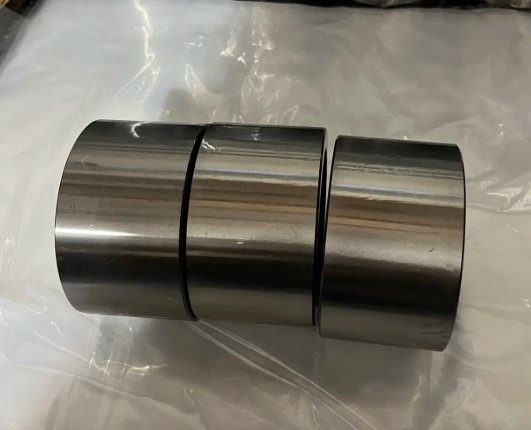
A stainless steel bushing is a precision cylindrical component used to guide, support, space, or protect moving and stationary mechanical parts. In demanding environments where corrosion, washdown chemicals, temperature variation, and dimensional stability matter, Stainless Steel Bushings offer a durable alternative to carbon steel, brass, bronze, and many polymer bushings.
These bushings are commonly used as sleeve bearings, shaft liners, pivot bushings, spacer bushings, flange bushings, valve guide bushings, and wear sleeves. They can be CNC turned, bored, reamed, ground, grooved, passivated, and customized to match shaft diameter, housing bore, lubrication method, load direction, and operating environment.
Product Overview: What a Stainless Steel Bushing Does
A stainless steel bushing provides a controlled bearing surface between a shaft and a housing or between two assembled components. Its main functions include reducing wear on expensive parts, maintaining shaft alignment, improving corrosion resistance, absorbing light to moderate radial loads, and acting as a replaceable wear component.
| Function | Engineering Purpose | Typical Example |
|---|---|---|
| Sleeve bearing | Supports rotational or sliding motion | Conveyor roller, pump shaft, hinge pin |
| Spacer bushing | Maintains distance and alignment between parts | Bracket assembly, linkage mechanism |
| Wear liner | Protects housing bore from abrasion or corrosion | Marine hardware, food machinery |
| Guide bushing | Controls shaft, rod, or pin movement | Valve stem, actuator rod, fixture guide |
Why Choose Stainless Steel for Bushings?
Stainless steel is selected when a bushing must resist moisture, oxidizing chemicals, cleaning agents, outdoor exposure, or high-temperature operation better than plain carbon steel. For buyers and engineers, the decision is usually based on total service life rather than only the initial component cost.
- Corrosion resistance: suitable for humid, marine, food-processing, pharmaceutical, and chemical environments.
- Dimensional stability: maintains geometry better than many plastics under heat, compression, or continuous load.
- Strength and rigidity: supports higher mechanical loads than polymer bushings of similar size.
- Cleanability: stainless surfaces can be polished and passivated for hygienic or washdown applications.
- Custom machinability: IDs, ODs, flanges, grooves, holes, chamfers, and keyways can be produced to drawing.
For dry-running applications, stainless steel is often combined with lubrication grooves, grease channels, PTFE liners, or surface treatments. Stainless steel has excellent corrosion resistance, but it is not always the lowest-friction material by itself; the mating shaft hardness, surface finish, lubrication, and load-speed conditions must be considered.
Common Types of Stainless Steel Bushings
The best bushing type depends on how the part is installed, how the load is applied, and whether the bushing must also position or retain another component.
Sleeve Stainless Steel Bushings
Sleeve bushings are straight cylindrical bushings with an inside diameter and outside diameter. They are used in rotating shafts, hinge pins, guide rods, pump shafts, and mechanical linkages where compact support is required.
Flanged Stainless Steel Bushings
A flanged bushing includes an integral shoulder that helps control axial movement, provides a larger bearing face, or simplifies installation in a housing. Flanged designs are useful when the assembly needs a built-in thrust surface.
Grooved Stainless Steel Bushings
Oil grooves, spiral grooves, or grease channels improve lubricant distribution across the contact surface. This can reduce localized wear, lower operating temperature, and improve service intervals in pivoting or slow-rotating equipment.
Thin-Wall Stainless Steel Bushings
Thin-wall bushings are used when the housing has limited space or when the design requires corrosion protection without significantly changing the assembly envelope.
Custom Machined Stainless Steel Bushings
Custom bushings may include non-standard tolerances, special surface finish requirements, cross holes, retaining grooves, flats, slots, internal threads, external threads, or press-fit geometry. They are typically produced from bar stock, tube stock, or forged blanks.
Material Grades for Stainless Steel Bushings
Material selection is one of the most important decisions in bushing performance. The most common stainless grades include 304, 316, 303, 420, 440C, and 17-4 PH. Each grade has different corrosion resistance, machinability, hardness, magnetic response, and cost.
| Grade | Key Advantage | Typical Use | Engineering Note |
|---|---|---|---|
| 304 Stainless Steel | General corrosion resistance and availability | Food equipment, general machinery, light-duty shafts | Good all-purpose option for non-marine environments |
| 316 Stainless Steel | Improved chloride and chemical resistance | Marine hardware, washdown conveyors, chemical systems | Often preferred for salt spray or aggressive cleaning agents |
| 303 Stainless Steel | Excellent machinability | Precision turned components, fittings, spacers | Less corrosion-resistant than 304/316 due to sulfur content |
| 420 Stainless Steel | Heat-treatable hardness | Wear parts, shafts, moderate corrosion applications | Useful when hardness is more important than maximum corrosion resistance |
| 440C Stainless Steel | High hardness and wear resistance | Bearing components, precision wear sleeves | Requires careful finishing and corrosion evaluation |
| 17-4 PH Stainless Steel | High strength with good corrosion resistance | Aerospace, marine, high-load mechanical assemblies | Can be precipitation hardened for strength-critical bushings |
Material selection note for marine and washdown applications
For saltwater, chloride exposure, or frequent sanitation washdown, 316 stainless steel is commonly specified over 304 because of its molybdenum content and improved resistance to pitting corrosion. However, lubrication, crevice design, surface finish, and cleaning residue still affect long-term performance.
Stainless Steel Bushing vs Bronze, Carbon Steel, and Polymer Bushings
No bushing material is best for every machine. Stainless steel performs especially well where corrosion resistance, strength, cleanability, and temperature resistance are priorities. Bronze may offer better embedded lubricity, polymers may reduce noise and friction, and carbon steel may be more economical in dry indoor equipment.
| Material | Strength | Corrosion Resistance | Friction Behavior | Best Fit |
|---|---|---|---|---|
| Stainless Steel | High | High to excellent, depending on grade | Requires proper lubrication or compatible mating surface | Washdown, marine, chemical, high-temperature, hygienic machinery |
| Bronze | Medium to high | Good, but depends on alloy and environment | Good bearing behavior, often used with oil or grease | Traditional sleeve bearings, heavy machinery, slow-speed pivots |
| Carbon Steel | High | Low without coating | Requires lubrication and corrosion protection | Low-cost indoor machinery with controlled environment |
| Engineering Polymer | Low to medium | Excellent for many chemicals | Low friction, often self-lubricating | Low-load, low-noise, lightweight, dry-running systems |
In a food-processing washdown conveyor, replacing plated carbon steel spacers with 316 stainless steel bushings can eliminate coating failure and reduce corrosion-related maintenance. In one typical engineering review, weekly visual rust checks were reduced to monthly inspections after changing to passivated 316 components, while shaft fit remained stable after repeated alkaline cleaning cycles.
The trade-off is that stainless steel against stainless steel can gall under high load or poor lubrication. In such cases, engineers may specify a hardened shaft, dissimilar mating material, dry-film coating, PTFE liner, or controlled surface roughness to reduce adhesive wear.
Machining Capabilities and Manufacturing Considerations
Precision stainless steel bushings are commonly manufactured by CNC turning, boring, drilling, reaming, grooving, internal grinding, external grinding, deburring, polishing, and passivation. The manufacturing route depends on quantity, tolerance, material grade, wall thickness, and drawing complexity.
- CNC turning: suitable for OD, ID, shoulder, flange, chamfer, and length control.
- Reaming or boring: improves inside diameter accuracy and roundness.
- Grinding: used when tight tolerance, concentricity, or fine surface finish is required.
- Groove machining: creates straight, spiral, or annular lubrication paths.
- Passivation: improves the stainless surface condition by removing free iron contamination.
- Deburring and edge finishing: prevents shaft scoring and assembly damage.
For sliding or rotating service, surface finish and concentricity are often as important as material grade. A rough bore can accelerate shaft wear, while poor concentricity can cause uneven load distribution and localized heat. For many machined bushing applications, a bore finish in the range of Ra 0.4–1.6 μm is commonly evaluated, depending on lubrication and shaft speed.
Typical tolerance considerations
Press-fit bushings require careful control of outside diameter and housing bore. Slip-fit bushings require clearance that accounts for shaft tolerance, thermal expansion, lubrication film, and contamination. The final fit should be based on load, speed, operating temperature, and assembly method rather than nominal diameter alone.
Engineering Data Buyers Should Confirm Before Ordering
Buyers, sourcing teams, and design engineers can reduce revision cycles by confirming the working conditions before specifying a stainless steel bushing. A dimensionally correct part may still fail if the material, clearance, surface finish, or lubrication method is mismatched to the application.
| Specification Item | Why It Matters | Common Input |
|---|---|---|
| Inside diameter | Controls shaft clearance and bearing contact | Shaft diameter, fit class, operating temperature |
| Outside diameter | Controls press fit or slip fit in the housing | Housing bore, installation force, retention method |
| Length | Affects load distribution and stability | Radial load, available space, shaft overhang |
| Material grade | Determines corrosion resistance, strength, and machinability | 304, 316, 303, 420, 440C, 17-4 PH |
| Lubrication | Reduces friction, heat, galling, and wear | Dry, grease, oil, food-grade lubricant, PTFE liner |
| Surface finish | Influences friction, shaft wear, and cleanliness | Turned, reamed, ground, polished |
| Load and speed | Defines PV condition and expected service life | Radial load, oscillation angle, RPM, duty cycle |
| Environment | Determines corrosion and contamination risk | Salt spray, steam, washdown, chemicals, outdoor exposure |
A useful procurement drawing should include ID, OD, length, chamfer size, flange dimensions if applicable, tolerance class, material grade, heat treatment if required, surface finish, deburring requirements, passivation requirement, and inspection standard.
Application Areas for Stainless Steel Bushings
Stainless steel bushings are used across industries where reliability and corrosion resistance are critical. Their combination of strength, clean surface characteristics, and machining flexibility makes them suitable for both OEM production and maintenance replacement programs.
- Food and beverage equipment: conveyors, mixers, filling machines, packaging systems, washdown linkages.
- Marine and offshore hardware: hinges, rollers, deck equipment, cable guides, corrosion-resistant pivots.
- Pumps and valves: shaft sleeves, guide bushings, valve stem supports, impeller spacers.
- Pharmaceutical machinery: cleanable guide bushings, spacers, and stainless wear components.
- Chemical processing: corrosion-resistant rotating or sliding supports in aggressive environments.
- Agricultural and outdoor equipment: exposed pivots, linkage bushings, moisture-resistant assemblies.
- Automation and fixtures: guide sleeves, alignment bushings, tooling spacers, precision locating parts.
In outdoor linkage assemblies, 316 stainless steel bushings are often chosen when zinc plating or black oxide coatings cannot provide sufficient life after repeated rain, salt spray, or fertilizer exposure. For high-load pivots, a hardened pin or coated shaft is recommended to minimize adhesive wear.
Common Failure Modes and How to Prevent Them
Stainless steel bushings can provide long service life, but failures may occur when the design ignores clearance, lubrication, load concentration, or environmental chemistry. Understanding these risks helps engineers select the right grade and geometry from the start.
| Failure Mode | Likely Cause | Prevention Method |
|---|---|---|
| Galling | Stainless-on-stainless contact under load with poor lubrication | Use dissimilar materials, lubrication grooves, coatings, or hardened mating shaft |
| Pitting corrosion | Chloride exposure, stagnant moisture, wrong stainless grade | Select 316 or suitable alloy, improve drainage, specify passivation |
| Rapid bore wear | Insufficient lubrication, rough shaft, abrasive contamination | Improve filtration, shaft finish, sealing, lubrication interval |
| Loose housing fit | Incorrect OD tolerance, thermal cycling, housing deformation | Recalculate fit, use retaining feature, control housing bore tolerance |
| Shaft scoring | Burrs, sharp edges, poor bore finish | Deburr, chamfer, polish, inspect bore surface |
Engineering example: reducing galling in a pivot joint
A stainless pivot assembly operating under oscillating motion may show dark transfer marks and rising torque after several thousand cycles. Changing from identical stainless mating surfaces to a 316 bushing with a hardened 17-4 PH pin, adding a spiral grease groove, and improving bore finish can significantly reduce adhesive wear and stabilize operating torque in many moderate-speed applications.
Inspection, Documentation, and Packaging
For production and replacement projects, quality documentation helps ensure that stainless steel bushings fit correctly and perform consistently. Typical inspection items include dimensional measurement, material verification, visual surface inspection, burr control, concentricity checks, and surface roughness testing when specified.
- Dimensional inspection: ID, OD, length, flange thickness, chamfers, grooves, and hole locations.
- Material traceability: grade confirmation by mill certificate or positive material identification when required.
- Surface condition: visual inspection for scratches, dents, tool marks, rust contamination, and burrs.
- Passivation verification: requested for clean, corrosion-resistant stainless components.
- Protective packaging: individual wrapping or separated layers to prevent metal-to-metal damage during transit.
For critical assemblies, specify acceptable inspection standards directly on the drawing. This is especially important for bushings used in pumps, valves, medical equipment, marine hardware, and automated machinery where downtime or rework cost is higher than the component price.
How to Specify Stainless Steel Bushings for Better Fit and Service Life
A well-specified stainless steel bushing balances corrosion resistance, mechanical load, shaft compatibility, lubrication, manufacturability, and cost. The most reliable results usually come from defining the operating environment first, then selecting the stainless grade, fit, surface finish, and any required groove or coating features.
For general corrosion-resistant machinery, 304 stainless steel may be sufficient. For saltwater, washdown, or chloride exposure, 316 is often the stronger specification. For high-strength or wear-focused designs, 17-4 PH, 420, or 440C may be evaluated. When dry running or low friction is essential, a stainless shell with a liner or a different bearing material may be more appropriate than solid stainless steel.
By treating the bushing as an engineered wear component rather than a simple spacer, buyers can improve equipment reliability, reduce shaft and housing damage, and lower replacement frequency in corrosive or high-maintenance environments.